Many wholesale buyers learn the hard way: a great-looking arch support sample does not guarantee consistent bulk production. For podiatry clinic groups, footwear OEMs and medical distributors, sourcing custom arch support inserts hinges on verifiable biomechanical performance, repeatable manufacturing, audit-ready compliance and dependable supply terms. This practical guide covers the core criteria experienced B2B buyers use to vet orthotic suppliers.
Biomechanical Precision and Tunable Arch Geometry
Arch height alone never tells the full story. Seasoned buyers evaluate the complete contour, contact footprint and stiffness gradient along the medial arch. A capable manufacturer can adjust arch length, peak support position and transition zones to suit flat feet, high arches or neutral gait patterns.
Heel cup design receives equal scrutiny. Deep, well-formed heel cups stabilise rearfoot alignment; shallow, low-profile versions fit slim dress footwear where internal space is limited. Reliable suppliers provide documented dimensional tolerances for arch seating and heel containment instead of vague descriptive language.
Forefoot flexibility and metatarsal relief zones are another key checkpoint. Most therapeutic inserts combine a rigid arch shell with a flexible forefoot section. Strong manufacturing partners can tune stiffness characteristics without reworking the entire insert geometry.
Material Stack Performance and Verified Long-Term Durability
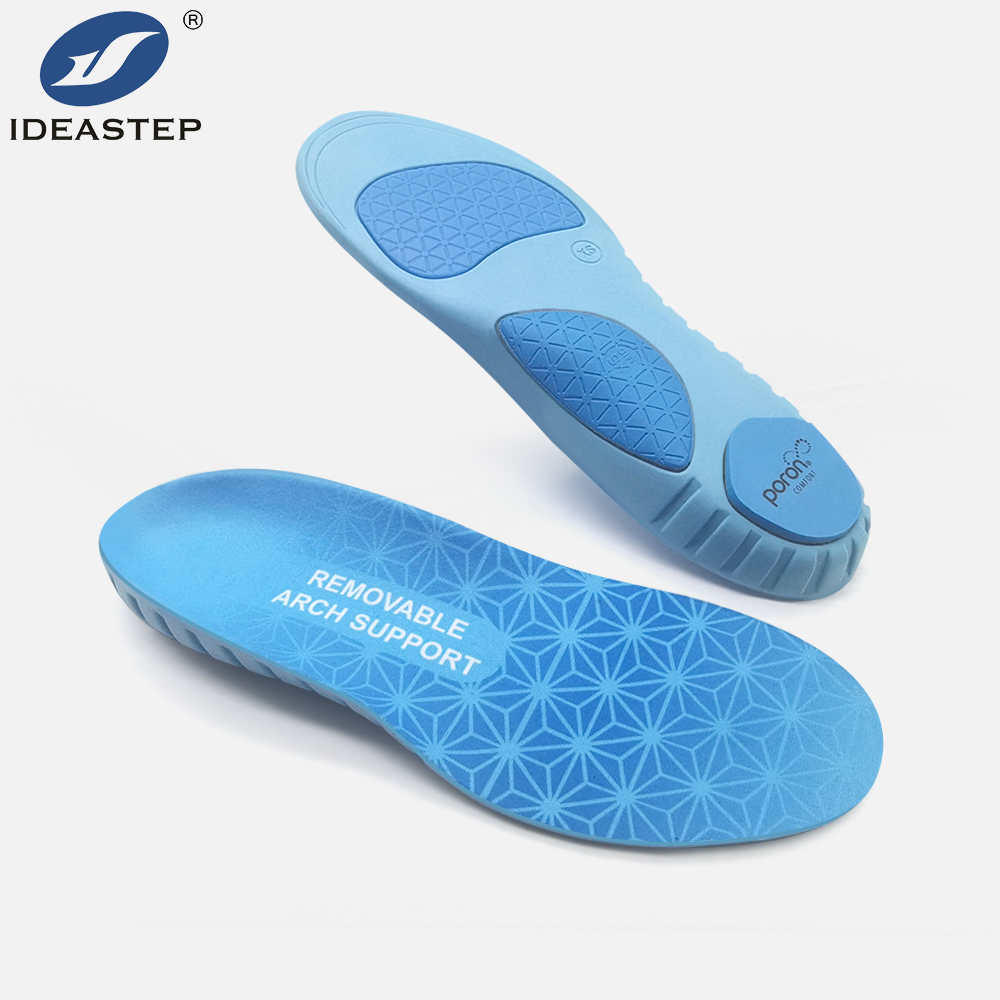
Material selection separates short-lived comfort inserts from clinically suitable arch supports. Buyers clearly distinguish cosmetic cushioning layers from load-bearing structural shells. Polypropylene, carbon fiber composite, multi-density EVA and cork each deliver distinct support behaviour, and every material choice should come with documented hardness, compression set and bond performance data.
Top cover fabrics are selected based on slip resistance, antimicrobial treatment, abrasion resistance and skin compatibility. Diabetic care and long-term care lines require seamless, low-friction surfaces as a baseline requirement.
Lamination integrity is a frequent failure point in custom arch supports. Repeated loading causes delamination when adhesive systems are poorly matched. Trusted suppliers share independent peel testing reports so buyers can rule out weak bonding before committing to large orders.
Scalable Customization and Robust Size Grading
A common sourcing pitfall: suppliers produce one excellent prototype but fail to maintain geometry across the full size run. Dependable orthotic manufacturers follow formal grading rules. Arch height, heel cup depth and relief zones scale proportionally across sizes, rather than being manually adjusted for each SKU.
Buyers seek flexible production workflows: heat-moldable blanks, CNC trimming, 3D printed profiles and semi-custom modifications. This supports diverse go-to-market strategies, whether for clinic-fitted orthotics or pre-calibrated inserts integrated directly into footwear.
Private label customisation falls under this controlled workflow. Brand marking, edge finishing and packaging updates are managed as formal design revisions, not last-minute cosmetic changes.
Batch Consistency and Formal Quality Control
Wholesale orthotic programs rely on predictable, repeatable output. Buyers prioritise suppliers with structured QC: incoming raw material inspection, in-line dimensional sampling and final functional audits. Golden sample control, revision lock procedures and non-conformance logs form the foundation of a stable quality system.
Medical-grade arch supports require a deeper testing package, including flex-cycle durability testing, pressure mapping and biocompatibility documentation. Non-therapeutic comfort inserts carry lighter testing obligations, yet buyers still expect clear visual and dimensional acceptance standards.
A defined sample approval process reduces risk. Signed-off pre-production samples establish the performance benchmark and prevent quality drift once bulk manufacturing begins.
Regulatory Documentation and Market Compliance
Therapeutic arch support inserts are classified as medical devices in many major markets. Responsible buyers confirm valid certifications, risk management files and declarations of conformity before launch. ISO 13485, CE MDR and REACH documentation are standard requirements for EU and North American distribution.
Even non-medical comfort lines need traceable material certificates. Suppliers should tie every material variant to its corresponding test report, allowing distributors to respond quickly to retailer audits and compliance inquiries.
Label copy and intended-use statements must align with local regulatory frameworks. The brand owner holds final liability for product claims, so buyers value suppliers that can support compliant label review.
Commercial Terms, Lead Times and Supply Chain Stability
Unit pricing is only one piece of the evaluation. Experienced buyers compare MOQ structures, tooling ownership terms, sampling charges, reorder lead times and available production capacity. Low minimum order quantities suit clinic networks testing niche arch profiles, while footwear OEMs prioritise high-volume scalable output.
Supply chain resilience carries substantial weight. Consistent raw material inventory, backup production capacity and transparent communication around delays help protect recurring wholesale programs.
Strong manufacturing partners act as technical collaborators during development. They flag manufacturability constraints and suggest material alternatives, rather than simply executing drawings without feedback.
Closing
Successful sourcing of custom arch support inserts balances biomechanical accuracy, batch consistency and regulatory readiness. Buyers that prioritise price above all else often face elevated return rates, clinical complaints and costly compliance exposure.
If your team is sourcing custom arch support lines for podiatry clinics, safety footwear brands or medical distribution networks, we deliver graded arch profiles, validated material stacks and audit-ready documentation for wholesale orthotic production. Reach out to discuss your specification and sampling needs.
Related Reading:
Adding Custom Arch Support Inserts to Specialized Wholesale Insole Collections
Custom Arch Support Inserts for Sneakers: OEM Solutions for Footwear Brands