In modern orthopedic insole design, comfort is no longer defined by soft cushioning alone. In real-world use, especially in work footwear and long-duration walking scenarios, the key factor is how well the arch support adapts to foot biomechanics under load.
Heat moldable arch supports are designed to solve a common limitation of traditional insoles: fixed geometry. Instead of forcing the foot to adapt to the insole, the structure can be reshaped under controlled heat and then locked into a foot-matched contour.
In footwear manufacturing and orthopedic product development, this type of structure is often positioned as a semi-custom arch support system, bridging standard insoles and fully custom orthotics.
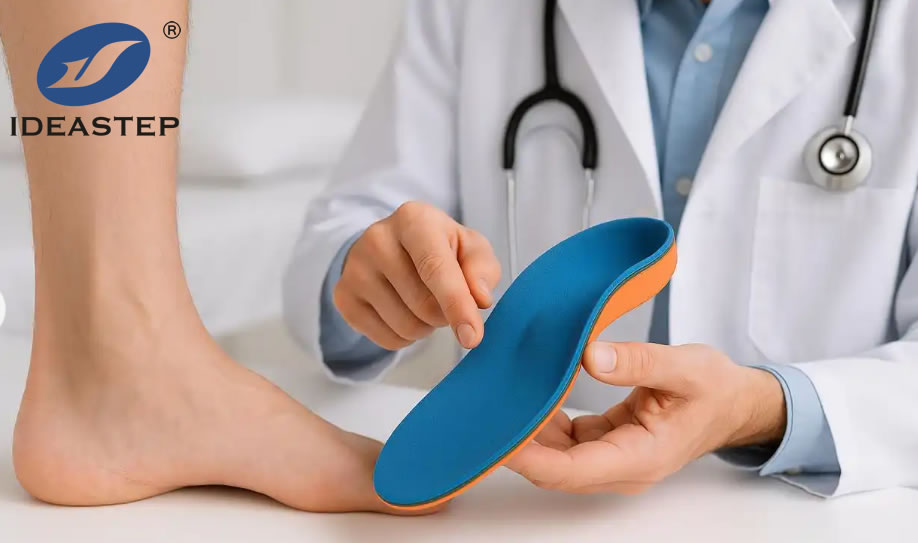
What Are Heat Moldable Arch Supports?
Heat moldable arch supports are foot support components made from thermoformable polymer systems combined with EVA-based cushioning layers. When exposed to controlled heat, the material softens and becomes moldable. After cooling, it retains the new shape.
From an engineering perspective, this allows the arch structure to be adapted to:
- Medial longitudinal arch height
- Heel alignment angle
- Plantar pressure distribution patterns
Unlike standard prefabricated arch inserts, the final shape is defined by the wearer’s foot rather than a fixed mold.
How Heat Moldable Arch Support Technology Works
The working principle is based on thermoforming and structural stabilization of polymer chains.
Heat activation phase
When heated within a controlled temperature range (typically 60–80°C depending on material formulation), the thermoplastic component becomes flexible without losing structural integrity.
Foot loading and shaping phase
While the material is in a softened state, the user stands in a natural posture. Body weight guides the shaping process, influencing:
- Arch curvature
- Heel cup depth
- Forefoot load distribution
Cooling and locking phase
Once cooled, the molecular structure stabilizes again, locking the customized geometry into place. This creates a stable arch support profile matched to the user’s biomechanics.
Why Arch Support Matters in Daily Foot Function
The medial arch plays a critical role in the foot’s load-bearing system. It functions as a natural shock absorber and stabilizer during gait.
When arch support is insufficient or poorly aligned, common biomechanical issues may occur:
- Excess pronation or supination
- Increased plantar fascia tension
- Fatigue during prolonged standing
- Secondary knee or lower back compensation
Heat moldable arch supports help improve this by maintaining a more stable midfoot interface during movement.
Key Advantages of Heat Moldable Arch Supports
Adaptive fit across different foot structures
Because the arch zone is moldable, the same product can adapt to different users with varying arch heights, making it suitable for broad distribution in retail or OEM programs.
Improved pressure distribution stability
By conforming to real plantar pressure zones, the support reduces localized stress peaks, especially under the heel and midfoot.
Enhanced walking comfort during long wear
A better structural match reduces internal foot movement inside the shoe, improving comfort during long standing or walking periods.
Multi-shoe compatibility
Heat moldable arch supports can be integrated into:
- Daily casual shoes
- Work and safety footwear
- Sports and training shoes
Heat Moldable vs Traditional Arch Supports
From a functional perspective, the main difference is structural adaptability.
Traditional arch supports:
- Fixed geometry
- One-size pressure profile
- Limited adaptation to foot variation
Heat moldable arch supports:
- Adaptive geometry after molding
- Personalized pressure response
- Better compatibility with foot asymmetry
In OEM production, this difference is one of the key reasons heat moldable systems are increasingly used in mid-range orthopedic product lines.
Technical Structure Overview (OEM Perspective)
In manufacturing practice, a typical heat moldable arch support system includes:
- Thermoformable core layer: enables structural reshaping
- EVA cushioning layer: provides impact absorption and comfort
- Arch reinforcement zone: maintains midfoot stability under load
- Anti-slip base layer: ensures in-shoe fixation during movement
Material selection is critical, especially for repeated heat cycles and long-term deformation stability.
Application Scenarios in Real Use
Heat moldable arch supports are widely used in different footwear segments:
- Occupational footwear programs (long standing environments)
- Retail orthopedic insole systems
- Sports performance footwear adjustment
- Mild foot discomfort support solutions
In B2B distribution, they are often positioned as entry-level customizable orthotic solutions before full custom orthotic development.
How to Use Heat Moldable Arch Supports Correctly
- Heat the support until it reaches a flexible state
- Place the foot in a natural standing posture
- Apply even weight distribution during shaping
- Allow full cooling before wearing in daily use
Incorrect molding may reduce arch accuracy and long-term support stability.
Selection Criteria for Buyers and OEM Brands
- Thermoforming stability across multiple cycles
- EVA density consistency and rebound performance
- Arch rigidity range (support vs flexibility balance)
- Compatibility with different footwear volumes
- OEM/ODM customization capability (branding, structure adjustment)
Conclusion: A Shift Toward Adaptive Foot Support Systems
Heat moldable arch supports represent a shift from static orthopedic structures to adaptive, user-shaped support systems.
Instead of relying on fixed molds, the support adapts to the wearer’s actual foot biomechanics, improving both comfort and functional stability during daily movement.
In global footwear and orthopedic markets, this category is increasingly recognized as a practical balance between cost efficiency, customization capability, and biomechanical performance, making it a growing segment in both retail and OEM supply chains.
Related product links: https://www.aideastep.com/heatmoldable-orthotic/.