As functional footwear continues to grow, more brands are developing arch support insoles to create products with better stability, comfort, and market differentiation. For flat feet applications, the challenge is not simply adding more support, but designing the right balance between foot control, cushioning, flexibility, and footwear compatibility.
For footwear brands, healthcare companies, and distributors, developing high-quality arch support insoles for flat feet requires experience in foot structure, material selection, and manufacturing processes.
This article explains the key design factors, material combinations, and OEM development process behind best arch support insoles for flat feet.
What Are Arch Support Insoles for Flat Feet?
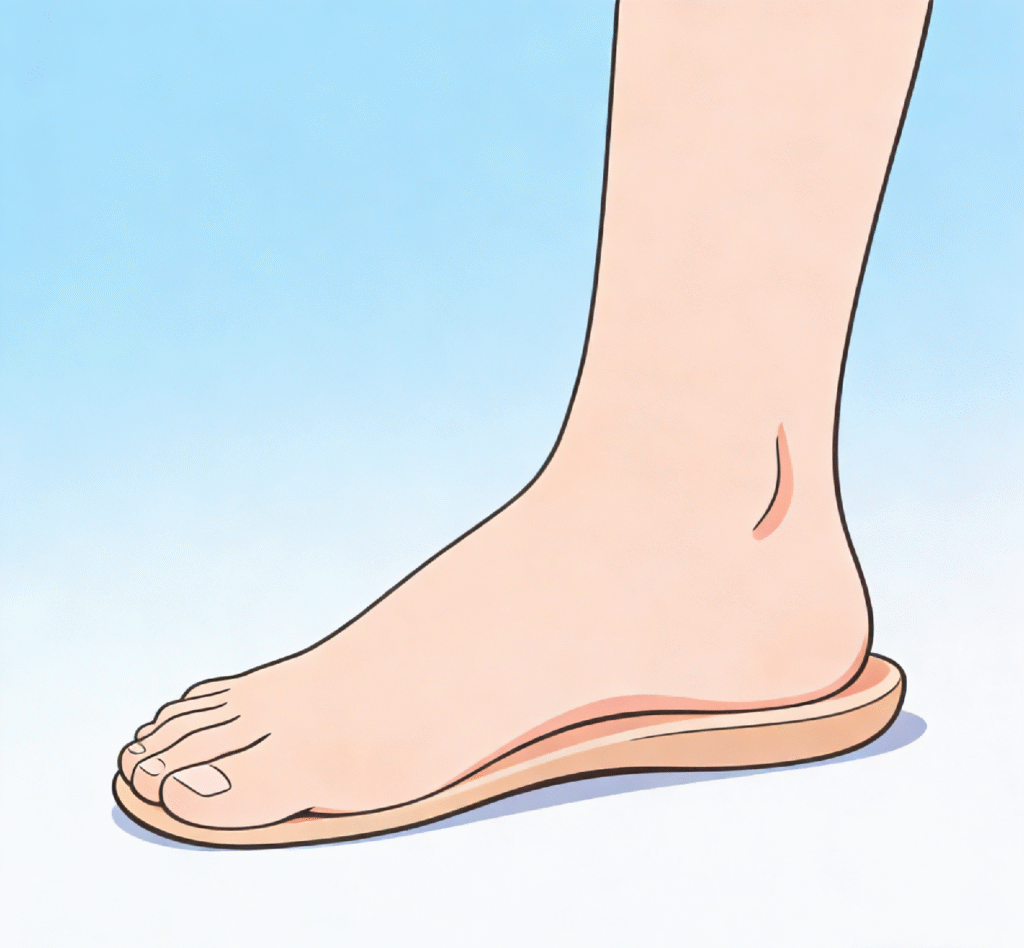
Arch support insoles for flat feet are functional insoles designed to improve the support structure inside footwear by optimizing the arch area, heel stability, and overall foot positioning.
From a product development perspective, a successful flat feet insole is not created by simply increasing arch height. Its performance depends on the combination of:
- Arch structure design
- Material density selection
- Heel stabilization
- Compatibility with footwear construction
The goal is to create an insole that provides functional support while maintaining natural movement and wearing comfort.
Why Brands Develop Flat Feet Insoles
Improve Stability and Wearing Comfort
Footwear users with flat feet often require additional structure inside the shoe. A properly designed insole can help improve foot positioning and provide a more stable wearing experience.
For long-term wearing applications, brands usually combine structural elements with cushioning materials to achieve a balanced product performance.
Expand Functional Footwear Categories
For footwear brands, functional insoles create opportunities to develop products for specific markets instead of competing only through appearance and price.
Common applications include:
- Healthcare footwear
- Walking shoes
- Work footwear
- Sports footwear
Key Design Features of Flat Feet Insoles
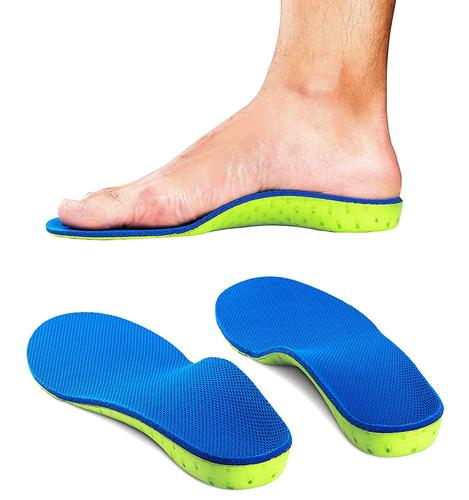
Arch Structure Design
The effectiveness of an arch support insole depends on the relationship between arch geometry, material characteristics, and shoe structure.
During development, manufacturers evaluate:
- Target user group
- Required support level
- Footwear type
- Internal shoe space
A suitable design should provide effective support without affecting overall wearing comfort.
Multi-Density Construction
Professional flat feet insoles often use multiple materials with different densities to create functional zones.
For example:
- Softer materials for cushioning areas
- Higher-density materials for structural zones
- Flexible areas for natural movement
This approach allows brands to achieve a better balance between stability and comfort.
Heel Stabilization
The heel area plays an important role in overall foot control. A reinforced heel structure can improve positioning inside the shoe and enhance product stability.
Heel stabilization designs are commonly used in:
- Orthotic footwear
- Walking shoes
- Work shoes
- Performance footwear
Material Combinations for Custom Arch Support Insoles
Material selection directly affects the performance, durability, and user experience of custom arch support insoles.
Instead of relying on a single material, professional manufacturers usually combine different materials according to the product application.
EVA + TPU Combination
EVA provides lightweight cushioning and adjustable density options, while TPU adds structural reinforcement.
This combination is commonly used for products requiring a balance between cushioning and stability.
EVA + PU Combination
EVA and PU combinations are often selected for comfort-focused footwear applications.
EVA offers lightweight performance, while PU provides a softer feel and resilience for long-term wearing.
Breathable Fabric Top Layer
The top layer directly contacts the foot, making breathability and surface comfort important considerations.
Fabric materials can improve moisture management and enhance the overall wearing experience.
Important Factors in Flat Feet Insole Development
Footwear Compatibility
An insole cannot be developed separately from the shoe. Shoe last design, internal volume, midsole structure, and outsole construction all influence the final performance.
A design suitable for one footwear model may require adjustment when applied to another product platform.
Target Market Requirements
Different applications require different design priorities.
| Application | Development Focus |
|---|---|
| Healthcare Footwear | Functional structure and stability |
| Walking Shoes | Balance between cushioning and support |
| Sports Footwear | Lightweight design and flexibility |
| Work Shoes | Durability and long-term wearing |
OEM Development Process for Arch Support Insoles
Step 1: Requirement Review
The development process begins with understanding the brand’s product positioning, target users, footwear category, and expected performance.
Step 2: Material and Structure Design
Based on project requirements, manufacturers recommend suitable material combinations and structural designs.
Key considerations include:
- Material density
- Arch structure
- Thickness design
- Footwear compatibility
Step 3: Prototype Development
Prototype samples allow brands to evaluate product performance before bulk production.
The process usually includes:
- Sample production
- Fit evaluation
- Material review
- Design adjustment
Step 4: Production and Quality Control
For functional insoles, production consistency is critical because small variations in material density, thickness, or bonding quality may affect the final product performance.
Quality control commonly includes:
- Raw material inspection
- Thickness accuracy
- Bonding quality
- Appearance inspection
- Batch consistency
Why Choose an OEM Orthotic Insole Manufacturer?
Professional Product Development Experience
Developing functional insoles requires knowledge of materials, footwear applications, and manufacturing processes.
An experienced OEM partner can provide support in:
- Material recommendation
- Structure optimization
- Prototype development
- Production management
Customization Capability
OEM manufacturers can support customized solutions including:
- Arch height adjustment
- Material combinations
- Thickness customization
- Private label packaging
Stable Manufacturing Capability
For brands, consistent quality and reliable production are essential for long-term cooperation.
A professional supplier should maintain controlled production processes to ensure each batch meets approved specifications.
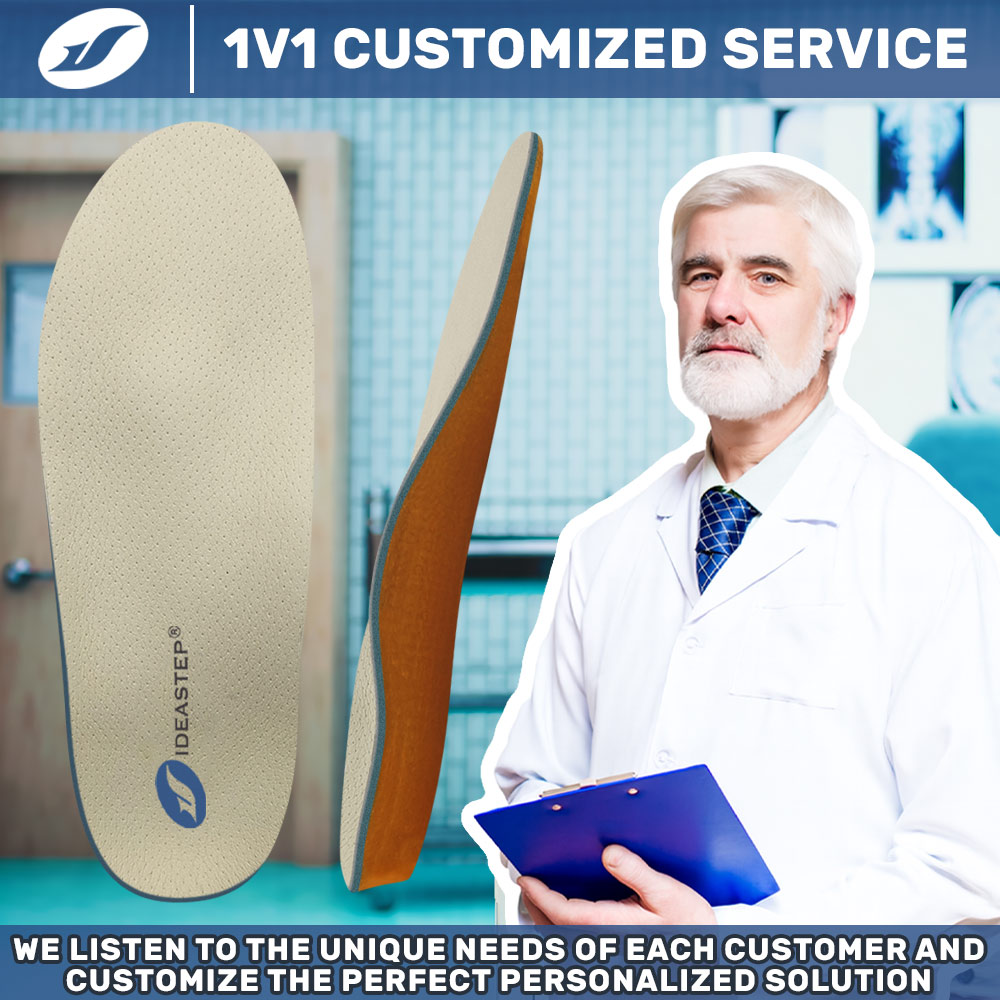
Develop Your Custom Arch Support Insoles with Ideastep
Brands developing flat feet insoles often need a manufacturing partner with experience in materials, structure design, and production management.
Ideastep provides OEM and ODM solutions for custom orthotic insoles, supporting customers from initial concept development to prototype sampling and bulk production.
For qualified projects, sample evaluation can be arranged to help customers verify product design, materials, and performance before full-scale manufacturing.
FAQ About Arch Support Insoles for Flat Feet
What factors affect the design of flat feet insoles?
Key factors include target users, footwear structure, material selection, required support level, and intended application.
Can brands customize arch support insoles?
Yes. OEM manufacturers can customize materials, structures, thickness, branding, and packaging according to project requirements.
What materials are commonly used in flat feet insoles?
Common materials include EVA foam, TPU, PU foam, memory foam, and breathable fabric layers.
How should brands choose an OEM orthotic insole manufacturer?
Brands should evaluate product development experience, customization capability, quality control systems, and manufacturing capacity.
Conclusion
Developing the best arch support insoles for flat feet requires more than selecting a supportive material. Successful products combine functional structure, suitable materials, footwear compatibility, and manufacturing expertise.
For footwear brands and healthcare companies, working with an experienced OEM orthotic insole manufacturer helps transform product ideas into reliable market-ready solutions.
Related Reading:
Best insoles for walking and standing all day flat feet
Who Makes the Best Insoles for Flat Feet?