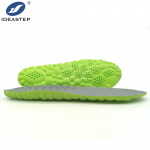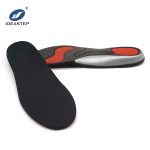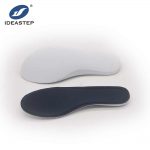
During running, the foot goes through repeated loading and release cycles. Each landing creates impact, while the foot also needs enough flexibility to move into the next step.
For runners with overpronation, the challenge is not simply adding more cushioning or making the insole firmer. The real requirement is finding the right balance between support, comfort, and natural movement.
For manufacturers developing running insoles for overpronation, the product performance depends on how the structure, materials, and footwear fit work together.
Support Should Guide the Foot, Not Restrict It
Overpronation describes a greater-than-normal inward rolling movement of the foot during running.
However, the purpose of an overpronation insole is not to completely stop this movement. Some degree of pronation is part of normal running mechanics.
The role of the insole is to provide better control when the foot absorbs load.
This usually requires attention to several areas:
- The position of the arch support
- The shape of the heel cup
- The transition between support and cushioning areas
- The overall thickness inside the shoe
A structure that works well in a neutral running shoe may not perform the same way in a lightweight racing shoe or a stability trainer.
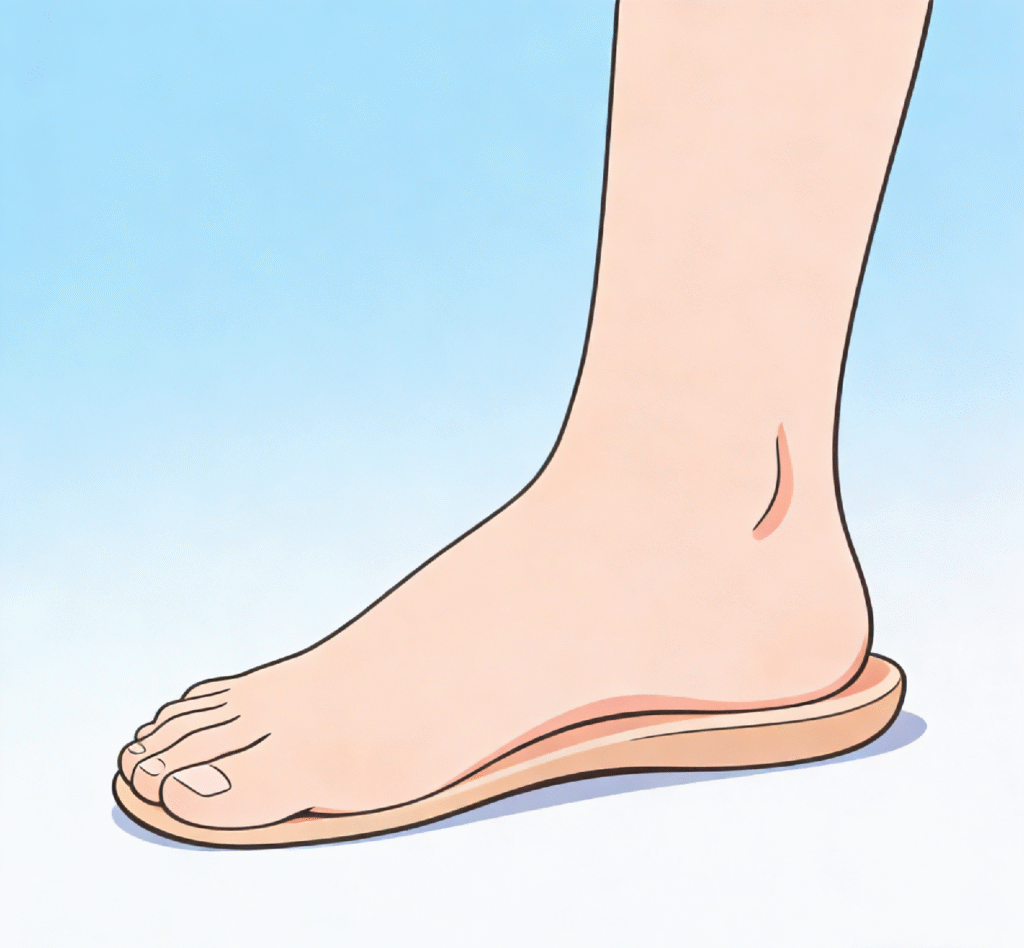
Arch Support Is About Position, Not Just Height
A common misunderstanding is that stronger arch support always means better correction.
In practice, the support location is often more important than simply increasing the height.
During development, manufacturers usually consider:
- Target foot type
- Shoe internal space
- Support requirements
- Intended wearing duration
An arch support that matches the foot position can provide stability without creating uncomfortable pressure points.
Heel Control Helps Improve Shoe Fit
The heel area influences how the foot sits inside the shoe.
A properly shaped heel cup helps keep the foot positioned during movement and reduces unnecessary sliding.
For running insoles, heel control should not be developed separately from the rest of the structure. It needs to work together with arch support and cushioning layers.
Material Selection Depends on the Final Product Goal
There is no single material that creates the best running insole.
Different materials solve different problems.
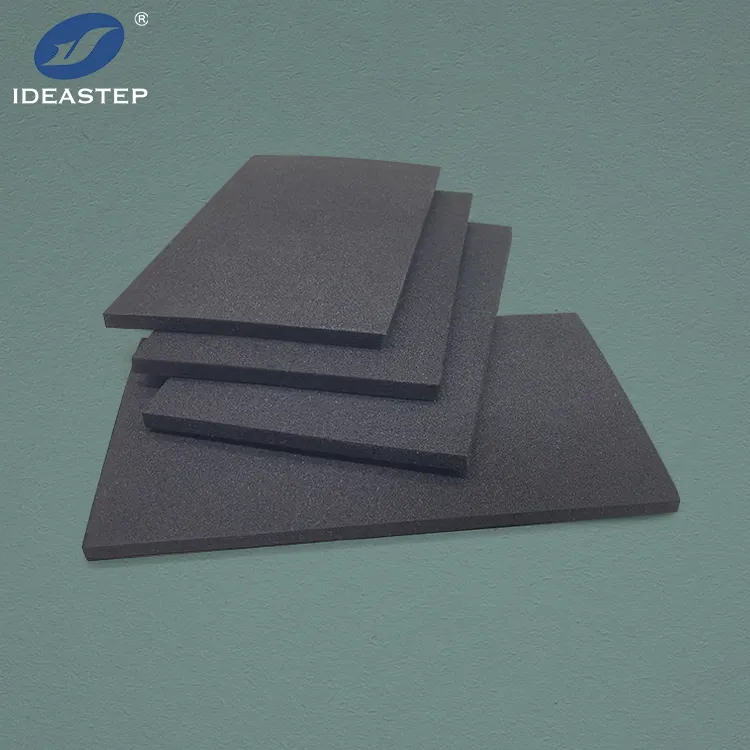
EVA Foam
EVA is widely used because its hardness and density can be adjusted for different cushioning and support requirements.
PU Foam
PU foam is often selected when a softer, more durable cushioning feel is needed.
TPU Components
TPU components are commonly added when additional reinforcement or shape control is required.
Multi-Layer Construction
In commercial production, these materials are often combined rather than used individually. A multi-layer construction allows each layer to perform a specific function.
- Top layer focuses on foot contact comfort
- Foam layer manages cushioning
- Support layer improves stability
- Bottom layer improves durability and grip
Product Design Should Match the Running Shoe
A running insole cannot be evaluated separately from the shoe it goes into.
Different footwear creates different requirements.
Daily Training Shoes
Daily training shoes usually allow more space and focus on comfort and durability.
Performance Running Shoes
Performance running shoes often require a thinner, lighter construction.
Long-Distance Running Shoes
Long-distance running products need consistent cushioning and support after repeated impact.
For this reason, understanding the target shoe is an important part of insole development.
Custom Development for Running Insole Projects
Standard insoles may work for general applications, but brands developing their own products often need more control.
Customization can involve:
Structure
- Arch support profile
- Heel cup shape
- Cushioning zones
- Reinforcement areas
Materials
- EVA density
- Foam hardness
- TPU reinforcement
- Top cover selection
Product Details
- Size range
- Thickness
- Color
- Logo
- Packaging
The purpose of customization is not simply creating a different appearance. It is developing an insole that fits a specific product position and target user group.
From Sample Testing to Production
Insole development usually requires several adjustments before moving into bulk production.
A sample should be tested inside the actual running shoe to check:
- Fit
- Thickness
- Heel stability
- Support position
- Overall running feel
Many design issues only appear after the insole is placed inside the final footwear.
After approval, production consistency becomes the next priority. Material properties, dimensions, bonding, and construction details all need to remain stable across batches.
Working With an Experienced Running Insole Manufacturer
For companies developing overpronation running insoles, manufacturing capability is only part of the process.
The ability to discuss structure, recommend materials, adjust samples, and maintain production consistency is equally important.
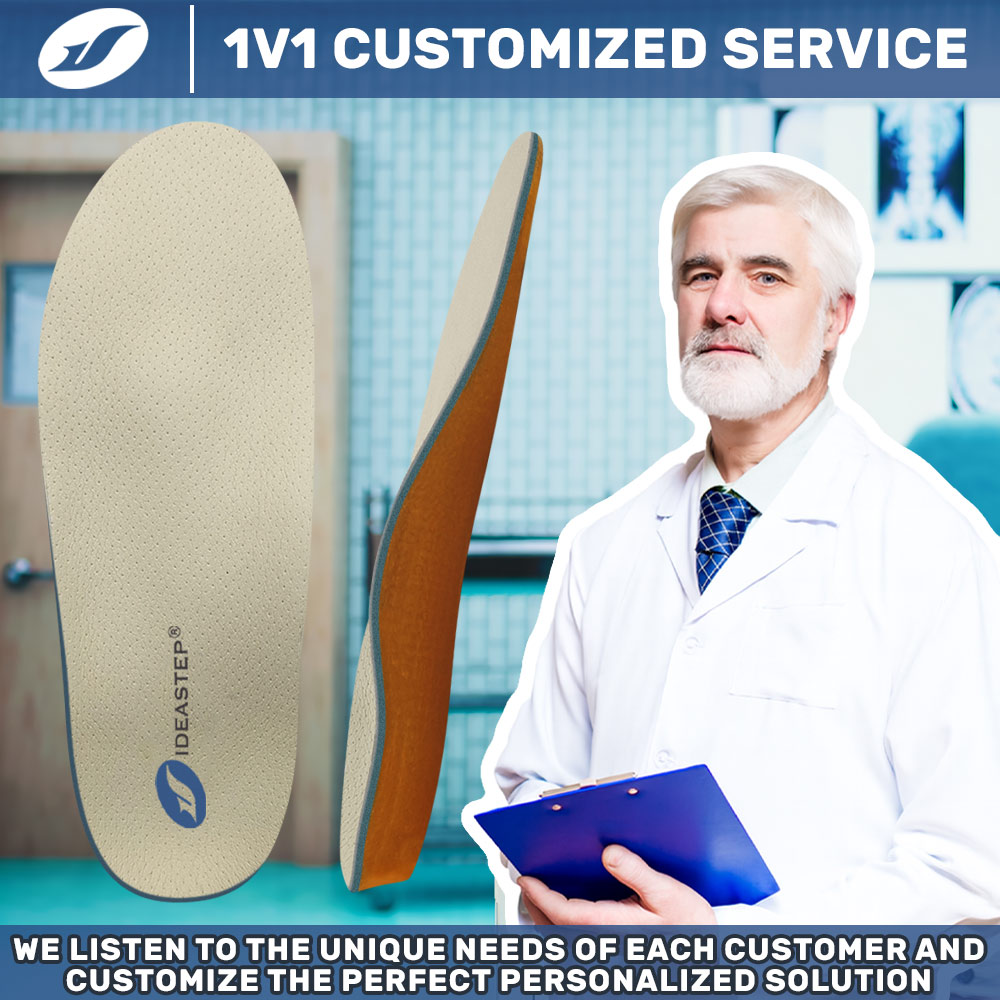
A supplier with experience in custom insole development can support projects from the initial concept through finished production.
Conclusion
Developing running insoles for overpronation is not about creating the hardest support or the softest cushioning.
The better approach is to balance stability, comfort, material performance, and compatibility with the target running shoe.
From early structure planning and material selection to sample testing and production, our team works with partners to develop running insoles based on their market needs and footwear requirements.
Related Reading:
Running Insoles for High Arches
Running Insoles for Plantar Fasciitis
Performance Running Insoles for Sports Footwear Brands