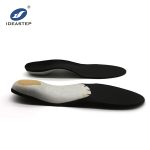
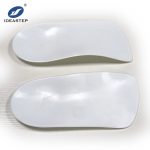
PP shell orthotic insoles use a polypropylene (PP) structural component to provide a defined base for orthotic insole construction. Manufacturers can adjust shell thickness, geometry, and forming conditions to meet different product specifications.
For wholesalers, orthotic brands, and footwear manufacturers, key sourcing considerations include material consistency, shell design, production capability, and dimensional control. Understanding these factors helps buyers specify products accurately and assess suppliers for long-term bulk supply.

1. Understanding PP Shell Orthotic Insoles
1.1 Polypropylene as a Structural Material
Polypropylene is a thermoplastic material used in orthotic shell production. Its processability allows manufacturers to form shells with defined contours and dimensions.
Material grade, thickness, and processing conditions influence the finished shell’s stiffness and shape retention. Buyers should confirm the material specification with the supplier rather than assume that all PP materials have identical properties.
1.2 PP Shells Compared with EVA and PU Materials
PP, EVA, and PU serve different roles in orthotic insole construction. A PP shell provides the structural base, while EVA foam and PU foam can form cushioning layers or other components.
Manufacturers may combine these materials to achieve the required construction and overall thickness. During product development, buyers should assess the complete assembly, including bonding compatibility, layer dimensions, and footwear clearance.
1.3 Rigid and Semi-Rigid Shell Designs
PP shells can support rigid and semi-rigid designs. Manufacturers influence shell stiffness through material selection, thickness, curvature, and geometry.
The appropriate configuration depends on the product specification and intended footwear. Sample evaluation helps verify whether the proposed design meets the required dimensions and structural characteristics.
2. Material Selection for PP Orthotic Shells
2.1 Thickness, Stiffness, and Shape Retention
Shell thickness affects stiffness, but geometry and material properties also determine structural behavior. Heel cup depth, arch contour, and shell length can change how a component responds to loading.
Buyers should define the required dimensions and structural characteristics before production. For new designs, prototype evaluation helps verify the relationship between material selection and shell performance.
2.2 Weight, Flexibility, and Footwear Compatibility
Shell design involves balancing stiffness, weight, and available footwear space. Increasing thickness may affect both shell weight and overall insole height, while changes in curvature can alter structural behavior.
Manufacturers should assess the shell alongside the intended footwear and any additional cushioning layers. This helps identify dimensional conflicts before bulk production.
2.3 Material Consistency in Bulk Production
Variations in material grade, thickness, or processing conditions can affect finished-product consistency. Buyers should establish clear requirements for material identification, dimensional tolerances, and incoming inspection where applicable.
For recurring orders, documented specifications and controlled material substitutions help maintain consistency between production batches.
3. PP Shell Structure and Design Features
3.1 Full-Length and Three-Quarter-Length Shells
Full-length shells extend toward the forefoot and can support constructions that require a structural base along most of the insole. Three-quarter-length shells stop before the toes, leaving more space in the forefoot area.
The choice depends on footwear geometry, internal volume, and the required top-cover construction. Buyers should confirm shell length and finished dimensions during sample approval.
3.2 Heel Cup Depth and Rearfoot Geometry
Heel cup depth, width, and contour affect shell geometry and compatibility with the footwear’s rearfoot area. A deeper heel cup may require additional internal shoe space.
Manufacturers should follow approved dimensions and reference samples to maintain consistency across sizes. Buyers should also confirm compatibility with the heel counter and other footwear components.
3.3 Arch Contour, Posting, and Wedge Geometry
Arch contour, posting, and wedge features define the shell’s shape and thickness distribution. These features also influence forming and finishing requirements.
Technical drawings, dimensional specifications, or reference samples give manufacturers a clear basis for production. Buyers should confirm critical angles and dimensions before approving the final design.
3.4 Top Covers and Cushioning Layers
PP shells can be combined with EVA foam, PU foam, fabric, microfiber, and other suitable materials. Each component affects the finished construction, including total thickness, surface finish, and bonding requirements.
Buyers should specify the shell, cushioning layers, top cover, adhesive system, and edge finishing as one integrated design. Sample approval should cover the assembled product, not just the shell.
4. Product Applications of PP Shell Orthotic Insoles
4.1 Orthotic Brands and Foot-Care Product Lines
Orthotic brands and foot-care product suppliers may require different shell profiles, sizes, and stiffness levels across their product ranges. Consistent specifications help manufacturers maintain repeatable output and support ongoing supply.
Buyers should establish material requirements, dimensional tolerances, quality criteria, and sample approval procedures before production.
4.2 Sports and Performance Footwear
Sports footwear projects require careful coordination between shell geometry, shoe volume, and cushioning layers. A shell developed for one shoe model may not fit another because internal dimensions and construction differ.
Manufacturers should evaluate the shell against the intended footwear or agreed reference dimensions before approving production.
4.3 Work Boots and Specialized Footwear
Work boots and specialized footwear often have specific internal dimensions and construction constraints. Shell thickness, heel cup depth, and forefoot coverage must fit the intended design.
Buyers should identify any applicable product or market requirements early and confirm that the proposed construction meets the project specifications.
4.4 Private-Label and OEM Projects
Private-label and OEM projects may involve specific shell dimensions, structural features, surface materials, branding, and packaging. Clear specifications help manufacturers assess feasibility and prepare accurate quotations.
A typical workflow includes technical review, sample development, customer approval, and confirmation of the final production specification. Documented revisions help prevent discrepancies between approved samples and subsequent orders.
5. Manufacturing Processes for PP Orthotic Shells
5.1 Thermoforming and Shape Development
Thermoforming uses heat to shape thermoplastic material with suitable tooling. Temperature, forming conditions, and cooling influence the resulting geometry and dimensional consistency.
Manufacturers should verify shell contours, dimensions, and shape retention during sample development. Process settings must suit the selected material and design.
5.2 Trimming, Finishing, and Assembly
After forming, manufacturers may trim the shell, finish its edges, and prepare it for assembly with other insole components. Accurate trimming helps the shell meet dimensional requirements and fit within the finished product.
For multi-layer constructions, buyers should also confirm bonding compatibility, total thickness, and edge finishing. These checks help identify assembly issues before mass production.
5.3 Quality Control and Batch Consistency
Quality checks should reflect the shell’s design and the buyer’s technical requirements. Common inspection points include:
- Material verification: Confirm the specified PP material and thickness.
- Dimensional accuracy: Check shell length, width, thickness, and other critical measurements.
- Shape consistency: Compare the shell contour with the approved sample or drawing.
- Surface and edge quality: Check for visible defects, deformation, and rough edges.
- Assembly quality: Inspect bonding and overall construction when additional layers are present.
- Specification control: Document design changes and maintain current production records.
Buyers and manufacturers should agree on inspection methods, tolerances, and required documentation before production begins. This creates a consistent basis for evaluating bulk orders.
6. How to Source PP Shell Orthotic Insoles for Wholesale
6.1 Define Product Specifications
A complete specification should cover the PP material, shell thickness, dimensions, size range, heel cup, arch contour, and intended footwear. Buyers should also identify requirements for top covers, cushioning, bonding, and finishing.
Technical drawings and reference samples help clarify details and reduce quotation discrepancies. Mark any undecided parameters so the supplier can recommend suitable options.
6.2 Compare MOQ, Tooling, Lead Time, and Total Cost
The minimum order quantity (MOQ), tooling, sample development, finishing, packaging, and inspection requirements all affect project cost. Buyers should compare quotations based on the same product specifications and order quantities.
Sample and production lead times depend on material availability, design complexity, approval schedules, and manufacturing capacity. Confirm the timeline for the specific project before placing an order.
6.3 Evaluate Supplier Capabilities
Supplier evaluation should cover material sourcing, forming methods, dimensional control, quality procedures, and communication. Buyers should also confirm how the manufacturer manages design revisions, material substitutions, and repeat orders.
An approved sample and documented technical specification provide a common reference for ongoing production.
6.4 Prepare an RFQ for PP Shell Orthotic Insoles
A request for quotation (RFQ) should include the information suppliers need to assess manufacturing feasibility and calculate costs.
- Product application and target footwear
- PP material specification and required structural characteristics
- Shell thickness, dimensions, and size range
- Heel cup, arch contour, posting, and wedge requirements
- Top-cover, cushioning, and bonding specifications
- Estimated order quantity and repeat-order expectations
- Packaging, labeling, and branding requirements
- Sample approval and quality inspection criteria
- Required delivery schedule and shipping destination
Complete specifications help suppliers prepare comparable quotations and identify technical questions before production.
7. Frequently Asked Questions About PP Shell Orthotic Insoles
7.1 What Are PP Shell Orthotic Insoles Used For?
PP shell orthotic insoles incorporate a polypropylene component as part of the structural base. Their applications depend on the shell design, overall construction, and intended footwear.
7.2 Can Manufacturers Adjust PP Shell Thickness and Stiffness?
Manufacturers can often adjust shell characteristics through material selection, thickness, and geometry. The available options depend on the material and forming process, so buyers should confirm the design through sample evaluation.
7.3 Can PP Shells Be Combined with EVA or PU Foam?
Yes. Manufacturers can combine PP shells with suitable EVA or PU foam layers and other covering materials. The complete construction must meet requirements for bonding, total thickness, and footwear compatibility.
7.4 What Should Wholesale Buyers Include in an RFQ?
Buyers should provide material requirements, shell dimensions, structural features, size range, order quantity, packaging details, and quality criteria. Drawings or reference samples can further clarify the design.
7.5 How Can Buyers Maintain Consistent Quality Across Orders?
Use an approved sample, documented specifications, defined tolerances, and agreed inspection criteria. Buyers should also establish a process for approving material substitutions and design changes before implementation.
8. Discuss Your PP Shell Orthotic Insole Requirements
Successful sourcing depends on clear material specifications, suitable shell geometry, controlled manufacturing, and consistent quality standards. Wholesale buyers should confirm these requirements before moving from sample development to bulk production.
Ideastep works with B2B buyers on orthotic insole and footwear component projects. To discuss PP shell orthotic insoles for wholesale or OEM production, share your technical drawings, reference samples, size requirements, and estimated order quantity with our team.
Contact Ideastep to discuss your project requirements.
Related Reading: Rigid Shell Orthotic Insoles A Guide to Materials Customization and Wholesale Sourcing.