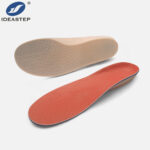
TPU orthotic insoles combine thermoplastic shell structures with design flexibility, making them suitable for different insole constructions. For wholesalers, orthotic brands, and footwear manufacturers, the main challenge is selecting the right balance between shell flexibility, structural support, and production consistency.
Material grade, thickness, shell geometry, and cushioning layers all influence the finished product. Understanding these factors helps buyers define specifications, evaluate manufacturers, and plan bulk orders more effectively.

1. Why TPU Is Used in Orthotic Insole Manufacturing
Thermoplastic polyurethane (TPU) offers a combination of flexibility, elasticity, and abrasion resistance. Its properties can be adjusted through material selection and structural design, allowing manufacturers to develop shells for different product requirements.
Compared with PP, TPU can offer a wider range of flexibility, depending on the grade and shell geometry. EVA and PU, meanwhile, are commonly used for cushioning and foam components. Combining these materials allows the shell and cushioning layers to perform different functions within one insole.
Material selection should therefore reflect the intended structure, footwear type, and performance requirements rather than material name alone.
2. Balancing Shell Flexibility and Structural Support
The performance of a TPU orthotic shell depends on both material properties and geometry. Hardness alone does not determine how a finished shell will behave.
Hardness and Thickness
TPU hardness influences how the material responds to loading, while shell thickness affects its resistance to bending. Geometry and material grade also play important roles.
Buyers should define the required hardness, thickness, and tolerances during product development. These specifications provide a consistent basis for sample approval and bulk production.
Shell Geometry and Support Features
Several structural details influence the finished design:
- Arch contour: Defines the shape and profile of the arch region.
- Heel cup: Affects rearfoot structure and the space required inside the shoe.
- Sidewalls: Influence local stiffness and shell geometry.
- Posting and wedges: Introduce specific angles or structural features according to the product specification.
These elements should be assessed together. Changes to one feature can affect overall thickness, adjacent areas, and footwear compatibility.
Matching Flexibility to the Application
Different footwear products require different shell characteristics. A low-profile design may be necessary when internal shoe space is limited, while other products may require a more defined arch profile or heel cup.
The appropriate design depends on the intended application. Prototype evaluation helps verify shell behavior and fit before production begins.
3. TPU Shell Designs and Material Combinations
Shell length, shape, and material combinations influence product construction, assembly, and footwear compatibility.
Full-Length and Three-Quarter-Length Shells
Full-length shells extend across most or all of the insole, while three-quarter-length designs stop before the forefoot. The choice affects coverage, available cushioning space, and compatibility with different shoe constructions.
Buyers should specify the required shell length and confirm the design against the target footwear.
Combining TPU with EVA and PU
TPU shells can be combined with EVA, PU, PORON, and suitable top-cover materials to create multilayer insoles. The shell provides the structural component, while foam layers contribute cushioning and compression characteristics.
Material compatibility, bonding, layer thickness, and assembly quality require attention during development. Sample approval should cover the complete insole, including overall thickness, edge finishing, and bonding.
4. Applications of TPU Orthotic Insoles
TPU orthotic insoles can serve different B2B product categories when the shell design matches the intended application.
- Orthotic brands and foot care suppliers: Different shell profiles, size ranges, and cushioning configurations can support multiple product lines.
- Sports footwear: Shell flexibility, repeated bending, cushioning, and midsole compatibility require evaluation as part of the complete design.
- Work boots and specialized footwear: Internal space, overall thickness, structural requirements, and compatibility with the shoe construction are key considerations.
For each application, specifications should reflect the actual footwear design and relevant testing requirements. Performance should be verified rather than assumed from material choice alone.

5. Manufacturing and Quality Control
Consistent bulk production depends on material control, forming conditions, finishing, and assembly.
TPU Shell Forming and Finishing
Depending on the material grade and design, manufacturers may use suitable thermoforming or other thermoplastic processing methods. Temperature, tooling, and cooling conditions can affect shell shape and dimensional stability.
After forming, trimming and edge finishing help bring the shell to specification. For multilayer insoles, assembly controls should also cover bonding, layer alignment, and overall thickness.
Quality Checks for Bulk Orders
Buyers should confirm that the manufacturer checks relevant product characteristics, including:
- TPU hardness and shell thickness.
- Key dimensions and shell geometry.
- Warping, surface defects, and edge quality.
- Bonding and layer alignment, where applicable.
- Finished dimensions and batch consistency.
Critical tolerances and acceptance criteria should be agreed upon before mass production. Where durability or mechanical performance is important, buyers should specify the required test methods.
6. What Bulk Buyers Should Confirm Before Ordering
Clear specifications help reduce quotation errors, avoid unnecessary revisions, and support repeat orders.
Product Specifications
Provide the following details when available:
- TPU grade, hardness, and thickness.
- Shell length, arch profile, and heel cup dimensions.
- Size range and dimensional tolerances.
- Cushioning materials and layer configuration.
- Target footwear application.
- Color, labeling, and packaging requirements.
Technical drawings, reference samples, or existing product specifications can help the manufacturer assess feasibility.
Supplier Capabilities and Order Terms
When evaluating suppliers, consider their shell-forming, tooling, assembly, and quality-control capabilities. Confirm how they manage sample approval, specification changes, and repeat production.
Before placing an order, clarify:
- Minimum order quantity (MOQ).
- Sample and tooling costs.
- Production lead time.
- Inspection criteria and approved specifications.
- Packaging, labeling, and shipping costs.
Compare quotations against the same specifications rather than unit price alone. The approved sample and key production requirements should be documented before mass production.
7. Frequently Asked Questions
Are TPU Orthotic Insoles Rigid or Flexible?
They can be designed with different levels of flexibility and structural support. The result depends on the TPU grade, hardness, thickness, and shell geometry.
Can TPU Shells Be Combined with EVA or PU Foam?
Yes. TPU shells can be integrated with suitable EVA or PU foam layers. Bonding compatibility, layer thickness, and assembly quality should be checked during product development.
Can TPU Orthotic Insoles Be Produced for Wholesale Orders?
Wholesale production depends on the manufacturer’s capabilities and the project specifications. Buyers should confirm MOQ, tooling requirements, size coverage, lead time, and quality standards before ordering.
What Is Needed for a TPU Orthotic Insole Quotation?
Provide drawings or reference samples, material requirements, dimensions, size range, estimated order quantity, and packaging requirements. These details help the supplier assess the project and prepare a more accurate quotation.
8. Discuss Your TPU Orthotic Insole Requirements
For bulk orders, the right TPU shell design depends on material specifications, structural requirements, and footwear compatibility. Clear technical information also helps manufacturers assess production feasibility and maintain consistency across repeat orders.
Ideastep works with orthotic insole and footwear projects requiring defined material and structural specifications. Share your drawings, reference samples, size requirements, and estimated order quantity to discuss your project.
Contact Ideastep to discuss your TPU orthotic insole project.
Related Reading:
Why TPU is a Top Choice for Custom Insoles in High-Performance Footwear
3D Printed TPU Insoles Manufacturer for Custom Orthotic Solutions and B2B Supply