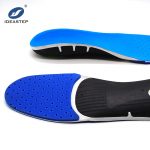
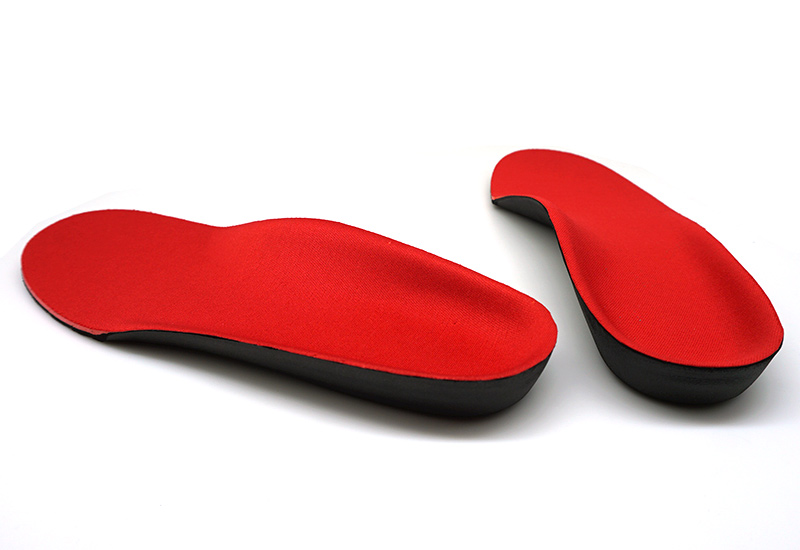
3/4 length orthotic inserts combine a shorter profile with structured heel and arch support. Unlike full-length insoles, they leave the forefoot area uncovered, making them a practical option for product lines that require targeted support without adding material across the entire footbed.
For orthotic product wholesalers, podiatry suppliers, and private-label brands, this design offers flexibility in structural configuration, material selection, and footwear compatibility.
This guide covers the key design features, material options, customization methods, and manufacturing considerations for developing custom fit pain relief orthotic inserts in 3/4 length.

Key Structural Features of 3/4 Length Orthotic Inserts
A 3/4 length design requires careful coordination between the heel cup, arch profile, and forefoot transition. Each component contributes to the insert’s overall structure and dimensional consistency.
Arch Support
The arch profile determines the shape and rigidity of the main support area. Manufacturers can adjust its height, contour, width, and flexibility to meet different product specifications.
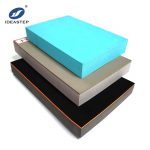
Common structural materials include EVA, polypropylene (PP), and thermoplastic polyurethane (TPU). Material selection depends on the required support level, product thickness, and intended application.
Heel Cup
The heel cup provides a defined seating area within the insert. Its depth, width, and wall geometry influence the overall construction.
A deeper profile creates a more enclosed heel structure, while a lower-profile design may be more suitable for footwear with limited internal space. These dimensions should be evaluated alongside the arch geometry during product development.
Cushioning Components
Localized cushioning can be incorporated to adjust the material composition and contact characteristics of the insert.
- EVA foam for lightweight cushioning and structural flexibility.
- PU foam for softer cushioning layers.
- PORON-type materials for localized cushioning applications.
- Latex foam for resilient cushioning characteristics.
Material density and thickness should match the product specification without compromising the overall profile.
Forefoot Transition
Although the insert does not cover the full forefoot, its front edge remains an important design detail. Edge thickness, shape, and finishing affect how the insert integrates with the existing footbed.
A controlled transition helps maintain a consistent profile and reduces unnecessary bulk.
3/4 Length vs. Full Length Orthotic Inserts
The two formats serve different product requirements and should be selected according to footwear dimensions and structural objectives.
| Design Factor | 3/4 Length Inserts | Full Length Inserts |
|---|---|---|
| Coverage | Heel to forefoot transition | Heel to toe |
| Forefoot structure | Leaves the front footbed exposed | Includes a forefoot layer |
| Internal shoe space | Less material beneath the forefoot | Covers the complete footbed |
| Main design focus | Heel and arch support | Integrated heel, arch, and forefoot construction |
| Customization | Arch profile, heel cup, cushioning, edge shape | Arch profile, heel cup, cushioning, top cover, forefoot structure |
Maintaining both formats can help wholesalers and brands serve different footwear categories without relying on a single product construction.
Material Options for Custom Fit Orthotic Inserts
Material selection affects rigidity, flexibility, cushioning, weight, and production compatibility. Manufacturers should consider these factors together rather than selecting materials based on individual properties alone.
| Material | Main Characteristics | Typical Application |
|---|---|---|
| EVA | Lightweight, flexible, available in different densities | Cushioning layers and support bases |
| Polypropylene (PP) | Relatively rigid and dimensionally stable | Structural support shells |
| TPU | Flexible with good structural resilience | Molded support components |
| PU Foam | Soft cushioning characteristics | Cushioning layers |
| PORON-type Materials | Resilient cushioning properties | Localized cushioning areas |
| Microfiber and Fabric | Available in different textures and finishes | Top covers |
Material combinations can be adjusted according to product positioning, target cost, and technical requirements. Bonding compatibility, thickness tolerances, and material consistency should also be confirmed during development.
Customization for Wholesale and Private-Label Projects
Custom fit pain relief orthotic inserts can be developed by modifying an existing product platform or creating a new structure based on project specifications.
For B2B projects, selected modifications can produce multiple product versions while maintaining a consistent manufacturing foundation.
Structural Modifications
Available adjustments may include:
- Arch height, width, and contour.
- Heel cup depth and geometry.
- Support shell thickness and rigidity.
- Cushioning position and material density.
- Overall length, width, and edge profile.
Technical drawings, reference samples, or detailed specifications help manufacturers translate these requirements into production-ready designs.
Material and Branding Options
Buyers can also specify:
- EVA density and hardness.
- Foam combinations and cushioning thickness.
- Microfiber or fabric top covers.
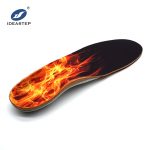
- Product colors and surface finishes.
- Logo printing and private-label packaging.
These options support product differentiation across wholesale and branded product ranges.
Manufacturing Processes
The production method depends on the selected materials, structural design, tooling requirements, and order volume.
Die Cutting
Die cutting produces consistent shapes from sheet materials. It is commonly used for foam layers, top covers, and selected support components.
Thermoforming
Thermoforming shapes suitable thermoplastic materials through controlled heating and forming. It is used to produce contoured support structures.
Compression Molding
Compression molding forms selected materials under controlled heat and pressure. Consistent process parameters help maintain product thickness and geometry.
CNC Machining
CNC machining supports accurate mold production and component shaping. It is useful for projects requiring defined contours and dimensional adjustments.
The manufacturing process should be selected according to the complete product structure rather than individual components alone.
Quality Control for Bulk Production
Consistent specifications are essential when manufacturing multiple sizes or product variations. Quality control should cover the following areas:
- Material inspection: Check thickness, density, hardness, and visible defects.
- Dimensional inspection: Verify product length, width, arch profile, and heel cup geometry.
- Bonding inspection: Check the connection between support shells, foam layers, and top covers.
- Appearance inspection: Review surface finish, color consistency, edge quality, and logo placement.
- Sample approval: Confirm the final sample against the agreed specifications before mass production.
- Batch inspection: Monitor production consistency throughout the order.
Defining inspection criteria before production helps reduce specification deviations and unnecessary revisions.

Information Required for Bulk Orders
A complete product specification helps manufacturers assess feasibility, prepare samples, and provide accurate quotations.
| Requirement | Details to Confirm |
|---|---|
| Product format | 3/4 length construction |
| Size range | Required sizes and target markets |
| Arch structure | Height, contour, and rigidity |
| Heel cup | Depth, width, and shape |
| Materials | Support shell, cushioning, and top cover |
| Product thickness | Overall thickness and component dimensions |
| Branding | Logo, color, and packaging |
| Order quantity | Total volume and size distribution |
| Sample approval | Reference sample or technical drawing |
MOQ, sampling arrangements, production lead time, and packaging specifications should be confirmed for each project.
Custom 3/4 Length Orthotic Manufacturing with Ideastep
Ideastep supports B2B orthotic insole development and bulk manufacturing, including customized support structures, material combinations, size specifications, and private-label requirements.
For 3/4 length orthotic inserts, our team can work with buyers on arch profiles, heel cup geometry, cushioning configurations, and overall product dimensions. Existing designs can be adapted, or new specifications can be developed based on technical drawings and reference samples.
Contact our team to discuss product specifications, sample development, and OEM/ODM manufacturing requirements.
Related Articles: 3/4 Length Orthotic Insoles Benefits And Wholesale Selection Tips.