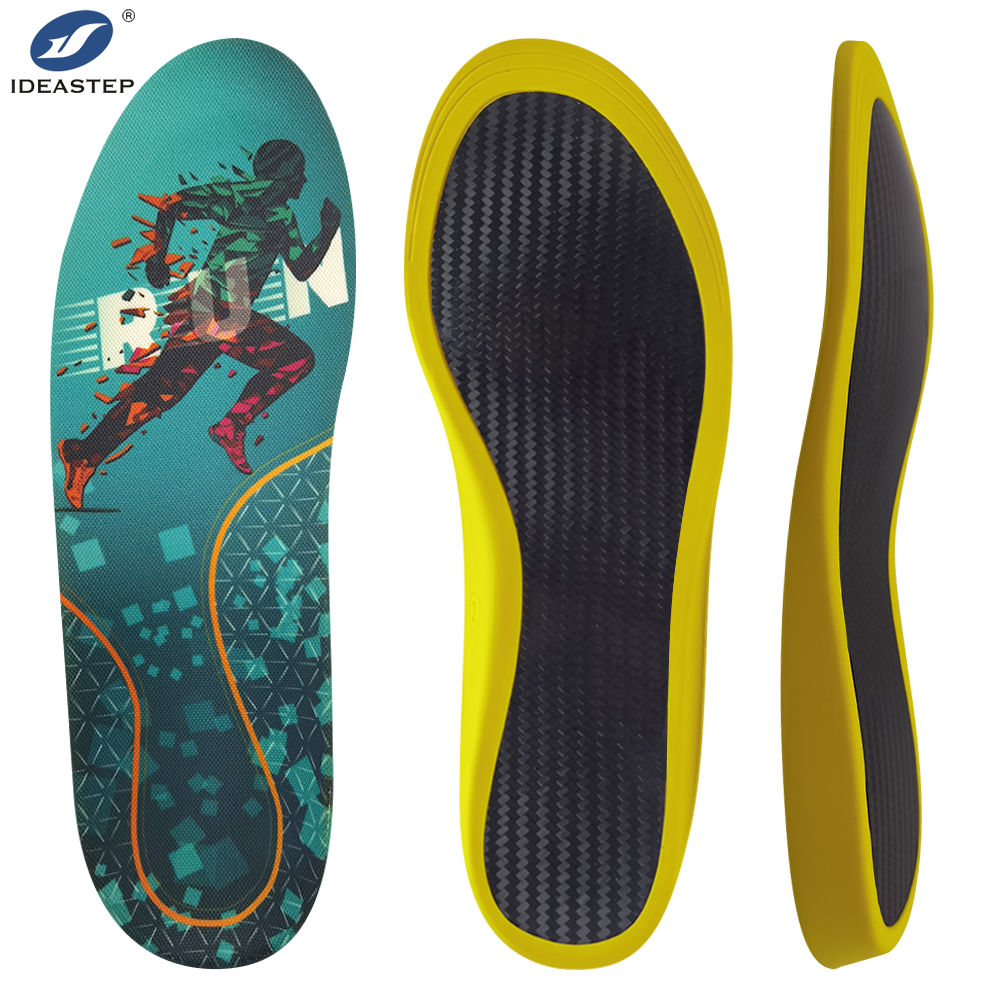
Carbon fiber composites are used in orthotic insole manufacturing where low weight, structural stiffness, and a slim profile are important design requirements. Their mechanical properties can be adjusted through fiber orientation, laminate thickness, and component geometry.
For orthotic manufacturers and footwear brands, the main challenge is developing a carbon fiber structure that meets the required stiffness without adding unnecessary weight or thickness. Material selection, component shape, and integration with cushioning layers all influence the final construction.
1. Why Use Carbon Fiber in Orthotic Insoles?
Carbon fiber offers a high strength-to-weight ratio, making it suitable for lightweight structural components. Unlike conventional support materials, its mechanical properties can be tailored through composite design.
Key characteristics include:
- Low weight: Provides structural reinforcement without adding excessive bulk.
- High stiffness-to-weight ratio: Supports relatively thin component designs.
- Directional strength: Fiber orientation can be adjusted to influence mechanical behavior.
- Design flexibility: Different laminate structures and geometries support varied product requirements.
- Material compatibility: Can be integrated with EVA, PU, PORON, and selected textile materials.
However, carbon fiber is not suitable for every insole construction. Its application depends on the required stiffness, component geometry, production method, and overall product specifications.
2. Controlling Rigidity Through Structural Design
Rigidity is a key parameter in carbon fiber orthotic development. It is influenced by the composite material itself as well as the way the component is designed.
Fiber Orientation
Carbon fiber composites have directional mechanical properties. Unidirectional reinforcement provides high stiffness along the fiber direction, while woven and multi-angle laminates distribute reinforcement across different directions.
The appropriate arrangement depends on the expected loading conditions and required bending or torsional stiffness.
Laminate Thickness
The number and arrangement of composite layers affect component thickness and rigidity. Additional layers can increase stiffness, but they also add material and may change the overall insole profile.
Manufacturers should determine laminate specifications together with the component geometry rather than adjusting thickness independently.
Component Geometry
Curvature, width, edge transitions, and reinforcement zones all influence structural behavior. A flat plate and a contoured shell made from similar composite materials may have different stiffness characteristics.
Therefore, geometry should be established according to the intended support structure and available space within the insole.
3. Common Design Options for Custom Carbon Fiber Orthotics
Carbon fiber components can be developed in different configurations according to the required reinforcement area and insole construction.
Full-Length Carbon Fiber Plates
Full-length plates extend through most or all of the insole. They provide a continuous reinforcement structure and can be integrated into multi-layer constructions where a consistent support profile is required.
Partial-Length Carbon Fiber Plates
Partial plates reinforce selected sections rather than the entire insole. This design can reduce material use and preserve flexibility in areas without reinforcement.
Their length, position, and edge profile should be defined during product development.
Contoured Carbon Fiber Shells
Contoured shells follow a three-dimensional profile, with geometry designed around the required arch, heel, and sidewall areas. Compared with flat plates, they offer greater control over component shape.
Their development requires careful planning of laminate construction, forming methods, and dimensional tolerances.
Localized Reinforcement
Smaller carbon fiber components can reinforce specific areas within an insole structure. This approach allows manufacturers to concentrate reinforcement where required without using a full-length plate.
The reinforcement position and bonding area must be coordinated with the surrounding materials.
4. Combining Carbon Fiber with Other Insole Materials
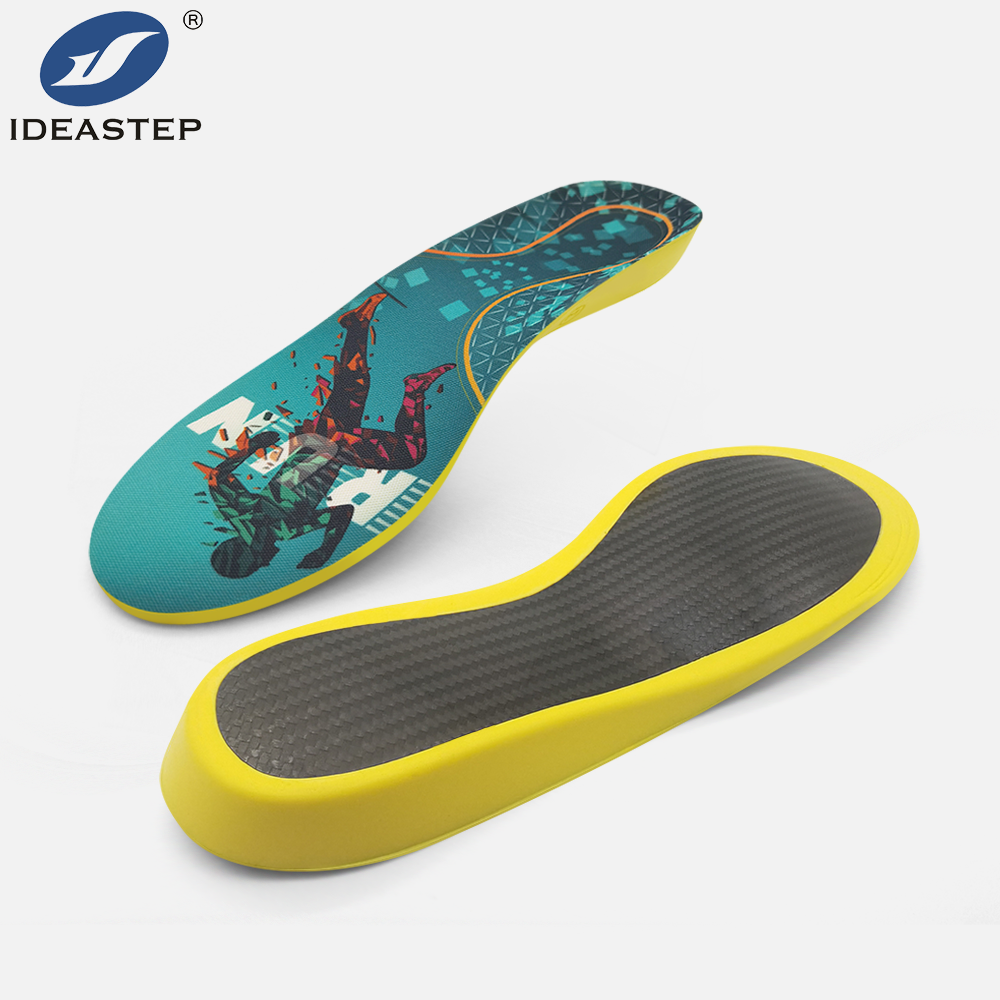
Carbon fiber is commonly used as a structural component within a multi-material insole. Combining it with foam and textile layers allows manufacturers to control the overall thickness, cushioning, and surface construction.
| Material Combination | Construction Purpose |
|---|---|
| Carbon Fiber + EVA | Structural reinforcement with lightweight cushioning |
| Carbon Fiber + PU | Composite support combined with cushioning foam |
| Carbon Fiber + PORON | Structural reinforcement with localized shock absorption |
| Carbon Fiber + TPU | Composite reinforcement with selected flexible components |
| Carbon Fiber + Fabric | Finished surface over a reinforced structure |
Material compatibility is important during assembly. Differences in flexibility, surface properties, and bonding requirements can affect layer adhesion and finished product consistency.
The thickness and position of each layer should also be considered when developing the complete insole structure.
5. Manufacturing Custom Carbon Fiber Components
Carbon fiber processing requires control over material preparation, laminate construction, forming, and finishing. The specific process depends on the fiber reinforcement, resin system, and component design.
Key manufacturing stages include:
- Material preparation: Select the appropriate fiber reinforcement and resin system.
- Layup and forming: Arrange composite layers according to the specified fiber orientation and component geometry.
- Curing: Follow the resin system’s required curing conditions to achieve the intended composite structure.
- Trimming and machining: Refine component dimensions and remove excess material.
- Surface finishing: Smooth edges and prepare bonding surfaces.
- Assembly: Integrate the finished component with EVA, PU, top covers, and other insole layers.
Processing parameters should be established for the selected composite system. Consistent control is particularly important when transferring prototypes into repeat production.
6. Specifications for OEM/ODM Carbon Fiber Projects
For custom development, manufacturers and brands should define the main structural and dimensional requirements before sampling.
| Design Factor | Specifications to Confirm |
|---|---|
| Component Type | Full-length plate, partial plate, or contoured shell |
| Rigidity | Required bending and torsional stiffness |
| Thickness | Laminate thickness and overall profile |
| Geometry | Arch profile, heel contour, and component dimensions |
| Material Combination | EVA, PU, PORON, TPU, or textile layers |
| Surface Finish | Edge treatment and bonding requirements |
| Production Volume | Prototype quantity and expected bulk order |
CAD drawings and physical samples help clarify component geometry and assembly requirements. Before mass production, manufacturers should also confirm measurable specifications for stiffness, thickness, and dimensional tolerances.
7. Testing and Validation
Carbon fiber components should be evaluated against the approved design specifications before bulk production.
Depending on the product requirements, validation may include:
- Bending stiffness: Measures resistance to bending under defined test conditions.
- Torsional stiffness: Evaluates resistance to twisting.
- Flex fatigue: Assesses structural integrity after repeated flexing.
- Dimensional inspection: Checks thickness, shape, and component size.
- Bonding strength: Evaluates adhesion between composite and adjacent materials.
- Visual inspection: Identifies surface defects, edge damage, and laminate inconsistencies.
Test methods and acceptance criteria should be established according to the component design and intended production requirements.
Conclusion
Custom carbon fiber orthotics require careful coordination between composite specifications, component geometry, and insole construction. Fiber orientation, laminate thickness, and reinforcement layout all influence the final structural properties.
For orthotic manufacturers and footwear brands, a clearly defined design and processing specification provides a practical basis for prototype development and repeat production.
Ideastep supports custom orthotic insole development and material selection for OEM/ODM projects. Contact our team to discuss carbon fiber components, structural requirements, and bulk production opportunities.
Related Reading:
Carbon Fiber Orthotics: Exploring Lightweight Structures for Custom Insole Development
Thin Carbon Fiber Insoles Performance And Sourcing Tips For B2B Footwear Supply