Custom orthotic shell design requires careful control of material properties, thickness, and structural geometry. These factors determine how the shell responds to loading, maintains its shape, and integrates with the complete orthotic assembly.
For orthotic manufacturers, podiatry clinics, and laboratories, the main challenge is achieving the required balance between rigidity and flexibility without compromising the intended support structure.
This article examines the key design factors, material options, and manufacturing considerations for custom orthotic shells.

1. Understanding the Role of an Orthotic Shell
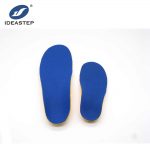
An orthotic shell forms the structural foundation of many custom foot orthoses. It maintains the designed contour and provides a base for additional cushioning and finishing materials.
Depending on the product specification, the shell may be rigid, semi-rigid, or more flexible.
Its main design functions include:
- Maintaining the specified arch profile and shell geometry.
- Providing structural support within the orthotic assembly.
- Resisting unwanted deformation under repeated loading.
- Supporting the integration of cushioning layers and top covers.
Shell specifications should be developed in relation to the complete orthotic structure rather than as an isolated component.
2. Balancing Rigidity and Flexibility in Shell Design
Rigidity and flexibility directly influence shell deformation and structural performance. The appropriate balance depends on the intended application, material, and shell geometry.
Rigidity and Structural Support
Rigidity describes a shell’s resistance to bending or deformation under an applied load.
A more rigid shell can help maintain its designed contour and provide a stable structural base. This is particularly relevant to orthotic designs requiring defined arch geometry and greater resistance to deformation.
However, excessive rigidity may not suit every orthotic specification. Material selection and shell geometry should reflect the required structural performance.
Flexibility and Material Response
Flexibility determines how much a shell can deform under load. It is influenced by material formulation, thickness, and structural configuration.
More flexible designs may be suitable for applications requiring greater deformation, while semi-rigid structures provide a different balance of support and flexibility.
Manufacturers should evaluate both initial deformation and recovery behavior when testing shell materials.
Factors Affecting Shell Rigidity
Shell rigidity is not determined by material hardness alone. Important variables include:
- Material formulation and mechanical properties.
- Shell thickness and thickness distribution.
- Arch height and geometric profile.
- Heel cup dimensions.
- Manufacturing and forming conditions.
These factors should be evaluated together during product development.
3. Key Structural Factors in Custom Orthotic Shell Design
Shell geometry determines how the component fits into the overall orthotic structure. Four design elements require particular attention.
Arch Height and Contour
Arch height and contour should follow the specified orthotic design. Different prescriptions may require different profiles, so a standard shell geometry may not suit every project.
CAD modeling allows manufacturers to adjust arch dimensions and reproduce approved designs across multiple sizes.
Heel Cup Depth and Shape
Heel cup dimensions influence the rearfoot section of the shell. Depth, width, and contour should be considered together to maintain the intended geometry.
The design should also account for the overall orthotic structure and available footwear space.
Shell Length
Common configurations include:
- Full-length: Extends toward the forefoot and integrates with the complete insole structure.
- Three-quarter-length: Covers the rearfoot and midfoot while leaving more space for forefoot components.
- Custom-length: Developed according to specific product and footwear requirements.
Thickness Distribution
Shell thickness affects bending resistance, weight, and flexibility. Some designs require different thicknesses across the rearfoot, midfoot, and forefoot.
Manufacturers should define thickness tolerances and distribution during development to maintain consistent structural performance.
4. Material Selection for Custom Orthotic Shells
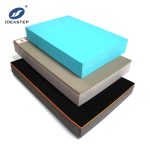
Material selection affects shell rigidity, flexibility, weight, and processing requirements. TPU, polypropylene, and EVA are commonly used in orthotic manufacturing, although their applications differ.
Thermoplastic Polyurethane (TPU)
TPU offers elasticity, abrasion resistance, and adjustable mechanical properties depending on its formulation.
It can be used in orthotic shell designs requiring a balance of structural support and flexibility. Hardness, thickness, and processing conditions should be confirmed for each application.
Polypropylene (PP)
PP is commonly used for rigid and semi-rigid orthotic shells. Its relatively high stiffness and low weight make it suitable for structural components requiring greater resistance to deformation.
Ethylene-Vinyl Acetate (EVA)
EVA is widely used in orthotic insole bases and cushioning layers. Different densities and hardness levels allow manufacturers to adjust the properties of the overall insole structure.
Material Comparison
| Material | Main Characteristics | Typical Application |
|---|---|---|
| TPU | Elasticity and adjustable mechanical properties | Orthotic shells and structural components |
| PP | Lightweight and relatively rigid | Rigid and semi-rigid shells |
| EVA | Cushioning and flexibility | Insole bases and cushioning layers |
Material selection should follow the required shell performance and manufacturing process. Combining a structural shell with EVA or other cushioning materials is common in multilayer orthotic construction.
5. Integrating the Shell into a Multilayer Orthotic Structure
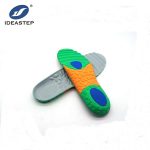
A custom orthotic shell is often combined with several materials to form the finished device.
Typical components include:
- Structural shell: TPU or PP provides the main supporting framework.
- Cushioning layer: EVA or PU foam adjusts the thickness and cushioning characteristics.
- Top cover: Fabric materials provide the finished surface.
During assembly, manufacturers should verify bonding compatibility, total thickness, material deformation, and dimensional accuracy.
The shell must retain its intended structural properties after the additional layers are applied. Material selection and assembly methods should therefore be confirmed during sample development.

6. Custom Orthotic Shell Manufacturing and Quality Control
A consistent manufacturing process helps maintain shell dimensions and structural specifications.
Design and CAD Modeling
Foot scans, casts, positive models, or existing CAD files can serve as design references.
The technical drawing should define arch geometry, heel cup dimensions, shell length, thickness distribution, and dimensional tolerances.
Material Processing and Forming
Manufacturing methods depend on the selected material and product design. TPU and PP may require different forming processes and processing conditions.
Material grade, tooling, temperature, and cooling conditions should be controlled according to the manufacturing requirements.
Trimming and Finishing
After forming, shells may require trimming, edge grinding, and dimensional adjustment. Finished edges should meet the approved design and assembly requirements.
Quality Inspection
Key inspection points include:
- Overall dimensions and shell geometry.
- Thickness and dimensional tolerances.
- Surface quality and visible defects.
- Structural integrity.
- Consistency with approved samples and technical drawings.
For OEM and bulk production, documented inspection standards help control variation between batches.
7. Common Design and Manufacturing Issues
Several issues can affect shell performance and production consistency.
Selecting Hardness Without Considering Thickness
Hardness alone cannot define shell rigidity. Thickness and geometry also influence bending resistance and deformation.
Using Standard Geometry for Different Specifications
Arch profiles, heel cup dimensions, and shell lengths should match the approved design. Reusing one configuration across different projects may lead to dimensional mismatches.
Ignoring Total Insole Thickness
The shell must fit within the complete assembly. Cushioning layers and top covers should be considered during initial design.
Overlooking Material Compatibility
Bonding performance and processing compatibility between the shell and additional materials should be checked before mass production.
Insufficient Specification Control
Incomplete drawings or unclear tolerances can create inconsistencies between samples and production batches. Technical specifications should be confirmed before bulk manufacturing.
8. Custom Orthotic Shell Manufacturing for B2B Projects
For orthotic brands, podiatry clinics, and wholesale manufacturers, a suitable production partner should be able to meet defined technical and supply requirements.
Key capabilities include:
- Custom shell dimensions and structural configurations.
- Material selection and specification confirmation.
- CAD drawing support and sample development.
- Production consistency and quality inspection.
- OEM, ODM, and bulk manufacturing.
Buyers should prepare technical drawings, reference samples, material preferences, and intended applications before requesting a quotation. Clear specifications help suppliers assess production feasibility and reduce unnecessary development adjustments.
Ideastep specializes in orthotic insoles and related materials, supporting B2B customers with product development and manufacturing solutions.
Contact Ideastep to discuss custom orthotic shell requirements, material options, and wholesale supply for your production projects.
Related Post: TPU Orthotic Shells: Material Properties, Structural Design and Custom Manufacturing.