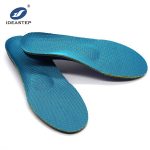
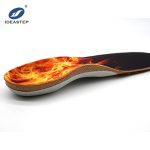
Insole requirements vary considerably across footwear categories. Running shoes need lightweight cushioning and flexibility, while safety footwear requires durable materials and stable support. Dress shoes present another challenge: the insole must fit within a limited internal space without adding unnecessary bulk.
For footwear brands, wholesalers, and orthotic manufacturers, developing the right insole means balancing material properties, structural design, and the intended application. Custom shoe inserts and orthotics can be produced in different configurations to meet these requirements, from simple cushioning layers to multi-layer constructions with shaped support components.
1. Custom Shoe Inserts and Orthotics: Key Differences
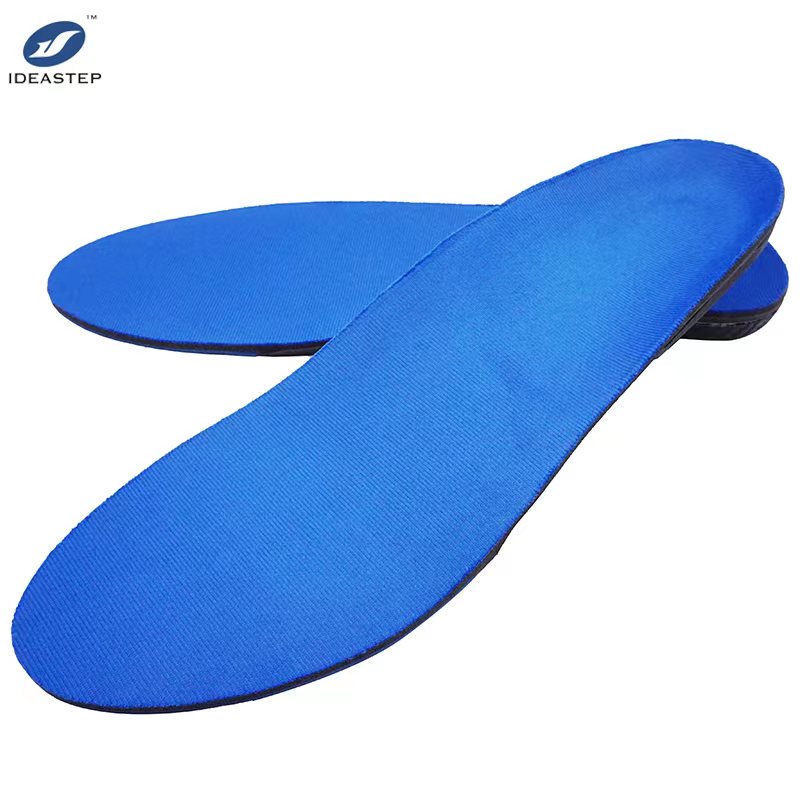
Custom shoe inserts cover a broad range of insole products developed for particular footwear designs or functional requirements. Their main purpose may be cushioning, improving the internal fit of footwear, or adding support to specific areas of the foot.
Orthotics have a more defined structural function. They typically incorporate features such as contoured arch support, deep heel cups, or semi-rigid shells to provide a specific level of support and help manage foot mechanics.
The distinction matters during product development. A cushioned replacement insole does not necessarily provide the structural features of an orthotic. Manufacturers should therefore define the intended function before selecting materials, dimensions, and construction methods.
2. Insole Requirements Across Different Footwear Categories
The same insole construction rarely works equally well across all types of footwear. Available shoe volume, expected wear conditions, flexibility, and cushioning requirements all influence the design.
Running and Sports Footwear
Sports insoles need to balance cushioning, flexibility, weight, and support. Their performance also depends on the shoe’s midsole construction and the demands of the intended activity.
EVA foam is widely used because manufacturers can select different densities and hardness levels for different designs. PU foam offers another option for cushioning and resilience, while TPU components can add structural support where needed. Mesh and other textile top covers are also used to suit different product requirements.
When developing sports insoles, manufacturers should assess compression behavior, thickness, flexibility, and bonding strength. An overly rigid or bulky construction may interfere with the footwear’s intended movement, so the insole needs to work with the overall shoe design.
Work and Safety Footwear
Safety shoes and work boots often face repeated loading, long wear periods, and demanding working conditions. Their insoles need to maintain suitable cushioning and structural integrity without taking up too much internal space.
Common design features include heel and forefoot cushioning, arch support, compression resistance, and durable surface materials. EVA and PU foam are suitable options for cushioning layers, while TPU or PP components may be added when the design requires more structural support.
Thickness and dimensional accuracy deserve particular attention. An insert that is too thick or incorrectly shaped can affect the fit of the finished shoe, especially when the footwear already contains protective components or has limited internal volume.
Dress Shoes and Formal Footwear
Formal footwear usually offers less room for an insole than athletic shoes. This makes thickness, edge profile, and material selection especially important.
Thin EVA, PU foam, latex, and selected leather or textile top covers can be considered according to the required appearance and performance. A well-designed insert should provide the intended cushioning without changing the shoe’s fit or taking up excessive space.
Manufacturers should check heel positioning, forefoot flexibility, surface finish, and compatibility with narrow shoe constructions. In this category, a slim and well-fitted structure is often more practical than adding multiple thick layers.
Casual and Everyday Footwear
Casual footwear covers a broad range of products, including sneakers, walking shoes, and lifestyle footwear. Insole designs generally need to balance cushioning, flexibility, and moderate support.
Multi-layer constructions offer flexibility during development. For example, an EVA base can provide lightweight cushioning, while a PU layer or textile top cover can modify the feel and surface characteristics.
The appropriate construction depends on the shoe’s internal volume, target price, and intended use. A simple cushioning insert may be sufficient for some products, while others benefit from additional arch or heel support.
3. Orthotic Insoles for Specialized Footwear
Some footwear applications require more than basic cushioning. In these cases, orthotic insoles use specific contours and supporting components to achieve the intended structural function.
Medical and Orthotic Footwear
Orthotic products may incorporate shaped arch support, deep heel cups, cushioning zones, and semi-rigid shells. The combination depends on the product specification and the level of support required.
EVA is commonly used as a base material because its density and hardness can be selected for different constructions. TPU and polypropylene (PP) are also used in supporting components, although their stiffness and processing characteristics differ.
During development, manufacturers should establish clear specifications for arch height, heel cup geometry, shell thickness, forefoot flexibility, and cushioning layer density. These details need to remain consistent across sizes and production batches.
Diabetic Footwear Components
Insoles for diabetic footwear require careful material and construction choices. Surface smoothness, cushioning, pressure distribution, and the prevention of unwanted seams or raised edges may all influence the design.
Soft foam layers and suitable top covers can be combined to create a more accommodating insole structure. However, softness alone does not establish clinical suitability. Material selection and product performance should follow the technical requirements provided by the customer and any applicable validation standards.
For manufacturers serving this market, it is important to distinguish general comfort features from verified medical performance claims.
Children’s Footwear
Children’s footwear inserts require appropriate sizing, flexibility, and material selection. Depending on the intended product, manufacturers may use lightweight EVA foam, shaped arch areas, and cushioning layers.
Size grading is particularly important. The length, width, and proportions of the insert should remain consistent throughout the size range while maintaining the intended design features.
For orthotic-related children’s products, support requirements should be defined in the product specification rather than relying on a generic insole structure.
4. Choosing Materials for Custom Shoe Inserts and Orthotics
Material selection affects cushioning, flexibility, support, weight, durability, and manufacturing cost. The most suitable option depends on the product’s intended function and construction.
| Material | Main Characteristics | Typical Applications |
|---|---|---|
| EVA foam | Lightweight, with a range of densities and hardness levels | Sports, casual, work, and orthotic insoles |
| PU foam | Cushioning and resilience, depending on formulation | Everyday, work, and comfort-focused insoles |
| TPU | Thermoplastic properties and adjustable flexibility depending on grade | Supporting shells and structural components |
| PP | Generally more rigid than flexible foam materials | Semi-rigid and rigid orthotic shells |
| Latex | Flexible and cushioning properties | Selected comfort insole constructions |
| Mesh and textile | Varied surface feel and breathability | Sports, casual, and orthotic insoles |
| Leather | Traditional appearance and surface characteristics | Dress and premium footwear |
These materials can be used individually or combined in a single product. For example, EVA may form the cushioning base, while a TPU or PP shell provides additional support. A textile or leather top cover can then be selected to suit the footwear category.
Manufacturers should also consider material compatibility, bonding performance, processing requirements, and expected wear conditions. Choosing materials based only on their individual properties may overlook how they perform as part of the finished construction.
5. Multi-Layer Construction and Structural Design
Multi-layer construction allows different materials to serve specific functions within the same insole. The number of layers and their arrangement depend on the product’s intended use.
A typical construction may include:
- Top cover: Provides the contact surface and influences appearance, surface feel, and moisture management.
- Cushioning layer: Uses EVA, PU, or another suitable foam to provide cushioning.
- Support component: Incorporates TPU, PP, or shaped foam when additional structural support is required.
- Bottom layer: Completes the construction and provides a suitable interface with the footwear interior.
Not every design needs all four components. A thin dress-shoe insert may use a simpler structure, whereas an orthotic insole may require a shaped shell combined with cushioning layers.
Layer thickness and overall geometry should be considered together. Even a small increase in thickness can affect shoe fit, particularly in narrow footwear or designs with limited internal volume. Bonding compatibility between materials also needs to be checked during prototype development.
6. Manufacturing and Quality Control
Consistent production is essential when custom shoe inserts and orthotics are manufactured for footwear brands or wholesale orders. Material variations, dimensional differences, and bonding defects can affect both product performance and batch consistency.
Several production checks deserve attention:
Material inspection: Verify foam density, hardness, thickness, and appearance against approved specifications. Supporting components should also meet the agreed material and dimensional requirements.
Cutting and shaping: Maintain consistent outlines, contours, and size grading. CNC cutting, die cutting, molding, and other processes can be selected according to the product structure and production volume.
Layer bonding: Check bonding strength and material compatibility in multi-layer constructions to reduce the risk of separation during use.
Dimensional inspection: Measure length, width, thickness, heel cup geometry, and other critical features against approved drawings or reference samples.
Finished-product evaluation: Depending on the product specification, testing may cover compression behavior, flexibility, abrasion resistance, and repeated-use performance.
An approved sample and documented technical specification provide a useful reference for both initial production and repeat orders.
7. OEM and ODM Development for Footwear Brands
OEM and ODM projects give footwear brands, distributors, and wholesalers greater control over insole design, materials, and product positioning.
Development usually starts with the footwear category and intended function. The manufacturer can then recommend a suitable material combination, structural design, and production process based on the available specifications.
Key details to confirm include:
- Footwear type and intended application
- Insole dimensions and size range
- Cushioning and support requirements
- Material grades, density, and hardness
- Top-cover material and color
- Logo and packaging requirements
- Target order quantity and production schedule
Prototype samples should be checked in the actual footwear whenever possible. This helps confirm thickness, fit, material feel, and compatibility with the shoe construction before bulk production begins.
Clear specifications also make it easier to evaluate samples, maintain production standards, and manage repeat orders across different product ranges.
8. Developing Insoles for Different Footwear Markets
Insole development needs to reflect the construction and intended use of the footwear. Sports products call for a balance of cushioning and flexibility; safety footwear places greater emphasis on durability and fit; formal shoes require a slim profile. Orthotic products need carefully defined support features and controlled dimensions.
For manufacturers and wholesale buyers, the most reliable approach is to establish the product requirements first, then select materials and construction methods that meet those specifications.
Ideastep works with footwear brands, distributors, and orthotic businesses on custom insole development and wholesale production. Projects can cover material selection, structural design, sample development, and bulk manufacturing.
Contact Ideastep to discuss your custom shoe insert or orthotic insole requirements and request a sample for evaluation.
Related Post: Custom Shoe Inserts With Arch Support Bulk Custom Solutions.