Functional footwear continues its steady expansion across work, outdoor and premium casual segments. While market demand rises, many footwear brands still rely on generic one-size-fits-all insoles as standard equipment. These universal inserts only deliver basic cushioning and leave brands trapped in price-driven competition. Custom arch support insoles offer a viable route for brands to capture high-value market segments and scale sustainably.
Functional Footwear Growth And Core Product Challenges For Brands
Buyers across wholesale, retail and institutional procurement now look past aesthetics and prioritise measurable foot support performance. Most manufacturers still ship their footwear with mass-produced standard insoles. This default setup creates clear limitations for growing brands: product lines lack differentiators, profit margins shrink, and inconsistent support profiles push return rates higher across distribution channels.
To unlock new revenue streams, product teams need modular functional components that align with evolving buyer expectations without overhauling their entire footwear lineup.
Intrinsic Limitations Of Universal One Size Insoles
Generic insoles use fixed arch geometry and uniform firmness. They cannot be tuned to match the positioning of different product tiers. From a commercial standpoint, they provide no unique selling proposition, making it hard to justify premium pricing.
These standard inserts also lack flexibility for multi-channel strategies. A single insole design rarely satisfies requirements from retail footwear distributors, workwear bulk buyers and foot care clinics simultaneously. Brands end up limited to low-margin commodity segments as a result.
Custom Arch Support Insoles: A Modular Solution For Segmented Markets
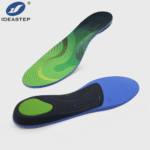
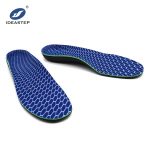
Custom arch support insoles can be built in graded support tiers: low-support comfort options, medium-support biomechanical variants and heavy-duty high-support designs for industrial and outdoor use. Brands can combine these insert options with existing shoe lasts to build layered SKU portfolios.
The biggest practical advantage is minimal disruption to existing tooling. The shoe shell remains unchanged; differentiation comes from swapping inserts. This lets brands serve diverse B2B channels while keeping mould investment under control.
Key Technical Criteria When Sourcing Custom Arch Support Insoles
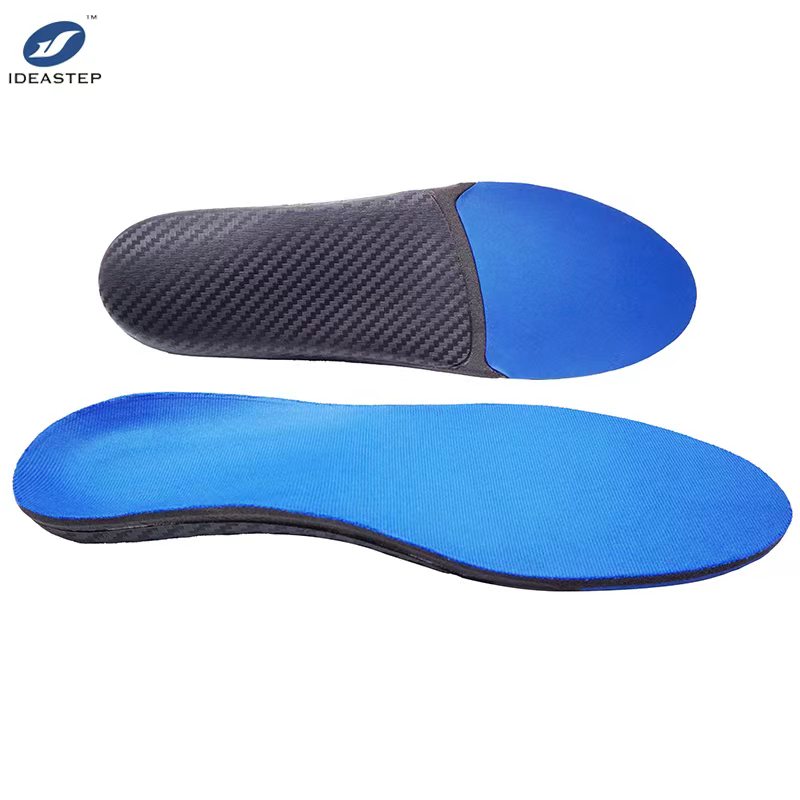
Focus your supplier evaluation on biomechanical design first. Arch height, support firmness and load-bearing zones should align with your target product category. Substrate selection is equally critical. EVA, PU foam and carbon fiber composites each carry distinct performance trade-offs for work boots, outdoor footwear and casual lines.
OEM customisation covers precision trimming, top fabric selection, embossed branding and thickness fine-tuning. Fit validation against your shoe last is mandatory to ensure inserts sit properly inside the shoe cavity without restricting internal volume.
Supply Chain Planning Aligned With Brand Growth Cycles
Sample validation should combine biomechanical performance testing and shoe last fitting checks before mass production locks in. Batch consistency is non-negotiable. Variations in arch height or material firmness across production runs create uneven product quality and harm brand trust.
Work with manufacturers offering flexible MOQ frameworks. This supports small-batch product trials before scaling, with tiered pricing for larger committed orders. Production timelines can be scheduled around new product launches and peak seasonal inventory builds.
Cross-Border Compliance And Marketing Risk For EU And North American Markets
Chemical compliance is foundational for shipments into EU and North America. All foam and fabric materials must meet REACH and RoHS requirements, with batch test documentation available for audits and customs clearance.
Teams must maintain strict separation between comfort accessory descriptions and regulated medical orthotic claims. Unsubstantiated therapeutic wording on packaging or product pages can trigger regulatory scrutiny. Third-party testing for mechanical durability and material ageing also helps satisfy requirements from large retail partners.
Commercial Benefits Of Integrating Custom Arch Support Insoles
Custom inserts help brands break free from commodity market competition. They enable premium SKUs and improve gross margins across the footwear portfolio. Brands can also tap into high-value B2B channels including workwear procurement and foot care clinic supply networks.
Consistent, tailored support reduces returns originating from poor foot fit. Lower return rates cut downstream operational costs and preserve long-term brand reputation among wholesale partners.
Common Product Development Pitfalls And Mitigation Strategies
Many brands underestimate how generic insoles limit long-term market potential. A common mistake is judging inserts only by hand feel during sampling, skipping biomechanical durability testing. This leads to gradual support degradation once products reach distribution.
Fit testing against your shoe last cannot be skipped. Poorly sized inserts create assembly issues and inconsistent end fit. Marketing teams also need pre-approved compliant copy to avoid overstated medical claims that expose the brand to regulatory risk.
FAQ
What sets custom arch support insoles apart from standard one-size prefabricated insoles?
Custom arch support insoles are engineered to match your product line’s defined biomechanical requirements, with adjustable arch height and firmness. Generic prefabricated insoles carry fixed geometry and cannot be tuned for segmented product tiers.
Do we need to modify existing shoe moulds to add custom arch support insoles?
In most cases, full mould modification is unnecessary. Inserts are custom profiled for your current shoe last. Minor adjustments to internal volume may be needed for thicker high-support variants, but complete redesign is rarely required.
Can custom arch support insoles be developed in multiple firmness grades?
Yes. Suppliers can produce several arch support firmness grades for the same shoe shell, allowing you to build a tiered product portfolio from one base footwear design.
What MOQ applies for OEM custom arch support insoles and are small trial runs available?
MOQ varies between manufacturers. Qualified suppliers support limited trial batches for product validation, with preferential pricing once orders scale to bulk volumes.
What material and mechanical test documentation is required for exports to EU and North America?
REACH and RoHS batch reports are essential. Brands should also secure mechanical durability and ageing test records. Avoid medical orthotic claims unless products meet full medical device certification rules.
Conclusion
The functional footwear market keeps expanding, and generic one-size insoles are no longer enough to capture emerging opportunities. Custom arch support insoles enable brands to create tiered product portfolios, access high-value B2B channels and build differentiated positioning without heavy tooling expenditure. Rigorous fit checks, material validation and compliance planning turn insert customisation into a sustainable competitive advantage.
Reach out to our team to request custom arch support insole samples and biomechanical test data for fit testing against your shoe lasts.
Explore More: Shoe Inserts Memory Foam Wholesale Custom Arch Support Insoles.