Carbon Fiber Orthotics for Clinic and Brand Partners
EVA and TPU remain common orthotic substrates. Even so, carbon fiber composite offers an unmatched stiffness-to-weight ratio for high-demand clinical and performance applications. Its slim profile preserves shoe internal volume, while stable torsion control restricts abnormal foot movement through gait cycles. Unlike foam substrates that degrade with wear, properly cured carbon fiber shells retain calibrated geometry long-term.
Custom carbon fiber insoles serve podiatry clinics, athletic brands and medical distributors. They support rigid, semi-rigid and controlled-flex orthotic protocols. For OEM clients, this premium line complements standard prefabricated orthotics to expand product portfolios.
Core Design Specifications
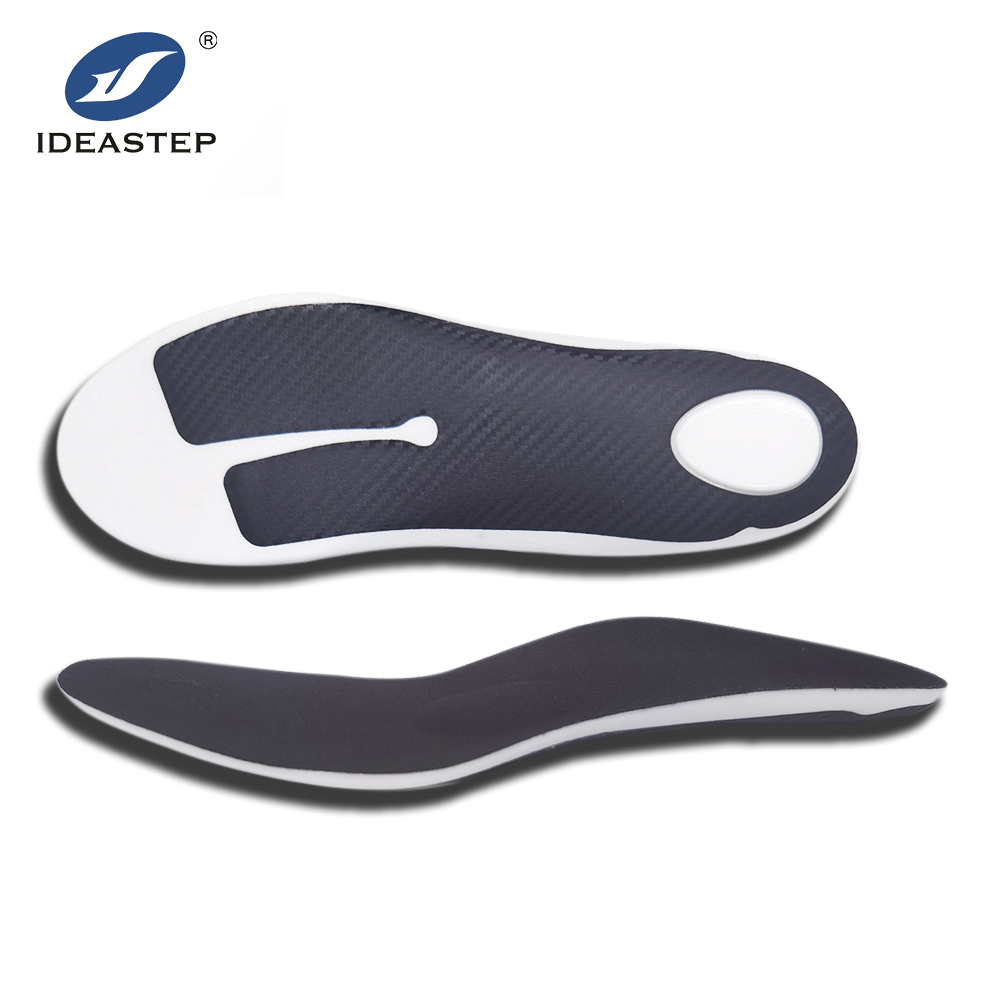
Carbon orthotic performance hinges on defined engineering parameters. Key specs are listed below:
- Shell thickness & stiffness tiers: 1.0–1.5 mm (controlled flex for sports); 2.0–2.5 mm (semi-rigid for midfoot instability and plantar fasciitis); 3.0 mm (rigid for severe supination, foot drop and fixed deformity)
- Fiber layup & orientation: Ply alignment locks midfoot torsion while preserving controlled forefoot flexion. Poor layup causes excessive stiffness or premature shell fatigue
- Shell coverage: Full-length, 3/4-length and partial midfoot profiles for low-profile footwear
- Contour & finishing: Calibrated arch geometry, stabilising heel cup, CNC bevelled edges to eliminate pressure irritation; matte or gloss surface with laser marking for branding or size coding
Composite Grades and Material Stack Configuration
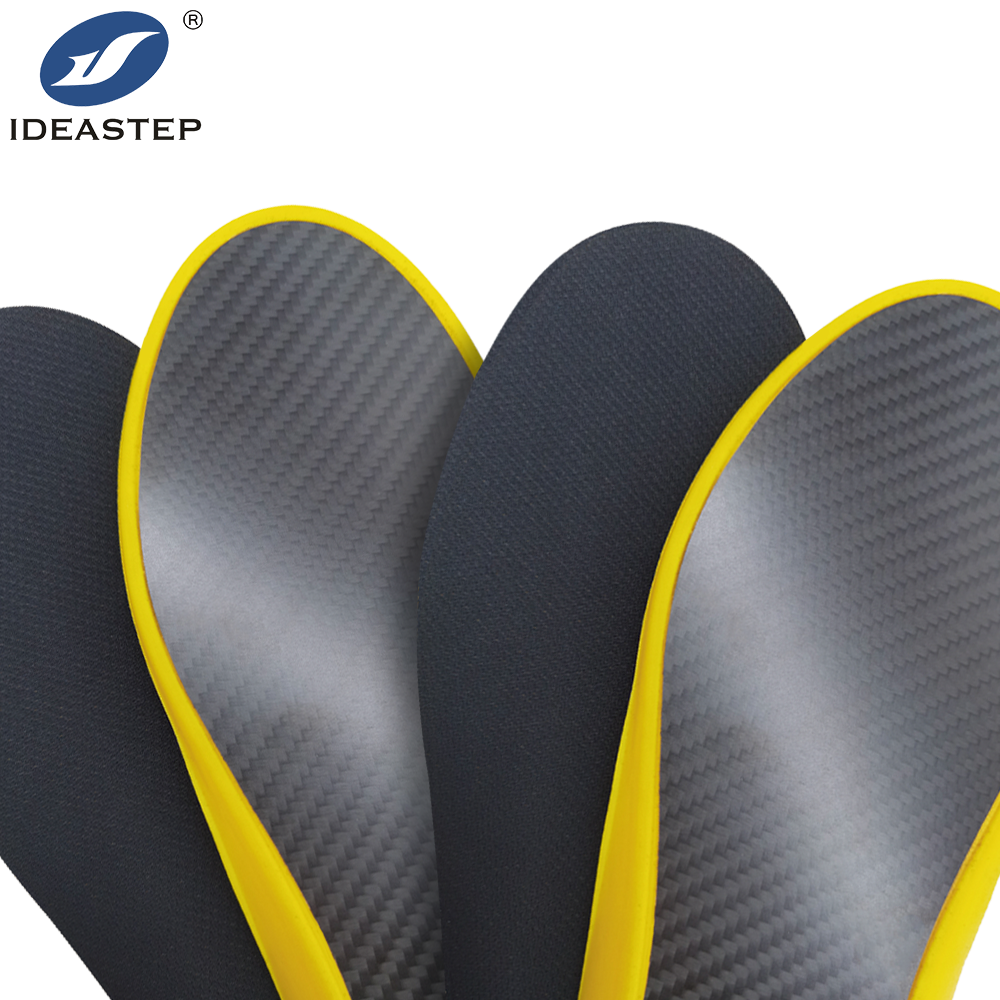
Medical orthotic production uses pre-preg carbon laminates. T300 or T700 aerospace-grade carbon fiber is the standard, balancing flexural strength and fatigue resistance without excess weight.
The carbon shell forms the structural core. Top layers are selected based on end use:
- PORON, closed-cell foam or cork for cushioning and pressure redistribution
- Anti-microbial breathable top covers for clinic-grade stock
All stack recipes are locked during sampling. Consistent layups guarantee batch-to-batch repeatability, a core requirement for ISO 13485 and MDR medical documentation.
Digital Workflow: Scan to Mold
Precision custom builds rely on digital data capture. Accepted inputs include 3D foot scans, plaster casts or ready CAD files. Our engineering team cleans mesh data, adjusts arch contours and defines flex zones.
Once the profile is approved, the digital file drives CNC mold machining. Tight dimensional tolerances reduce variability seen in manual casting. This workflow also supports fast iteration for private label brands testing new orthotic profiles.
OEM Manufacturing Sequence
Production follows a validated, repeatable process:
- Pre-preg carbon sheets are cut to match the approved layup pattern
- Layers are stacked with defined fiber orientation, then loaded into matched molds
- Heat and compression curing stabilises the composite structure
- Shells are CNC trimmed, bevelled and inspected for defects
- Cushioning layers and top covers are bonded to the carbon core
- Final inspection verifies symmetry, thickness and surface quality before packing
Sampling runs separate from mass production. Fit, stiffness and wear performance are validated and signed off before specs are locked for bulk orders. Tooling terms, sampling lead times and revision rules are shared upfront to avoid delays.
Quality Control and Regulatory Compliance
Structural testing is mandatory for every production batch. Flex cycle testing validates long-term stiffness retention, while visual checks screen for delamination, resin voids and sharp edges.
For EU-focused medical sales, we supply complete technical files, risk assessment records and batch traceability logs. These documents support MDR audits and medical device classification. Uniform sizing and predictable performance are non-negotiable for clinical buyers, as inconsistent shell stiffness alters patient outcomes.
OEM & Private Label Customisation Options
Customisation extends beyond foot geometry:
- Adjustable shell stiffness, top cover materials and edge bevel styles
- Laser engraving, printed size labels and custom packaging
- Low-minimum trial runs for clinics launching premium orthotic lines
- Custom mold development and exclusive profile grading for large brand partners
Carbon fiber insoles work as a high-margin add-on to EVA and metatarsal support orthotic ranges.
Key Criteria for B2B Sourcing
Many suppliers produce carbon plates, yet few control orthotic-specific manufacturing. Buyers should confirm these points:
- The manufacturer understands foot biomechanics, not just composite fabrication
- Stiffness test reports and clinical sample validation cycles are available
- Shell geometry is compatible with target footwear lasts
- Audit-ready compliance documentation and formal change control protocols are in place
Reliable lead times and consistent quality separate orthotic specialists from generic composite vendors.
Conclusion
Custom carbon fiber insoles merge composite engineering with orthotic biomechanics. Their core advantage is lightweight, stable torsion control that holds specification through thousands of gait cycles. When built to defined thickness, layup and flex parameters, they deliver reliable support for complex foot pathologies.
For OEM partners, this product strengthens premium catalogues and unlocks high-value clinic and sports brand channels. Send over your scan files, CAD drawings or reference samples. We can review stiffness grades, material stacks and private label packaging for your project.
FAQ: Custom Carbon Fiber Insoles and OEM Orthotic Production
Q1: What clinical cases suit carbon fiber custom orthotics?
Carbon fiber shells are ideal for plantar fasciitis, severe supination, foot drop and unstable midfoot deformities. Semi-flex profiles also support high-performance athletic use. They are selected when durable structural control takes priority over soft cushioning.
Q2: What is the typical thickness range for custom carbon fiber orthotics?
Standard production spans 1.0 mm to 3.0 mm. Thinner plates offer flex; thicker shells deliver rigid correction. All thickness options can be paired with foam or PORON top layers for pressure relief.
Q3: Can carbon fiber insoles be trimmed after manufacturing?
Preformed carbon shells cannot be freely trimmed. Geometry adjustments must be completed during the design phase. The foam top layers remain trim-to-fit for clinicians.
Q4: What inputs do you need for an OEM custom carbon fiber project?
We accept 3D foot scans, CAD files, physical samples or plaster casts. Your brief should specify target stiffness, shell coverage, top cover material and compliance requirements.
Q5: What certification documents are available for medical distribution?
We provide technical documentation, risk analysis and batch traceability records. Products meet ISO 13485 standards and satisfy MDR requirements for European medical markets.
Q6: How do carbon fiber orthotics compare to EVA orthotics?
EVA is lower cost and easier for on-site modification. Carbon fiber maintains stiffness far longer and fits slimmer footwear. Most clinics stock both: EVA for first-line care, carbon fiber for complex or long-term corrective cases.
Related Post:
Carbon Fiber Insole Plates: Thickness, Flexibility and Structural Design
Carbon Fiber Insoles for High Arches: Lightweight Design and Arch Support Performance