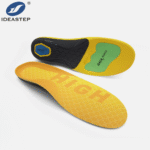
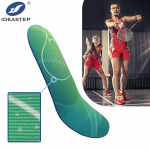
Different footwear programs require different insole designs. Running shoes may need lightweight cushioning, work footwear may require durable materials, while orthopedic footwear can call for more defined support structures.
For footwear manufacturers, wholesalers, and private-label brands, the challenge is to match the insole to the shoe’s internal dimensions, functional requirements, and production specifications. These factors need to be confirmed before sampling to avoid costly changes during bulk production.

Why Different Footwear Programs Need Different Insole Designs
Shoe shape and internal construction determine how an insole fits. The toe box, heel depth, footbed contour, and available internal space all affect the design.
Matching the Insole to the Shoe Last
The shoe last provides a reference for insole length, width, and contour. A design developed for one shoe model may not fit another, even when both use the same nominal size.
Buyers should provide a reference shoe, shoe-last dimensions, or an existing insole sample whenever possible. These details help the manufacturer assess compatibility before finalizing the design.
Accounting for Different Applications
Sports footwear may prioritize cushioning and low weight, while work footwear often places greater emphasis on durability. Orthopedic footwear may require specific support features or compatibility with an existing shoe structure.
Defining the application early helps guide material selection, thickness, and structural design.
Fit Requirements for Custom Foot Inserts
Length, Width, and Thickness
The insole outline should match the available footbed space without creating excessive pressure along the edges or unwanted movement inside the shoe. Buyers should also specify whether the insert will replace the original sockliner or sit on top of it.
Thickness affects internal shoe volume. A thicker insert may leave less room inside the footwear, while a thinner design provides more space for structural components. Both options should be assessed against the target shoe.
Full-Length and Partial-Length Designs
Full-length insoles cover most of the footbed, while three-quarter-length designs leave more room near the forefoot. The choice depends on the shoe construction and required support structure.
For multi-size programs, buyers should also confirm how the insole contour and support features change across the size range. Scaling a single outline may not preserve the intended fit in every size.
Designing Insole Structures for Different Support Requirements
Arch Profile and Stiffness
Arch support varies in height, contour, length, and stiffness. The appropriate design depends on the intended application and the available space inside the shoe.
Material hardness alone does not determine support. Thickness, geometry, reinforcement, and the combination of layers all affect the finished structure.
Heel Cups and Rearfoot Structure
A shaped heel cup can help position the heel within the insole. Its depth and width must be compatible with the shoe’s heel counter and internal dimensions.
Checking the design against the target footwear helps identify fit conflicts before production.
Cushioning and Shell Construction
EVA and other foam materials can provide cushioning, while PP or TPU components may be used where a more structured shell is required. Semi-rigid designs combine supportive components with softer layers.
The choice depends on the required stiffness, thickness, forming process, and shoe geometry. Buyers should evaluate the complete structure rather than selecting materials by name alone.
Choosing Materials for Custom Foot Inserts
EVA Foam
EVA is widely used in insole production because its density, hardness, and thickness can be selected for different designs. It can serve as a cushioning layer or form part of a multi-density construction.
For bulk orders, material specifications should be documented clearly to help maintain consistency across sizes and production batches.
PU and PORON Cushioning Materials
PU and PORON materials can be incorporated into cushioning layers, depending on the required thickness, construction, and application. Their position within the insole affects both the finished profile and manufacturing process.
PP, TPU, and Multi-Layer Structures
PP and TPU may be used in structured components, depending on the required geometry and processing method. Fabrics, perforations, and additional foam layers can also be included to meet specific product requirements.
Each additional material or process affects thickness, assembly, cost, or production time. Buyers should distinguish essential features from optional details when preparing the specification.
Preparing Specifications for Manufacturing
Before requesting a quotation, buyers should provide enough information for the manufacturer to assess the design and production requirements.
- Target footwear model and size range
- Reference shoe, shoe-last dimensions, or existing insole sample
- Material requirements, thickness, and structural details
- Color, surface finish, perforation, and branding requirements
- Expected order quantity and packaging specifications
If some details remain undecided, identify them before sample approval. This allows both parties to assess alternatives and clarify any effect on tooling, MOQ, cost, or lead time.
Sample Approval and Bulk Quality Control
Checking Samples Against the Target Shoe
Sample evaluation should cover dimensions, thickness, material appearance, structural details, and fit inside the intended footwear. For projects covering multiple sizes, checking representative sizes can reveal issues that a single sample may not show.
Setting Production Standards
Before bulk production, buyers and manufacturers should agree on key acceptance criteria, including dimensional tolerances, material specifications, color references, bonding quality, and surface finish.
The approved sample should be supported by written specifications. Production records should also identify the design version and any confirmed changes.
Maintaining Consistency Across Orders
Material substitutions and structural changes should be reviewed before implementation. Documented specifications and inspection procedures help maintain consistency across production batches and repeat orders.
Evaluating a Custom Insole Supplier
Wholesale buyers should assess a supplier’s product development experience, material knowledge, sampling process, and ability to manage bulk production.
Clear technical communication is particularly important when a project involves several sizes, complex structures, or multiple material layers. Buyers should also confirm MOQ, lead time, tooling requirements, and quality-control procedures before placing an order.
FAQs About Custom Foot Inserts
How do custom foot inserts differ from standard insoles?
Custom foot inserts are developed around defined requirements such as shoe dimensions, material combinations, support structures, or branding. Standard insoles generally follow an established design with fewer project-specific changes.
Can one insole design fit different shoe models?
Not always. Differences in shoe shape, internal volume, heel construction, and footbed contour may require adjustments to the insole outline or structure.
What affects MOQ and production lead time?
MOQ and lead time depend on materials, tooling, design complexity, manufacturing methods, and order quantity. Special components or additional sample revisions may also affect the schedule.
How can buyers maintain quality across bulk orders?
Use an approved sample, documented specifications, agreed tolerances, and consistent inspection procedures. Confirm design or material changes before applying them to production.
Developing Custom Foot Inserts for Your Footwear Program
Start with the target shoe model, size range, required support structure, material preferences, and expected order volume. These details help establish whether the proposed design is suitable for sampling and bulk production.
Ideastep works with wholesale buyers and footwear businesses on insole development and supply. If you are preparing a new footwear program, share your existing sample or product specifications through the Ideastep contact page to discuss the project’s technical requirements and production options.
Related Articles: Metatarsal Protective Orthopaedic Insoles Practical Sourcing Guide For Footwear Wholesale Buyers.