Polypropylene (PP) is the primary thermoplastic for rigid and semi-rigid orthotic shell construction. Orthotic labs, OEM manufacturers and medical distributors rely on PP support components to deliver predictable structural support, compatible with both custom in-house fabrication and high-volume production workflows. Careful selection of resin grade, forming parameters and pre-cut blank specifications directly impacts finished orthotic performance, production yield and compliance status. This guide covers practical sourcing and production considerations tailored for B2B partners building orthotic shell product lines.
1. Grade Selection: Homopolymer vs Copolymer PP for Orthotic Shells
Not all PP sheet performs equally within orthotic applications. The two core resin grades serve distinct functional needs and production environments.
Homopolymer PP delivers higher flexural stiffness and minimal creep, making it suitable for shells requiring firm, long-lasting arch control. It works well for prescription foot orthoses, heavy-duty AFO parts and any device where shape retention under repeated loading is critical. This grade has a narrow forming window, so operators need precise temperature control during vacuum thermoforming.
Copolymer PP balances rigidity with improved impact resistance and mild flex tolerance. It resists cracking at stress points and handles incidental bending, which makes it a common choice for paediatric orthoses, athletic stabilising shells and devices prone to bumps or knocks. Its wider thermoforming range reduces reject rates for fabrication teams with less experience.
Reinforced carbon-filled PP is specified for orthotics requiring maximum stability. It adds stiffness without extra thickness, though raw material costs rise, and milling or thermoforming settings must be adjusted accordingly. Buyers should match resin grade to clinical use requirements instead of basing decisions solely on unit cost.
2. Thickness and Blank Geometry for Consistent Fabrication
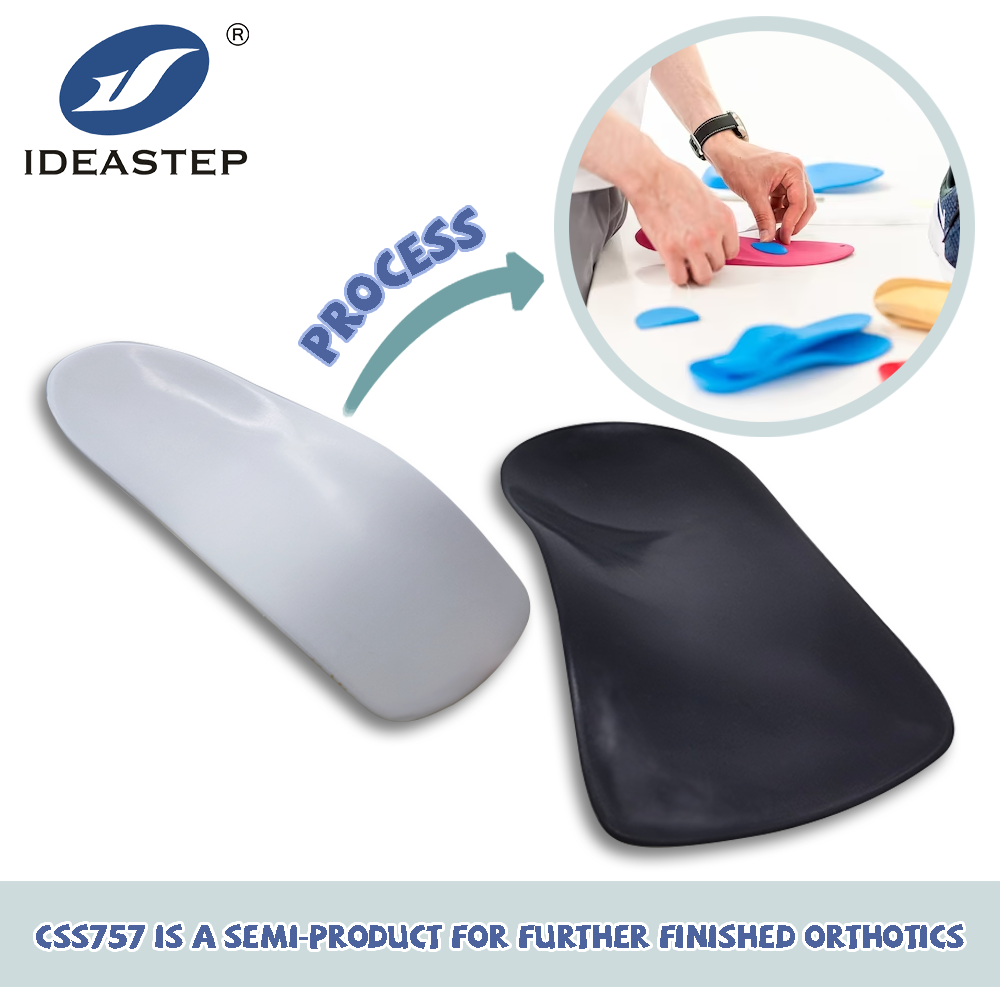
Shell thickness defines support characteristics and must align with the orthosis’s intended function. Foot orthotic shells typically use 2mm to 4mm stock; AFO and lower-extremity support structures often call for 4mm to 6mm. Standard flat sheet works well for custom vacuum forming, while pre-cut orthotic blanks cut waste and reduce prep work for OEM batch orders.
Blank geometry also matters. Pre-contoured blanks with pre-shaped heel cup outlines reduce post-forming trimming and deliver uniform edge profiles across SKUs. Plain rectangular sheets remain the go-to for patient-specific custom work, where technicians build each shell from flat substrate.
Always verify thickness tolerance across incoming batches. Minor gauge variation alters stiffness and creates inconsistent support when scaling private label orthotic programmes.
3. Compatible Fabrication Workflows for OEM and Lab Production
PP support components integrate smoothly into three widely used orthotic production routes, each with unique benefits for OEM partners.
Vacuum thermoforming remains standard for custom orthotic shells. Heated PP sheet is draped over positive plaster or CAD-milled models, then vacuum-formed to match the contour. This process fits low to medium production runs, clinical lab orders and custom prescription orthoses.
CNC milling from solid PP billets or pre-cut blanks delivers tight repeatability for fixed OEM SKUs. It produces clean, uniform shell geometry and connects directly with 3D scan data. This method is ideal for prefabricated orthotic lines and private label programmes built around fixed CAD designs.
Thermoplastic welding and secondary finishing allow teams to join PP segments, add strap mounting points or mould reinforcement ribs. Controlled heat input creates reliable welds, a key advantage when building modular orthosis assemblies.
Most OEM programmes combine these processes: thermoforming handles custom clinic orders, while CNC milling supports stock wholesale shell components.
4. Material Performance Benchmarks for Long-Term Orthotic Reliability
PP shell failures usually stem from creep, fatigue cracking or poor forming practice rather than inherent material weakness. When reviewing supplier specs, focus on fatigue resistance, thermal memory and moisture stability.
High-quality orthotic PP holds its formed contour after thousands of load cycles, with low creep under sustained body weight. It absorbs almost no moisture, so stiffness does not shift from sweat or repeated sanitisation. Medical-grade PP also withstands common clinic disinfectants without surface degradation from regular cleaning.
Ask suppliers for formal test data covering flex modulus, fatigue cycling and shrinkage rate before finalising specs. Shrinkage inconsistency is an often overlooked risk; even small dimensional changes disrupt fit once the shell is bonded to EVA or foam top layers.
5. OEM Customisation Options for Orthotic Shell Programmes
PP support components support multiple layers of customisation for private label orthotic partners.
Dimensional customisation includes custom blank sizes, pre-notched edges and pre-formed heel or posting geometry. This cuts downstream labour for labs and contract manufacturers.
Surface customisation covers pigmented colour options, matte or textured finishes, and laser marking for brand logos, size codes or batch traceability IDs. Laser marking is preferred for medical lines, as it does not compromise biocompatibility.
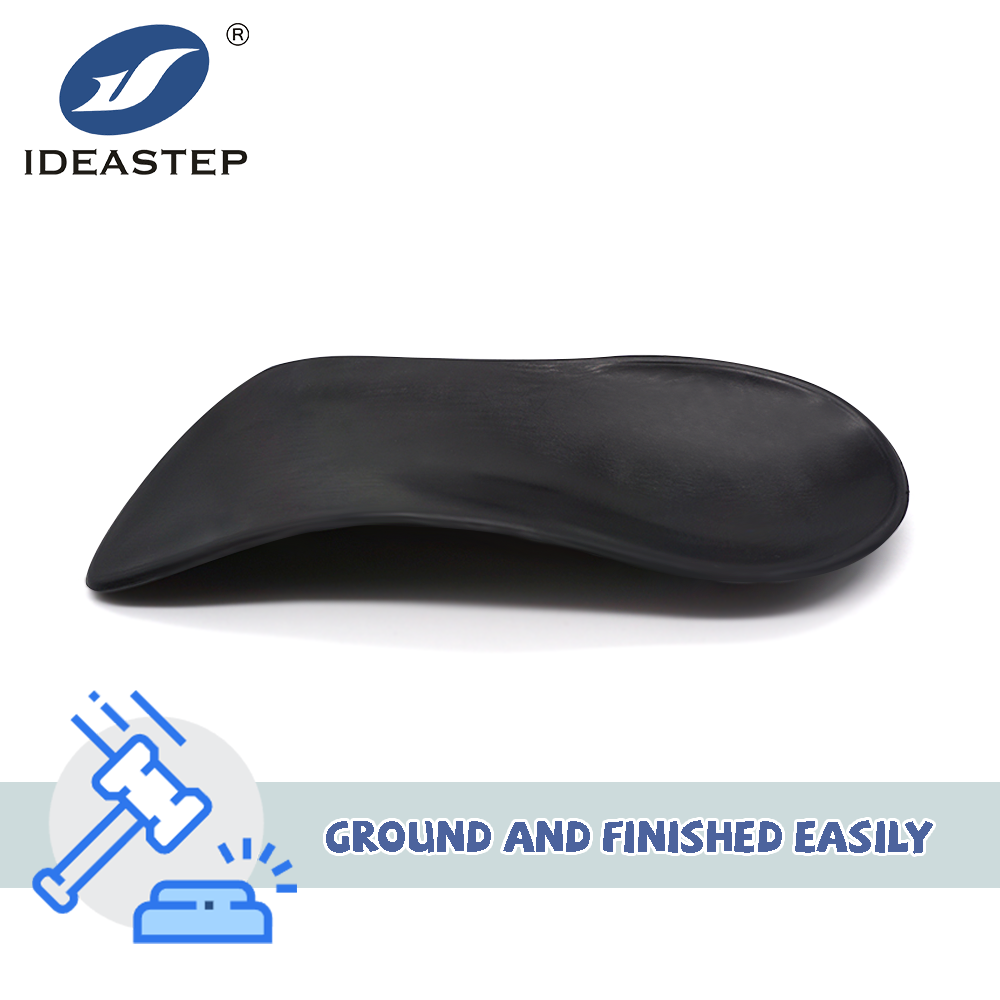
Functional customisation includes co-moulded attachment bosses, integrated hinge mounting points and pre-radiused edges that remove the need for extra sanding. These upgrades require tooling investment but lower per-unit processing cost at scale.
Reputable suppliers separate standard blank stock from custom-modified components, keeping MOQs flexible for both small clinic networks and large wholesale brands.
6. Regulatory, Documentation and Quality Controls for Medical Distribution
PP orthotic shells fall under medical device regulations once assembled into prescription orthoses. The raw material blank itself is not classified as a finished device, but full traceability is mandatory for downstream medical distributors.
Source biocompatibility-certified PP grades for any end product marketed as therapeutic orthotics. Suppliers should supply batch certificates, safety data sheets and resin lot traceability records.
Maintain separate specification documentation for two product streams: blanks sold as fabrication stock for orthotic workshops, and fully assembled orthotic devices. The same PP component carries lighter compliance requirements when sold as raw fabrication material, compared to when it is assembled and labelled as corrective orthotic equipment.
Quick Sourcing Checklist for PP Orthotic Support Components
- PP grade: homopolymer, copolymer or carbon-filled reinforced formulation
- Sheet or blank thickness, gauge tolerance and dimensional stability
- Target fabrication process: vacuum thermoforming, CNC milling or welding
- Fatigue creep, shrinkage rate and disinfectant resistance test data
- Customisation scope: pre-cut blanks, laser marking, pre-formed geometry
- Certification, batch traceability and biocompatibility documentation
PP orthotic shells form the structural foundation of most prescription foot orthoses and lower-limb orthoses. Cost-only sourcing that ignores resin grade and forming consistency leads to high field failure rates and returns for OEM partners. Stable production programmes lock in clear material specs, validate forming behaviour and preserve traceability across all batches.
Final Takeaway
PP support components give OEMs and orthotic fabricators a versatile, scalable substrate for rigid orthotic shell manufacturing. Selecting the right grade, thickness and blank format balances workshop ease of use, production yield and clinical durability. Reliable manufacturers can supply standard PP sheets, pre-cut blanks and custom CNC-milled shells to support custom lab fabrication and high-volume private label orthotic runs alike.
If you source PP orthotic shell components for your orthotic manufacturing line or wholesale catalogue and need custom blank geometry, certified medical-grade resin or sample validation, reach out to our team to review your specifications.
Explore More: How PP Shell, EVA and Gel Shape Prefabricated Orthotic Insole Design.