Ankle injuries rank among the most common acute injuries across competitive athletics and post-traumatic rehabilitation. For sports brands and medical distributors, orthopedic ankle braces represent a high-margin category that connects athletic protective gear and clinical rehabilitation supplies. Sourcing challenges frequently arise because the two buyer segments hold distinct performance priorities: sports programmes require dynamic, unrestricted support, while clinical partners demand consistent, verifiable immobilisation. This article covers targeted sourcing frameworks, product segmentation, positioning and partnership considerations for B2B wholesale buyers.
1. Segment Product Lines by Support Grade and Application
Generic one-tier brace catalogues rarely serve mixed wholesale customer bases effectively. Structured SKU segmentation lets your downstream partners match products to their own channels.
Compression sleeves: Light support for mild instability and oedema management. Well suited for sports retailers and gym distributors, prioritising breathability and low movement restriction.
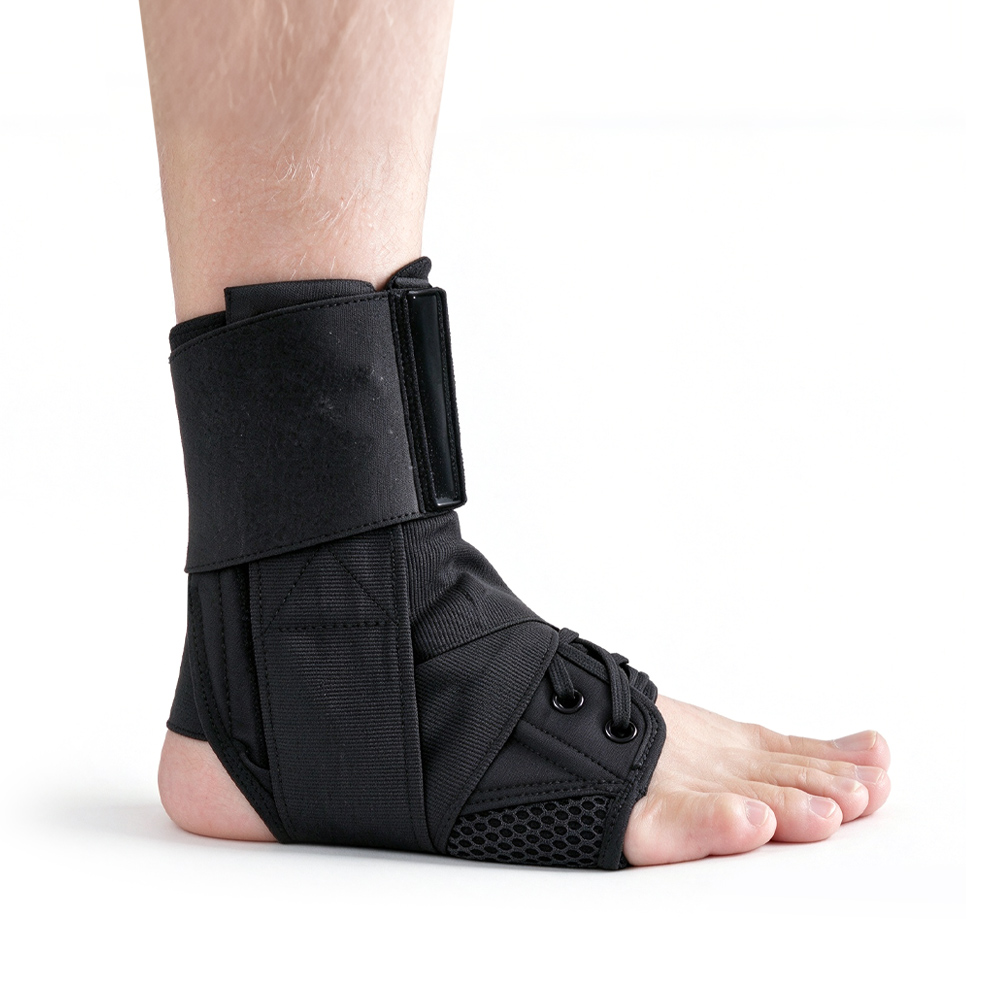
Semi-rigid hinged braces: The highest-volume tier for athletic programmes. Hinged frames limit excessive inversion and eversion while preserving natural ankle flexion and extension. Suitable for basketball, soccer, volleyball and return-to-sport protocols following grade 1 and 2 sprains.
Rigid stabilising braces: Clinical-grade units for severe sprains, chronic instability and post-operative care. Hard shells and reinforced strapping with optional heel locks deliver controlled immobilisation. Primary buyers include medical distributors, physiotherapy clinics and orthopaedic supply providers.
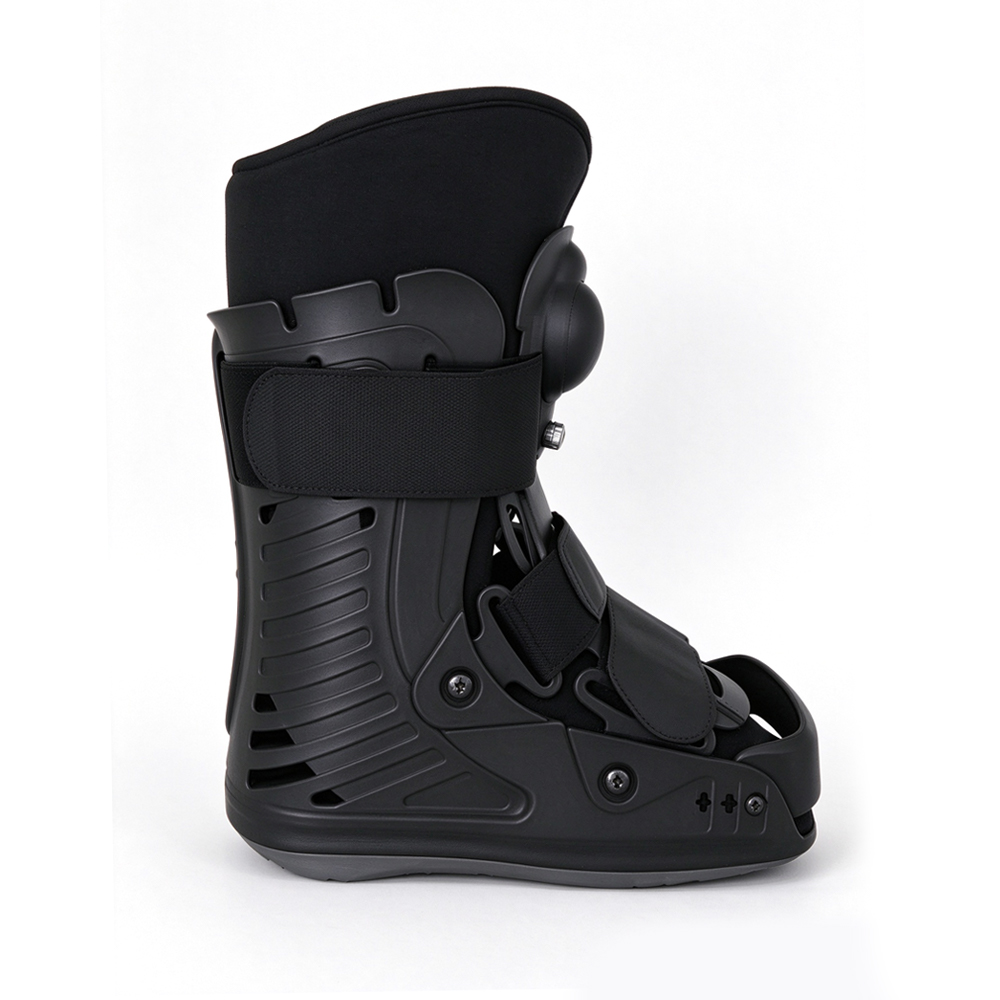
Walking orthosis ankle braces: Reserved for fracture management and partial or non-weight-bearing recovery. This category carries stricter regulatory controls and is distributed almost exclusively through clinical channels.
Clear tiering reduces misapplication and simplifies sales enablement, allowing distributors to quickly match units to required clinical or athletic use cases.
2. Material Selection Balances Longevity, Regulatory Compliance and Wear Performance
Material specification is a frequent failure point for wholesale brace lines. Sports-focused buyers prioritise low profile, moisture transfer and customisable aesthetics; medical buyers require structural stability, cleanability and consistent performance after repeated sanitisation.
Neoprene remains the baseline material for compression sleeves and wrap-style braces, delivering predictable compression and thermal retention. Blended technical knit fabrics are growing in demand for athletic ranges, offering superior wicking, reduced weight and colour customisation for brand co-branding.
Hinge hardware is typically PP or lightweight aluminium. PP hinges resist corrosion and fit high-volume athletic lines, while aluminium provides higher load capacity for heavy-duty clinical braces. Hook-and-loop fasteners are a critical specification: medical-grade fasteners must retain grip after repeated cleaning cycles, a common failure point on low-cost imports.
When drafting specs, separate functional requirements from cosmetic requirements. Sports brands often prioritise custom colours and branding; medical distributors require traceable material safety documentation and hypoallergenic liners.
3. Customisation Options for Private Label, Co-Branding and Clinic SKUs
Wholesale partners seldom require identical off-the-shelf units. Customisation falls into three defined tiers with separate MOQ and lead time expectations.
Aesthetic customisation includes custom colourways, printed logos, woven labels and packaging. This is the lowest-barrier option for sports brands, with flexible minimums for existing base models.
Functional customisation covers revised strap geometry, adjustable hinge stop limits, liner padding modifications and size scaling for youth or larger-fit ranges. This often requires tooling revisions and higher minimums, but creates differentiated SKUs harder for competitors to replicate.
Clinical documentation customisation covers branded patient guides, assessment inserts and channel-specific packaging. This is essential for distributors supplying clinics and rehab networks, and must align with regional labelling standards.
Reliable suppliers separate these options clearly, so buyers avoid unnecessary tooling costs when only surface branding is required.
4. Regulatory Classification Distinguishes Athletic SKUs From Medical Devices
Regulatory classification is the highest-risk area for brands expanding into ankle bracing. The same physical brace is subject to different controls based on marketing claims.
Products marketed solely for athletic support and injury prevention qualify as general sporting goods with lighter testing requirements. Once copy references therapeutic stabilisation, injury treatment, post-surgical management or orthopaedic correction, the product becomes a medical device and triggers mandatory certification.
CE marking, FDA registration, ISO 13485 and biocompatibility testing obligations vary by territory. Distributors serving both retail and clinical markets commonly maintain two independent catalogues: one for athletic support products with comfort-focused claims, and one medical catalogue with full technical documentation. Separating marketing copy, packaging and datasheets prevents compliance breaches.
5. QA and Validation Protocols for Bulk Wholesale Orders
Unlike static insoles, ankle braces endure cyclic loading, torsional stress, sweat exposure and repeated fastening. Quality checks must extend beyond visual inspection.
Mandatory validation tests include hinge cycle fatigue testing, fastener retention cycling, compression consistency across sizes, and liner resistance to sweat and disinfectant degradation. For medical-grade lines, suppliers must provide batch traceability and inspection certificates with each shipment.
Pre-production field validation is recommended before large-scale runs. Submit samples to athletic testing groups for sports models and physiotherapy practitioners for clinical stabilisers. Feedback on strap slippage, compatibility with high-top footwear and extended-wear comfort identifies gaps that lab testing alone may miss.
6. Commercial Terms, Inventory Planning and Fulfilment for Wholesale Partners
Sports brands and medical distributors operate on divergent inventory cycles. Athletic programmes tend to place seasonal batches aligned with competition calendars, with flexibility for colour refreshes. Medical distributors hold slower-turning clinical inventory and prioritise fixed, stable specifications over frequent design changes.
Negotiate these terms upfront: per-SKU MOQ, mixed-container consolidation, lead times for customised runs, spare replacement components (hinges, straps and hook-and-loop sets), and defective stock return protocols for clinical lines. Many medical distributors require replacement parts to support ongoing clinic customer service, a feature often overlooked by commodity suppliers.
Quick Sourcing Checklist for Orthopedic Ankle Brace Wholesale
- Support tier mapping: compression sleeve, semi-rigid hinged brace, rigid stabiliser, walking orthosis
- Material specs: technical knit, neoprene, PP or aluminium hinge, medical-grade fasteners
- Customisation scope: logo printing, functional modification, medical packaging and inserts
- Regulatory status: general sporting goods vs medical device classification
- Validation tests: hinge cycling, strap durability, batch traceability and certification
- Commercial terms: MOQ, mixed SKU shipments, spare parts and lead times
Orthopedic ankle braces are not simple commodity add-ons. Proper segmentation allows sports brands to expand protective gear portfolios and medical distributors to stock reliable rehab supplies. Successful wholesale programmes keep retail and clinical messaging separate, lock in clear performance specs, and structure customisation to match each partner’s go-to-market strategy.
Final Takeaway
Wholesale orthopedic ankle braces create new revenue streams for sports brands and medical distributors, but sustainable sourcing depends on careful product segmentation, material specification and rigorous regulatory governance. A qualified manufacturer can deliver ready-to-ship stock units, private label athletic braces and fully documented medical-grade orthoses under one programme.
If you are developing an ankle brace wholesale portfolio for sports retail or clinical distribution and require custom specifications, certification support or private label sampling, contact our team to review your product roadmap.
Browse Related Products: https://www.aideastep.com/product/ideastep-gs6170-ankle-support-brace-in-three-sizes-for-orthopedic-product-wholesalers/.