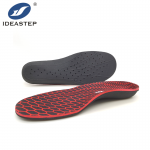
Footwear markets remain saturated with lookalike products, forcing many brands into price competition that shrinks profit margins. Launching entirely new shoe styles requires heavy investment in moulds and lasts, extended development cycles and higher inventory exposure. Customized shoe inserts act as modular functional components, letting brands upgrade and diversify their existing product lineup without overhauling core footwear tooling.

Key Challenges Facing Footwear Brand Product Portfolios
Retail buyers, wholesale distributors and institutional procurement teams now prioritise functional value alongside shoe aesthetics. Generic stock insoles offer minimal differentiation and leave little room for premium pricing. Expanding the catalog through brand-new shoe designs carries substantial risk. Brands need practical ways to create tiered offerings that appeal to varied B2B buyers while controlling upfront capital outlay.
How Customized Shoe Inserts Add Value To Your Product Line
The core advantage lies in modular product design. Brands retain existing shoe shells and lasts, while swapping in customized shoe inserts to create multiple SKUs from a single base shoe. Product tiers can be structured around comfort-focused inserts, mid-grade biomechanical support and heavy-duty reinforced inserts for industrial and outdoor footwear.
There are two common go-to-market formats. Inserts can be pre-installed inside footwear before shipment, or packaged separately as bundled add-ons. Either setup creates higher perceived value and supports higher average order values for wholesale orders.
Selection Criteria and Customization Options For Customized Shoe Inserts
Start technical evaluation with biomechanical design parameters. Suppliers can adjust arch height, support firmness, deep heel cup shape and metatarsal relief zones to match your product requirements. Substrate options include EVA, PU foam and carbon fiber composite sheets, each suited for different load conditions across work, outdoor and casual footwear.
OEM customisation covers precision contour trimming, top fabric selection, embossed brand logos, colour matching and thickness tuning. Fit validation against your shoe last is essential. This step confirms the insert sits properly inside the shoe cavity without reducing internal toe space or causing assembly issues.
Supply Chain Considerations For Scaling Your Product Portfolio
Sample validation must combine biomechanical performance testing and shoe last fit checks before full production release. Batch consistency is critical. Variations in foam density, support stiffness or insert geometry across runs will undermine the uniform quality your wholesale partners expect.
Work with manufacturers that offer flexible MOQ structures. Small trial batches let you validate market feedback before scaling. Volume-based tiered pricing kicks in once orders grow to bulk quantities. Production timelines can be aligned with new product launches and seasonal inventory preparation.
Cross-Border Compliance Requirements For EU and North American Markets
Material compliance forms the foundation of cross-border shipments. All foam and fabric materials must satisfy REACH and RoHS standards. Batch-specific third-party test reports should be available for retail audits and customs clearance.
Brand teams must clearly separate comfort accessory descriptions from regulated medical orthotic claims. Overstated therapeutic language on packaging or product listings invites regulatory scrutiny. Additional durability and compression ageing tests are often required to meet the quality standards of large retail chains.
Commercial Gains When Upgrading Your Portfolio With Customized Shoe Inserts
Customized shoe inserts help brands escape low-margin commodity competition by creating unique functional selling points. Tiered insert options unlock premium SKUs and lift gross margins across your catalog. The product upgrades also open access to high-value B2B channels including workwear bulk procurement and foot care clinic supply contracts.
Inventory risk stays contained. Your base shoe stock remains unchanged. Product differentiation lives within the insert component. If market preferences shift, you can adjust insert specifications without liquidating finished footwear inventory.
Common Product Development Pitfalls And Preventative Measures
A frequent mistake is judging inserts based only on surface feel of samples, skipping long-term compression and durability testing. This oversight leads to gradual support degradation once goods reach distribution.
Another common issue is skipping shoe last fit validation, resulting in inserts that crowd the shoe cavity and create assembly problems. Clear written specifications for every custom feature are needed to avoid misalignment with OEM suppliers. Marketing content also needs pre-vetted compliant wording to avoid unapproved medical claims.
FAQ
Do I need new shoe moulds to use customized shoe inserts?
In most cases, full mould redesign is unnecessary. Customized shoe inserts are contoured for your existing shoe last. Minor adjustments to internal volume may be required for thicker high-support inserts, but major tooling changes are rarely needed.
Can customized shoe inserts be built in multiple support grades for tiered product lines?
Yes. Manufacturers can produce inserts with different arch stiffness and cushioning levels for the same shoe shell, allowing you to build layered product portfolios from one base footwear design.
What MOQ applies for OEM customized shoe inserts and are small trial orders available?
MOQ differs by factory. Reliable OEM suppliers accept limited trial batches for product validation, with discounted unit pricing for larger bulk commitments.
Can customized shoe inserts include embossed logos and custom surface fabrics?
OEM services commonly offer logo embossing, custom top fabric selection and tailored colour options to align inserts with your brand identity.
What compliance documents are required to export customized shoe inserts to EU and North America?
REACH and RoHS batch test reports are mandatory. Compression ageing and mechanical durability test records are also recommended. Avoid medical orthotic claims unless products hold the corresponding medical device certifications.
Conclusion
Customized shoe inserts provide a cost-effective path to upgrade footwear brand portfolios. This modular approach lets brands build tiered functional SKUs, capture premium market segments and expand B2B channels, without heavy investment in new shoe moulds. Thorough fit testing, material validation and compliance planning turn insert customisation into a sustainable competitive advantage for your footwear line.
Contact our team to request customized shoe insert samples and complete fit testing with your shoe lasts to map out your portfolio upgrade plan.
Explore More: Good Shoe Insoles For Work A Practical Sourcing Guide For B2B Buyers.