How Poor Insole Performance Fuels Footwear OEM Customer Complaints
Footwear OEM teams often sink countless hours into refining uppers, outsoles and styling details, yet overlook a major trigger for customer complaints: generic off-the-shelf insoles. A shoe can look polished and well-built, but standard inserts with weak arch support, mismatched contours or foam that compresses quickly will inevitably spark complaints from end users and retail buyers.
These complaints carry real, cascading costs. Return logistics pile up, retail partners leave negative feedback, and long-standing wholesale relationships slowly erode. Many OEM teams still see insoles as simple low-cost filler components. In practice, the insole shapes the entire wear experience and often decides whether customers keep the shoe or send it back.

Where Custom Insole Orthotics Fix Common Footwear Fit & Comfort Issues
Mass-produced flat inserts cannot compare with custom insole orthotics, which are engineered around your shoe lasts and built to resolve recurring fit and pain problems. They directly tackle common issues that drive returns: arch fatigue, sharp heel pressure, metatarsal pinching, inserts sliding inside the shoe, and foam breaking down after limited wear time.
OEM projects have two practical paths to choose from. Semi-custom orthotics feature adjustable profiles and faster sampling timelines, ideal for brands testing new product lines. Fully custom options are built using your footwear’s exact geometry. Either route balances development lead times, budget constraints and performance targets for your collection.
Key Design Parameters Of Custom Insole Orthotics To Cut Complaint Rates
A handful of core design variables dictate how well orthotic insoles reduce customer complaints. Arch height, heel cup containment and metatarsal relief zones get tuned to match your target user and the internal space of each shoe model. Material layering matters just as much. Multi-layer substrates using EVA, PU or cork balance rigidity, cushioning and long-term compression resistance.
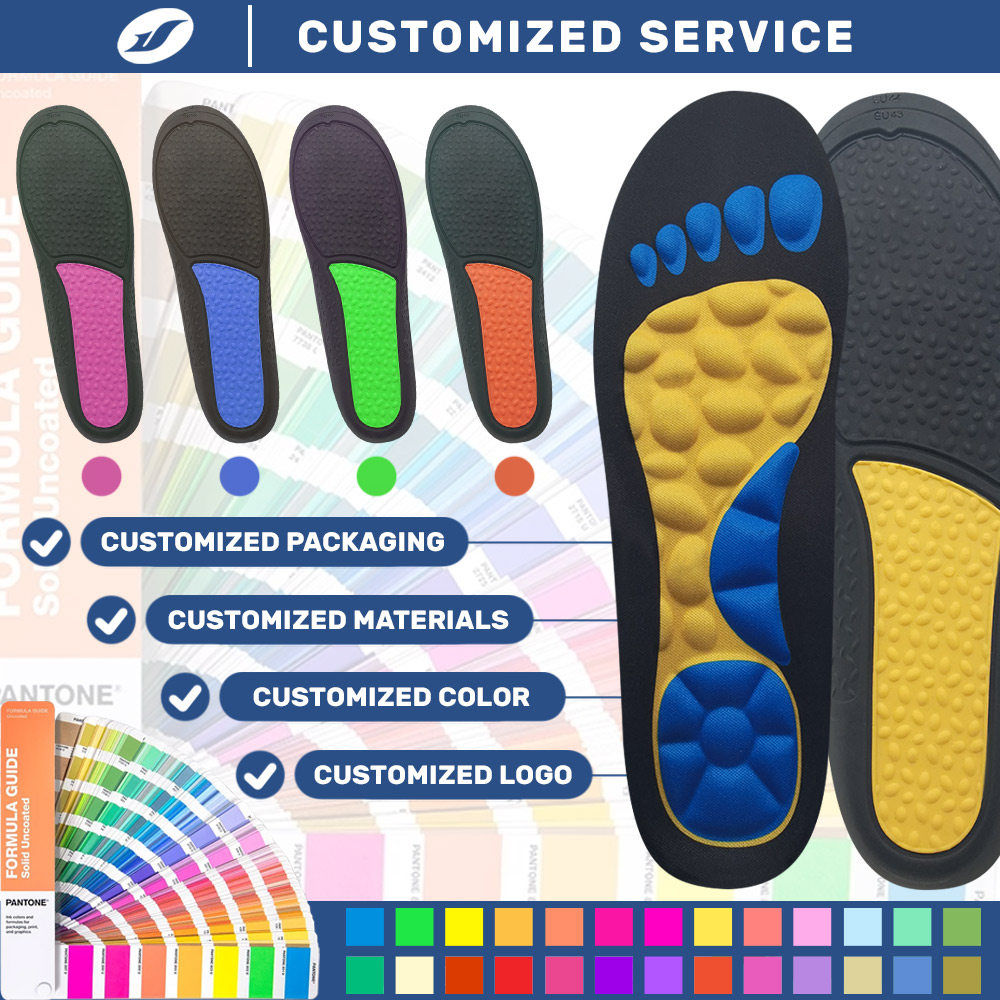
Small details frequently turn into major pain points for buyers. Slip-resistant top fabrics, clean edge trimming and breathable surface treatments prevent rubbing, peeling and discomfort. Brand embossing can also be added without compromising fit or durability.
Validation & Pre-Production Testing To Prevent Post-Launch Complaints
Thorough pre-production validation catches avoidable flaws before bulk orders ship. Start with 3D modeling and prototype sampling, then run fit checks inside your physical shoe lasts. Real-world performance testing covers long-term compression resistance, repeated flex cycles and abrasion checks for the top fabric.
Compliance is non-negotiable when selling into European and North American markets. Raw materials must meet REACH, RoHS and direct skin-contact safety standards. Verifying these requirements early shields your brand from costly product holds or safety-related complaints later.
OEM Sourcing Best Practices For Custom Insole Orthotics
When sourcing custom insole orthotics, don’t only assess a manufacturer’s foam cutting capabilities. Your production partner should understand footwear biomechanics and shoe last geometry, not just basic material processing. Secure written sign-off for every prototype, documenting material formulas, dimensions and tolerance limits.
Build batch quality controls into your purchase terms. Material test certificates and random inline sampling maintain consistency across large production runs. Stable batch performance stops waves of identical fit complaints that can damage trust with wholesale retailers.
Common OEM Pitfalls Even With Custom Orthotic Insoles
Moving to custom orthotics will not erase complaints automatically. One frequent problem is inconsistency between prototype and mass production. Worn molds or shifts in raw material batches can alter contours and create fit issues at scale.
Over-engineering presents another risk. An orthotic insole that is overly thick or rigid will not fit within your shoe cavity and may introduce new discomfort complaints. Clear technical specifications are critical. Vague requirements create room for misinterpretation, resulting in finished parts that fail to meet your brand’s expectations.
FAQ
How much can custom insole orthotics lower footwear product complaint rates for OEM brands?
Reduction varies by product category and target audience. Brands that roll out properly validated custom orthotics often see meaningful drops in comfort-related returns, especially for work footwear, hiking collections and therapeutic shoe lines.
What is the difference between semi-custom and fully custom insole orthotics for footwear OEM?
Semi-custom orthotics use pre-calibrated base structures with adjustable contours, faster sampling and lower MOQ. Fully custom orthotics are built exclusively around your shoe last data to deliver precise, collection-specific biomechanical support.
What pre-production tests should we require before bulk orders of custom insole orthotics?
Focus on compression fatigue testing, repeated flex testing, fabric abrasion checks, shoe last fit trials and material compliance certification. These tests uncover fit and durability weaknesses before full production begins.
Can custom insole orthotics be adapted to multiple shoe lasts within one footwear collection?
Yes. Many OEM brands use a base orthotic platform that can be trimmed and fine-tuned for several shoe silhouettes. This reduces repeated mold investment and streamlines collection launches.
Conclusion
For footwear OEM brands, custom insole orthotics are a practical investment to cut fit and comfort complaints, protect brand reputation and retain trust with wholesale retail partners. Thoughtful design, pre-production validation and consistent batch quality all work together to deliver reliable orthotic performance across your shoe lineup.
We are a seasoned custom orthotic insole supplier, supporting footwear OEMs through the full product development journey. From initial 3D design and prototype sampling all the way to large batch manufacturing and compliance paperwork, our team handles every stage. If you’d like to explore how tailored orthotic insoles can reduce your product complaint rates, get in touch to talk through your footwear project details.
Related Articles:
Memory Foam Orthotic Insoles: Combining Arch Support and Pressure Relief
Moisture-Wicking Sports Insoles for Running and Athletic Footwear