Custom arch support inserts allow footwear brands to develop insole products for different arch profiles, shoe constructions, and market requirements. Key design factors include arch geometry, heel cup structure, material selection, and available space inside the shoe.
For footwear brands, orthotic distributors, and private-label businesses, product development must also account for manufacturing costs, dimensional accuracy, and consistent bulk production. A clear specification helps manufacturers move from sampling to mass production with fewer revisions.
1. Designing Custom Inserts for Different Arch Profiles
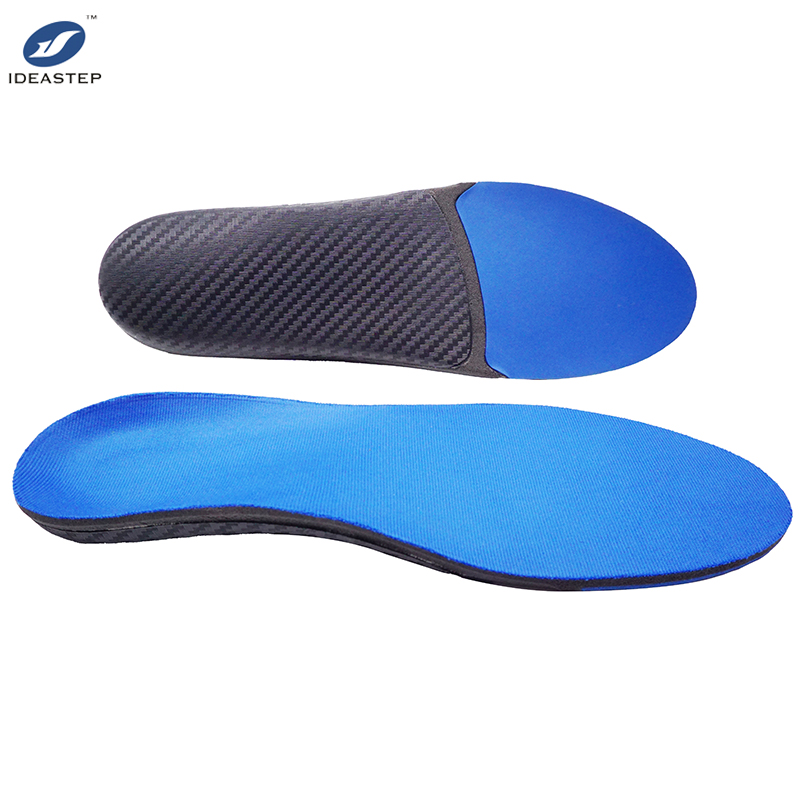
Low, medium, and high arch profiles provide a starting point for developing different insole configurations. However, arch height alone does not determine the final design. Arch length, curvature, heel cup geometry, and footwear dimensions must also be considered.
Arch Contour and Support Structure
The height, width, and length of the arch region influence the overall insole shape. Rigid-shell, semi-rigid, and flexible designs require different approaches to achieve the intended structure.
For multi-model product lines, each arch profile should have clearly documented dimensions. CAD drawings and approved reference samples help manufacturers maintain consistency across sizes and repeat orders.
Heel Cup and Overall Fit
Heel cup depth, forefoot thickness, and edge transitions affect how an insert fits inside the shoe. A design suitable for athletic footwear may require adjustments for dress shoes or other low-volume constructions.
Brands should evaluate the arch profile and heel cup together, using the intended footwear or relevant shoe last data where available. This helps identify dimensional conflicts before production approval.
2. Material Selection for Custom Arch Support Inserts
Material choice affects structural support, flexibility, cushioning, product weight, and manufacturing cost. The specification should identify material type, hardness, density, thickness, and component placement.
EVA, PU, and PORON
EVA is widely used in foam-based insoles and multi-density constructions. Different density and hardness options allow manufacturers to develop products with varied structural characteristics.
PU and PORON may be used in cushioning layers or selected areas of a multi-layer design. Their suitability depends on material grade, thickness, compression characteristics, and compatibility with other components.
PP and TPU Structural Components
PP and TPU can be used in shell-based designs where a defined structural component is required. Selection depends on the desired stiffness, shell geometry, forming method, and overall construction.
For layered products, bonding quality, shell alignment, and component thickness should be reviewed during sampling. The final material configuration should be documented before mass production.
Multi-Layer Construction
Combining structural shells, foam layers, and top covers allows manufacturers to meet different product specifications. However, material combinations must be assessed as a complete assembly rather than as separate components.
A detailed material specification helps maintain consistency and reduces the risk of unapproved substitutions during repeat orders.
3. Adapting Inserts to Different Footwear Categories
Footwear construction directly affects insole design. Shoe volume, heel depth, toe shape, and the original sockliner can all influence the available space and required dimensions.
Sports, Casual, and Work Footwear
These categories may require different combinations of flexibility, thickness, and structural support. The design should reflect the target shoe construction and intended product application.
Brands developing inserts for several shoe models should confirm compatibility through prototype evaluation rather than assume that one design will fit every model.
Dress Shoes and Low-Volume Footwear
Limited internal space can restrict arch height, heel cup depth, and overall thickness. Material selection and edge profiles may need adjustment to accommodate these constraints.
Checking the insert against the intended shoe model helps confirm fit before the design is approved for production.
Size Grading and SKU Management
Scaling an insole across sizes requires attention to arch geometry, heel cup dimensions, and overall proportions. A standardized size chart and documented grading method help control variation.
For product ranges with multiple arch profiles, colors, or materials, each configuration should have a distinct model code and specification.
4. OEM/ODM Development and Sample Approval
A structured development process helps align technical requirements, production feasibility, and commercial expectations.
Preparing the Product Specification
Before requesting a quotation, buyers should provide the available project details:
– Target footwear category and intended application
– Required arch profiles and structural features
– Material types, hardness, density, and thickness
– Dimensions and size range
– Colors, top covers, and finishing requirements
– Estimated order quantity and target cost
– Branding and packaging requirements
Reference samples, CAD files, or shoe last data can help clarify design requirements where necessary.
Prototyping and Final Approval
The manufacturer reviews the specification, develops samples, and adjusts the design according to the agreed requirements. Evaluation should cover dimensions, material combinations, construction quality, and compatibility with the target footwear.
Before mass production, both parties should approve the final sample and confirm the relevant drawings, materials, tolerances, and packaging details. Any subsequent changes should be documented to prevent discrepancies between approved samples and bulk orders.
5. Quality Control in Bulk Manufacturing
Consistent production depends on clear specifications and repeatable inspection procedures. Quality checks should cover incoming materials, finished dimensions, structural integrity, and product identification.
Material and Dimensional Inspection
Depending on the product, inspection may include material hardness, density, thickness, arch height, overall dimensions, and heel cup geometry. Acceptance limits should be agreed upon before production begins.
Construction and Batch Consistency
Shell forming, bonding, trimming, and component alignment require particular attention in structural and multi-layer designs. Inspection records help identify production variation and support corrective action when necessary.
For orders covering multiple sizes and models, approved specifications and batch records also simplify quality reviews and repeat-order management.
6. Bulk Purchasing and Private-Label Supply
Commercial planning should begin alongside product development. MOQ, unit cost, lead time, and customization options depend on the design, material requirements, tooling, order quantity, and packaging.
MOQ, Cost, and Lead Time
New tooling, custom shells, specialized materials, and branded packaging may affect development costs and minimum order quantities. Sampling and mass-production schedules should be confirmed separately where applicable.
A clear quotation should identify the product configuration, order quantity, included services, and any additional charges.
OEM, ODM, and Private-Label Options
OEM projects generally follow buyer-provided specifications, while ODM projects may involve more extensive design support. Available services depend on the manufacturer’s capabilities and the agreed project scope.
Customization may include material combinations, arch profiles, logos, labels, and packaging. Artwork, product specifications, and approval responsibilities should be confirmed before production.
Managing Repeat Orders
Documented specifications, approved samples, and standardized SKU codes help maintain consistency across repeat orders. Buyers should also communicate demand forecasts and size breakdowns to support production and inventory planning.
7. Choosing a Custom Arch Support Insert Manufacturer
Supplier evaluation should focus on capabilities relevant to the project, including:
– Experience with arch support structures and orthotic materials
– Custom design, prototyping, and sample revision capabilities
– Production capacity and dimensional quality control
– OEM/ODM and private-label support
– Clear technical communication and repeat-order management
Reviewing comparable products, samples, and inspection procedures provides a more practical basis for evaluating a manufacturer than relying on general capability claims.
8. Frequently Asked Questions
Can Inserts Be Customized for Different Arch Profiles?
Yes. Arch contours and structural configurations can be developed according to the product specification and the manufacturer’s capabilities.
What Information Is Needed for a Quotation?
Key details include the intended footwear, design or reference sample, materials, dimensions, size range, estimated quantity, and packaging requirements.
Can Inserts Be Produced with Private-Label Packaging?
Private-label options may include logos, labels, and branded packaging. Available services, MOQ, and artwork requirements should be confirmed with the manufacturer.
How Can Bulk Production Match the Approved Sample?
Documented specifications, defined dimensional tolerances, material controls, and final sample approval help reduce differences between development samples and production batches.
9. Custom Arch Support Inserts for Footwear Brands
Developing custom arch support inserts requires coordination between structural design, material selection, footwear compatibility, and production control. Clear specifications and sample approval provide a foundation for consistent manufacturing and repeat supply.
Ideastep provides orthotic insole products and material solutions for business customers. Footwear brands, distributors, and private-label businesses can contact the Ideastep team to discuss custom designs, material options, sample development, and bulk supply requirements.
Related Post:
Custom Arch Support Inserts for Sneakers: OEM Solutions for Footwear Brands
Custom Arch Support Inserts for Clinics: Enhance Comfort and Speed Up Recovery