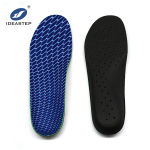
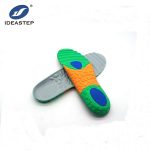
Arch support inserts for sandals are not simply shortened versions of conventional shoe insoles. Their design must account for the footbed structure, open upper construction, strap placement, and the way support components are secured to the sandal base.
For sandal brands and footwear manufacturers, the main development challenge is integrating a defined arch profile without compromising the footbed’s overall shape, thickness, or construction. The choice between a molded footbed, a bonded support insert, and a multilayer platform also affects tooling, material selection, and production methods.
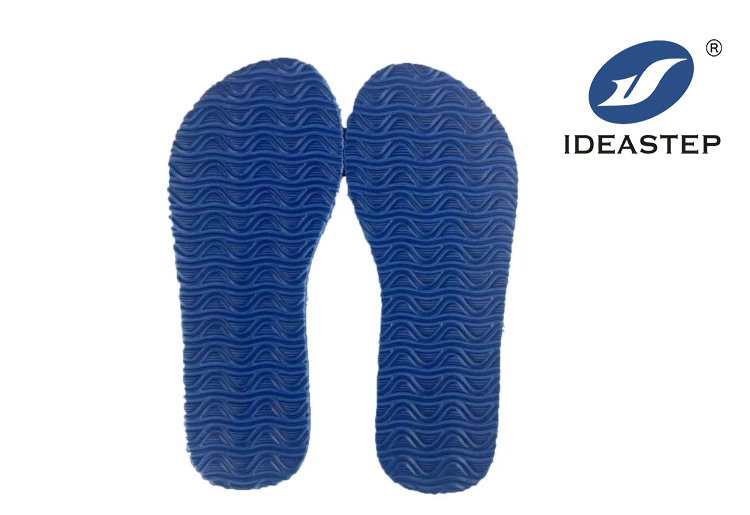
1. How Arch Support Fits into Sandal Construction
In closed footwear, the upper helps hold the foot in position. Sandals provide less coverage, so the footbed and strap system have a closer relationship with the overall product design.
An arch support structure must therefore be developed alongside the sandal’s other components.
Three areas require particular attention:
- Footbed profile: The arch contour must connect naturally with the heel and forefoot sections.
- Upper and strap placement: Raised areas and changes in footbed thickness should not interfere with strap attachment points or available space.
- Component integration: The support structure must remain securely connected to the footbed or sole platform throughout production and use.
These requirements vary by sandal construction. A molded slide sandal, for example, offers different integration options from a flat sandal with separately attached straps.
2. Three Structural Approaches to Sandal Arch Support
The most suitable construction depends on the sandal’s design, production volume, target price, and required support profile.
Integrated Molded Footbed
In this design, the arch contour is formed directly into the sandal footbed. The heel cup, midfoot support, and forefoot surface are developed as part of one continuous structure.
EVA is commonly used for molded footbeds because it can be processed into different shapes and thicknesses. PU may also be considered where the product specification calls for a different cushioning structure.
The main advantage of this approach is that it reduces the need for a separately attached arch component. However, the mold must accurately reproduce the intended geometry, and changes to the arch profile may require tooling adjustments.
Bonded Arch Support Insert
A separate support component can be attached to an existing sandal footbed.
This approach allows manufacturers to develop the arch structure independently from the main platform. A molded EVA component or thermoplastic support piece can be combined with a cushioning base, depending on the required construction.
Important considerations include:
- Contact area between the insert and footbed
- Component thickness and edge transitions
- Adhesive compatibility with both substrates
- Positioning accuracy during assembly
- Resistance to separation during repeated use
This construction offers flexibility in component selection, but the bonding process needs consistent control.
Multilayer Footbed Platform
A multilayer design combines different materials to perform separate structural functions.
For example, a sandal footbed may use an EVA base, a localized TPU support component, and a surface covering. The layers can be configured to provide a defined arch profile while maintaining the intended overall thickness.
This approach gives manufacturers more control over material combinations. It also introduces additional production requirements, particularly for layer alignment, bonding, and thickness consistency.
3. Arch Geometry: Profile, Transitions and Size Grading
Arch support performance depends on more than the maximum height of the raised section. Its width, curvature, length, and transition into surrounding areas all contribute to the finished footbed geometry.
Arch Profile and Coverage
The arch profile should be defined according to the intended product design and target foot shape.
Relevant specifications include:
- Arch height at defined measurement points
- Medial and lateral profile
- Support length and width
- Position relative to the heel and forefoot
- Transition into the surrounding footbed
A high or narrow contour is not automatically suitable for every sandal design. The geometry should be evaluated as part of the complete footbed rather than specified by height alone.
Heel and Forefoot Transitions
The arch section does not function independently of the rest of the footbed.
A heel cup, where included, needs to connect with the rearfoot platform without creating abrupt changes in surface height. At the forefoot, the arch structure should transition into the ball-of-foot area while maintaining the intended thickness and shape.
These transitions are particularly relevant in molded footbeds, where the geometry is formed as one continuous surface.
Size Grading
Arch geometry should be reviewed across the full size range.
Simply increasing the dimensions of one mold design may not preserve the intended relationship between arch position, heel location, and forefoot width. Manufacturers should establish grading rules for the main structural features and verify representative sizes before approving the production range.
4. Material Combinations and Surface Construction
Material selection should follow the structural requirements of the sandal rather than a fixed material formula.
EVA foam is suitable for molded footbeds, cushioning platforms, and shaped arch sections. Different grades allow manufacturers to adjust hardness, density, and compression characteristics. These properties should be specified and tested separately.
PU foam can be used in cushioning layers or molded footbed constructions. Its suitability depends on the formulation, compression behavior, dimensional stability, and compatibility with adjacent components.
TPU and other thermoplastic materials are options for localized reinforcement. They can be integrated into an EVA or PU structure when a more defined support component is required. Component thickness and stiffness must be considered alongside the flexibility of the surrounding footbed.
Surface materials also influence the construction. Microfiber, mesh, and other fabrics can be used as footbed coverings, depending on the product’s surface requirements. Their abrasion resistance, moisture-related properties, and bonding characteristics should be evaluated as part of the finished assembly.
For open sandals, exposed edges and surface finishing deserve particular attention. Wrinkles, lifted edges, uneven lamination, or visible adhesive can affect the appearance and consistency of the finished product.
5. Attachment Methods and Production Considerations
The attachment method should be selected early in product development because it affects both the component design and manufacturing sequence.
Common approaches include direct molding, adhesive bonding, and integration between layers during assembly.
For direct molding, tooling determines the footbed profile and the repeatability of the arch geometry. Mold design should account for material behavior, shrinkage, and dimensional tolerances.
For bonded inserts, the process requires controlled component positioning, surface preparation, and adhesive application. The selected adhesive must be compatible with the materials being joined.
For multilayer footbeds, manufacturers need to control layer alignment and total thickness. In addition, the support component should not shift during assembly or create an uneven surface after bonding.
The production method should be validated using complete sandal assemblies, not only individual components.
6. Product Validation and Quality Control
Inspection should focus on the features most likely to vary during molding and assembly.
| Checkpoint | What to Verify |
|---|---|
| Arch profile | Height, width, position, and curvature |
| Footbed dimensions | Length, width, and regional thickness |
| Heel structure | Cup depth and shape consistency, where applicable |
| Component attachment | Bonding coverage and adhesion |
| Surface finishing | Cover alignment, wrinkles, and exposed edges |
| Strap interface | Clearance around strap slots and attachment points |
| Finished assembly | Fit between footbed, upper, and outsole |
For molded footbeds, dimensional checks should confirm that the production part matches the approved reference sample. For bonded and multilayer constructions, inspection should also identify gaps, edge lifting, misalignment, and uneven thickness.
Physical evaluation of the assembled sandal is necessary to verify that the arch structure does not interfere with the upper or other footwear components.
7. Specifications for OEM and ODM Development
For sandal brands and footwear manufacturers, a clear technical brief helps reduce revisions during sampling and production.
The initial specification should include:
- Sandal style and construction type
- Footbed drawings or reference samples
- Arch profile and measurement requirements
- Heel cup and forefoot geometry, where applicable
- Material grades and thicknesses
- Surface covering and finishing requirements
- Attachment or molding method
- Size range and grading rules
- Color and appearance requirements
- Inspection criteria and packaging specifications
During sample development, the main review points should be arch geometry, footbed dimensions, component integration, and compatibility with the sandal upper and outsole.
After approval, the sample and technical specifications should be retained as production references. Any subsequent changes to materials, tooling, or structural dimensions should be reviewed before being applied to bulk orders.
Conclusion
Arch support inserts for sandals need to be designed around the complete footbed and sandal construction. Integrated molded footbeds, bonded support components, and multilayer platforms each offer different manufacturing options.
The right approach depends on arch geometry, material requirements, strap placement, attachment methods, and size grading. For sandal manufacturers and footwear brands, controlling these details from the sampling stage helps establish a consistent construction for repeat production.
Related Insole Products: https://www.aideastep.com/product/ideastep-custom-eva-foam-sheet-for-slipper-soles-and-footwear-applications/.