In today’s competitive footwear industry, insoles are no longer just auxiliary components. They are a critical factor that directly influences comfort, functionality, and overall product performance. Among various insole materials, the EVA cushioned insole has become one of the most widely adopted solutions in athletic shoes, casual footwear, safety shoes, and outdoor footwear.
For footwear brands, wholesalers, and OEM/ODM buyers, selecting the right EVA insole solution can significantly impact product positioning, user experience, and market competitiveness.
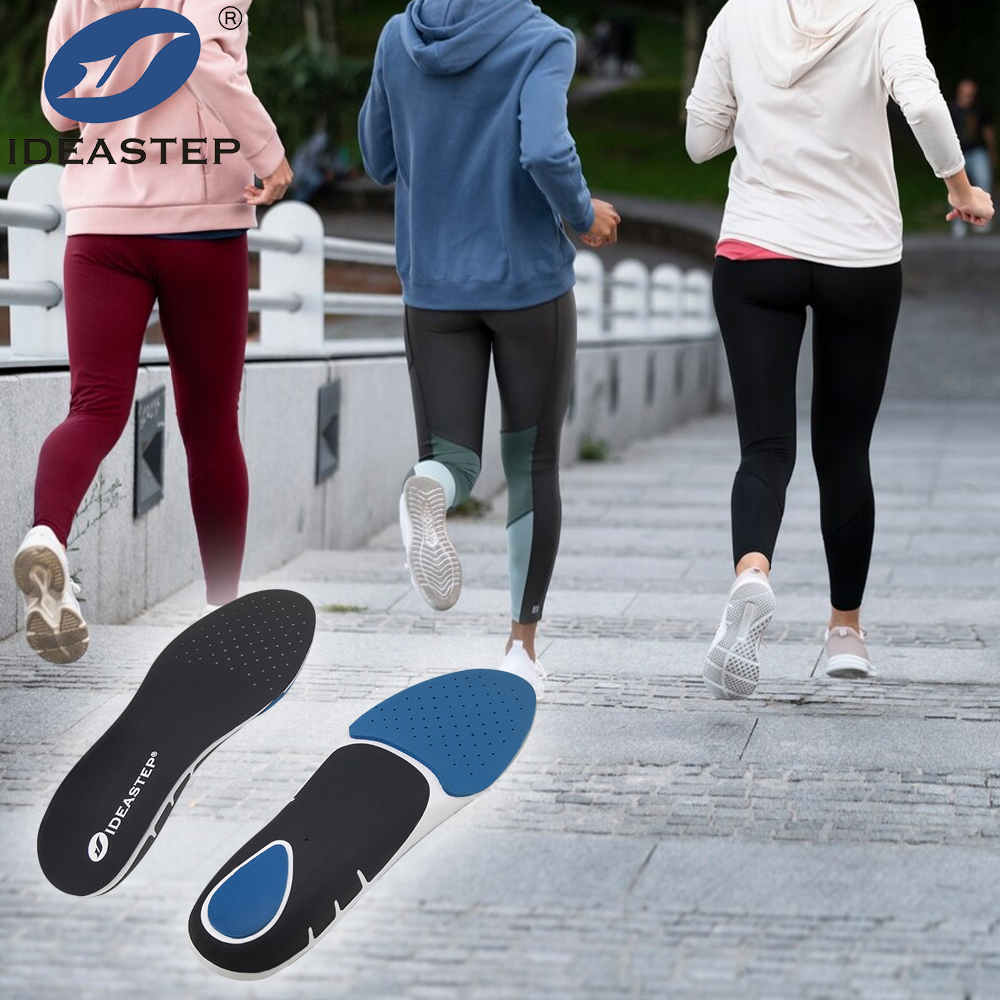
1. Why Insole Material Determines Footwear Performance
The insole is the direct interface between the foot and the shoe structure. Its material properties play a decisive role in overall wearing experience.
A high-quality insole must balance the following key factors:
- Comfort and cushioning performance
- Shock absorption during walking and sports activities
- Structural stability under long-term use
- Overall durability of the footwear product
As global demand shifts toward lightweight and functional footwear, traditional foam materials are increasingly unable to meet modern performance expectations. EVA has therefore become a preferred upgrade material across the industry.
2. What Is EVA Cushioned Insole Material?
EVA (Ethylene Vinyl Acetate) is a polymer foam material widely used in the footwear industry. It is known for its excellent elasticity, lightweight structure, and strong cushioning performance.
In insole applications, EVA is typically processed through a foaming technique that creates a closed-cell structure, delivering both comfort and durability.
Key characteristics of EVA material include:
- Lightweight structure that reduces overall shoe weight
- Excellent rebound and elasticity
- Strong shock absorption capability
- Adjustable density and hardness
- Easy molding and customization flexibility
Compared with traditional PU or standard foam materials, EVA offers a more balanced combination of performance and cost efficiency.
3. Key Advantages of EVA Cushioned Insoles
3.1 Superior Cushioning and Pressure Relief
EVA’s closed-cell structure effectively disperses impact forces during movement, reducing pressure on the feet.
It helps to:
- Absorb ground impact energy
- Reduce pressure concentration on the heel and forefoot
- Minimize fatigue during long walking or sports activities
This makes EVA insoles particularly suitable for running shoes and performance footwear.
3.2 Lightweight Design for Enhanced Comfort
One of EVA’s most significant advantages is its low density. Compared to rubber or PU-based insoles, EVA significantly reduces overall shoe weight.
This improves:
- Walking efficiency
- Athletic performance
- All-day wearing comfort
3.3 High Durability and Compression Resistance
Unlike standard foam materials that may collapse over time, high-quality EVA maintains its structural integrity under repeated pressure.
Benefits include:
- Long-term shape retention
- Stable rebound performance
- Reduced material fatigue
3.4 Strong Customization Capability for OEM/ODM Projects
EVA is highly adaptable in manufacturing processes, making it ideal for customized footwear development.
Manufacturers can adjust:
- Material density
- Hardness levels
- Structural design
- Surface material lamination (mesh, fabric, etc.)
This makes EVA insoles a preferred choice for OEM/ODM footwear production.
4. Applications of EVA Insoles in Different Footwear Categories
4.1 Sports Shoes (Running & Training Footwear)
EVA insoles provide excellent cushioning and energy return, helping athletes reduce impact stress and improve performance during training and running activities.
4.2 Safety Shoes
In industrial environments, EVA insoles support long hours of standing and walking, reducing foot fatigue and improving workplace comfort.
4.3 Casual and Lifestyle Shoes
EVA enhances daily comfort by offering soft cushioning and lightweight wearability, making it ideal for everyday footwear products.
4.4 Outdoor and Functional Footwear
For outdoor applications, EVA provides stable support and impact protection, improving durability in complex environments.
5. Why Brands and Buyers Prefer EVA Insoles
From a commercial perspective, EVA insoles offer a strong balance between performance and cost efficiency, making them highly attractive for footwear brands and distributors.
Key advantages include:
-
- Cost-effective material with stable performance
- Suitable for large-scale OEM/ODM manufacturing
- High adaptability across multiple footwear categories
- Supports product differentiation and branding strategies
- Mature and stable global supply chain
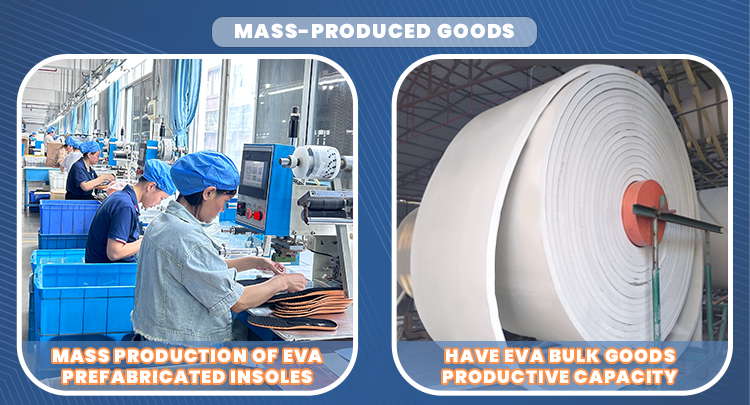
6. EVA Insole Manufacturing Process Overview
Understanding the manufacturing process helps buyers evaluate supplier capability and product consistency.
6.1 Foaming Process
EVA foam is produced through high-temperature expansion, forming a uniform closed-cell structure that determines cushioning performance and density.
6.2 Compression Molding
Molds are used to shape insoles into standardized forms, ensuring consistent size, structure, and mass production efficiency.
6.3 Surface Lamination
EVA insoles are often combined with additional materials such as:
- Mesh fabric for breathability
- Textile layers for comfort
- Functional coatings (e.g., antibacterial treatment)
6.4 Density and Hardness Control
Different footwear applications require different EVA specifications:
- Running shoes: high rebound and medium density
- Safety shoes: high-density support structure
- Casual shoes: soft comfort-oriented formulation
7. How to Choose a Reliable EVA Insole Supplier
For B2B buyers, supplier selection directly affects product quality and delivery stability.
Key evaluation criteria include:
- OEM/ODM development capability
- Customization flexibility in design and materials
- Compliance with international standards (REACH, RoHS)
- Production capacity and consistency
- Fast response for sampling and development
A professional supplier should act not only as a manufacturer but also as a product development partner.
8. Value of Working with a Professional EVA Insole Manufacturer
Cooperating with an experienced manufacturer provides significant advantages for footwear brands aiming to scale globally.
- Multiple EVA density and structure solutions
- Customized insole design support
- Rapid prototyping and sampling services
- Stable mass production and export capability
- Continuous product optimization support
9. Conclusion: EVA Insoles as a Key Trend in Modern Footwear Materials
As the footwear industry continues to evolve toward lightweight, functional, and comfort-driven designs, EVA cushioned insoles have become a core material solution across global markets.
With strong performance, scalable production capability, and cost efficiency, EVA remains one of the most strategic materials for footwear brands and B2B buyers.
Choosing the right EVA insole solution is not just a material decision—it is a long-term strategy for improving product competitiveness and market success.
Related Post: The Role of EVA Cushion Insole in Shock Absorption and Comfort