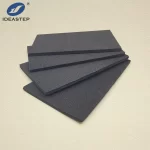
Heat moldable TPU orthotic shells give manufacturers greater flexibility in developing orthotic structures with specific support profiles and mechanical properties. Thermoplastic polyurethane (TPU) combines elasticity, abrasion resistance, and thermoplastic processability, making it a useful material for selected custom and semi-custom orthotic designs.
However, shell performance depends on more than the material itself. Hardness, thickness, geometry, forming conditions, and layer compatibility all influence the finished structure. Understanding these factors helps orthotic manufacturers develop consistent products and select suitable materials for different production requirements.
1. TPU Material Properties for Orthotic Shells
TPU is a thermoplastic elastomer with a combination of flexible and rigid molecular segments. Its mechanical properties vary according to formulation, hardness, and processing conditions.
Several properties are particularly relevant to orthotic shell design.
Hardness and Flexibility
Shore hardness provides a reference for comparing TPU grades, but it does not determine finished shell stiffness on its own. Thickness, curvature, and structural geometry also influence resistance to bending.
A thinner shell may retain considerable flexibility, while a thicker or more contoured structure can provide greater mechanical support. Manufacturers should evaluate hardness alongside the intended shell design.
Elasticity and Shape Retention
TPU offers elastic recovery and resistance to repeated deformation. These characteristics are useful in orthotic structures exposed to regular mechanical loading.
The design challenge is balancing flexibility with shape retention. Excessive flexibility may compromise the intended support profile, while excessive stiffness can limit structural adaptability.
Abrasion and Tear Resistance
TPU’s abrasion and tear resistance make it suitable for applications requiring durable thermoplastic structures. Actual performance depends on the selected grade, shell thickness, and manufacturing process.
Thermal Response
Heat moldability varies between TPU formulations. Each grade has a specific processing window, and unsuitable heating conditions may cause incomplete forming, surface defects, or dimensional changes.
Manufacturers should confirm the supplier’s recommended temperature range and forming method before production.
2. Structural Design of Heat Moldable TPU Shells
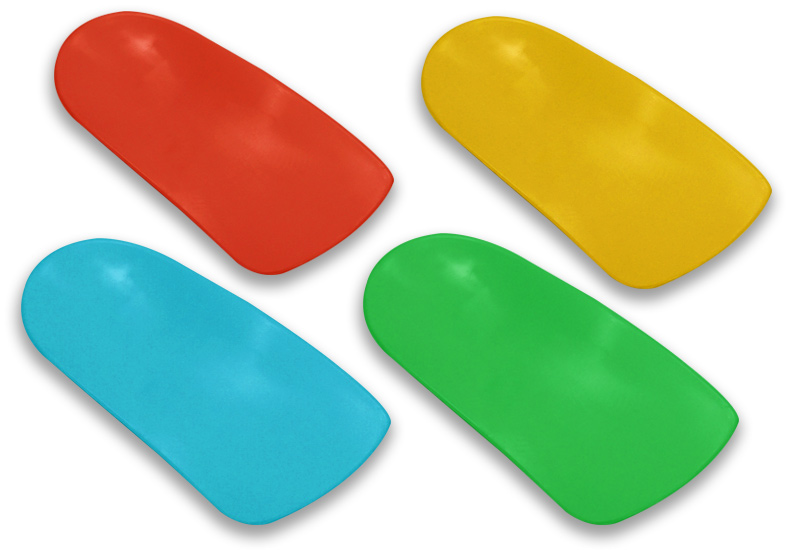
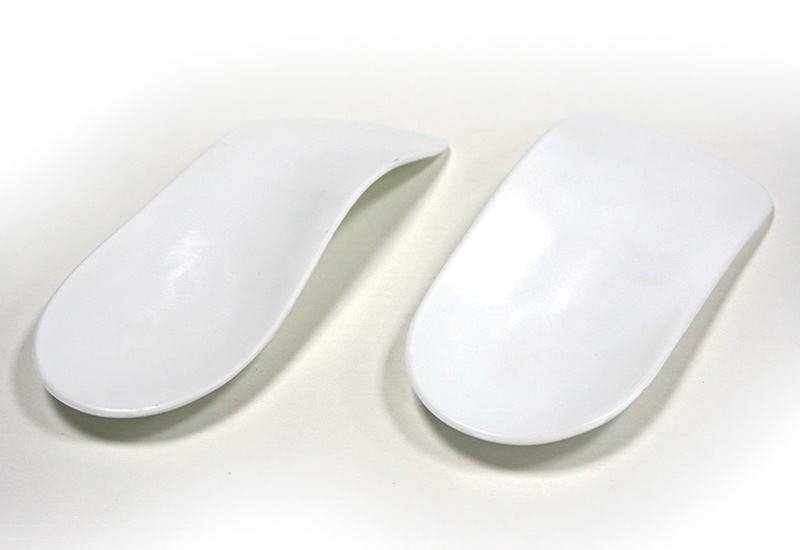
TPU allows manufacturers to develop different shell contours and support configurations. The main design variables include arch geometry, heel cup structure, thickness distribution, and flexibility across different zones.
Arch Profile
The medial and lateral arch regions are important elements in many orthotic designs. Manufacturers can adjust arch height, contour, and transition zones to match the intended product specifications.
The shell must also integrate properly with the cushioning base. Poorly matched contours may create pressure concentrations or interfere with the overall insole structure.
Heel Cup Design
Heel cup depth, wall angle, and rearfoot contour influence the geometry and stability of the shell.
These dimensions should be developed together rather than adjusted independently. The final design must account for the intended orthotic function, footwear space, and surrounding materials.
Thickness and Flexibility Distribution
Uniform thickness is not always necessary across the entire shell. Different regions may require different levels of flexibility and structural resistance.
For example, the heel area may require a more stable structure, while the forefoot transition may need greater flexibility. Manufacturers can adjust thickness, curvature, and material grade to achieve the required balance.
3. TPU Shells in Multi-Layer Orthotic Construction
TPU shells are commonly integrated into multi-layer orthotic insoles. The surrounding materials determine cushioning characteristics, surface finish, and the connection between structural components.
Common material combinations include:
- TPU shell: Forms the main support structure and maintains the designed contour.
- EVA foam: Provides cushioning with adjustable density and thickness.
- PU foam: Offers alternative cushioning and compression characteristics.
- Top cover fabric: Provides the finished surface and contributes to wear resistance and moisture management.
A semi-rigid orthotic design, for example, may combine a formed TPU shell with an EVA base and fabric top cover.
Material compatibility is essential. Adhesive selection, surface preparation, bonding pressure, and curing conditions affect the connection between TPU and other layers. These factors should be verified during sample development to prevent delamination or changes in shell geometry.
4. Heat Molding and Manufacturing Process
Consistent TPU shell production requires control over material preparation, heating, forming, cooling, and finishing.
Material Preparation
Before production, manufacturers should verify the TPU grade, hardness, thickness, and surface condition. Storage and handling should follow the material supplier’s recommendations.
Controlled Heating
Heating temperature and duration depend on the TPU formulation, material thickness, and equipment. Uniform heating is necessary to achieve consistent forming results.
Manufacturers should use the processing window specified for the selected grade rather than applying one temperature setting to all TPU materials.
Forming and Contour Control
Once the material reaches its suitable forming condition, it is shaped using the selected mold or forming equipment.
Important parameters include:
- Arch height and contour
- Heel cup depth and wall angle
- Shell thickness and edge profile
- Overall length and width
- Alignment with the insole base
Accurate mold design and controlled forming conditions help reduce dimensional variation between batches.
Cooling and Finishing
The formed shell should cool under controlled conditions to stabilize its geometry. After cooling, manufacturers should inspect dimensions, surface quality, edges, and potential deformation.
Trimming and edge finishing must preserve the designed shell structure.
5. Quality Control for TPU Orthotic Shells
Quality control should cover both incoming materials and finished components.
Key inspection areas include:
| Inspection Area | Main Parameters |
|---|---|
| Material verification | TPU grade, hardness, thickness, supplier specifications |
| Forming consistency | Arch profile, heel cup geometry, dimensions |
| Mechanical performance | Flexibility, deformation, elastic recovery, fatigue resistance |
| Surface quality | Cracks, bubbles, uneven surfaces, sharp edges |
| Layer bonding | Adhesion between TPU, foam base, and top cover |
| Batch consistency | Material batches, forming conditions, dimensional tolerances |
Mechanical testing should reflect the intended application and product structure. Material datasheets alone cannot confirm the performance of a completed orthotic shell.
Recording material batches, heating conditions, forming parameters, and inspection results also helps manufacturers identify production variation and maintain consistent specifications.
6. TPU Compared with Other Orthotic Materials
TPU is one of several materials used in orthotic shell and insole construction. Selection depends on the required support level, flexibility, processing method, and production cost.
| Material | Main Characteristics | Typical Design Considerations |
|---|---|---|
| TPU | Elasticity, abrasion resistance, thermoplastic processability | Suitable grades can support flexible or formed shell structures |
| PP | Lightweight and relatively rigid | Used where a more rigid support structure is required |
| EVA | Lightweight cushioning and adjustable compression properties | Commonly used for cushioning bases and supporting layers |
| Nylon | Strength and varying degrees of flexibility | Used in selected engineered and digitally manufactured structures |
TPU may suit designs requiring a balance of flexibility and structural support. PP is often considered when greater rigidity is needed, while EVA and PU are widely used in cushioning layers.
The final choice should account for shell geometry, footwear space, processing equipment, performance requirements, and target production cost.
7. Considerations for Wholesale and OEM Production
For wholesale and private-label projects, consistent specifications are essential before mass production begins.
Manufacturers and buyers should confirm:
- TPU grade, hardness, and thickness
- Shell dimensions and structural profile
- Arch configuration and heel cup geometry
- Forming method and processing conditions
- Compatibility with EVA, PU, and top cover materials
- Adhesion requirements for multi-layer construction
- Inspection standards and dimensional tolerances
- Packaging, labeling, and order quantities
Sample development allows both parties to evaluate shell geometry, forming consistency, material compatibility, and finished dimensions before approving bulk production.
For OEM and ODM projects, technical drawings and approved samples provide a clear reference for manufacturing and quality inspection.
8. Developing Orthotic Designs with Heat Moldable TPU
Heat moldable TPU shells provide manufacturers with another option for developing orthotic structures with defined contours and controlled flexibility.
Successful application depends on selecting the appropriate TPU grade, optimizing shell geometry, and maintaining consistent forming conditions. Hardness, thickness, thermal response, and layer compatibility should be evaluated as part of the complete product design.
Ideastep works with B2B buyers on orthotic insole development, material selection, and OEM/ODM production. For projects involving heat moldable TPU shells, buyers can provide technical drawings, material specifications, or reference samples for manufacturing evaluation.
Related Post: TPU Orthotic Shells: Material Properties, Structural Design and Custom Manufacturing.