Buying custom orthotic insoles for a business involves more than evaluating a sample. B2B buyers need to consider the insole structure, materials, footwear compatibility, customization requirements, quality control, production quantity, and repeat-order consistency.
For wholesalers, distributors, clinics, footwear companies, and private-label brands, these factors should be clarified before moving from sampling to bulk production.
1. Define the Product Application
Start with how the insole will be used. An insole for everyday footwear may require a different combination of support, flexibility, cushioning, and thickness from one designed for work shoes, sports footwear, or clinical applications.
A product brief should normally include:
- Target footwear
- Target users
- Required support level
- Expected wearing environment
- Preferred thickness and flexibility
- Target price range
- Estimated order volume
Providing this information early gives the manufacturer a clearer basis for product development.
2. Review the Insole Structure
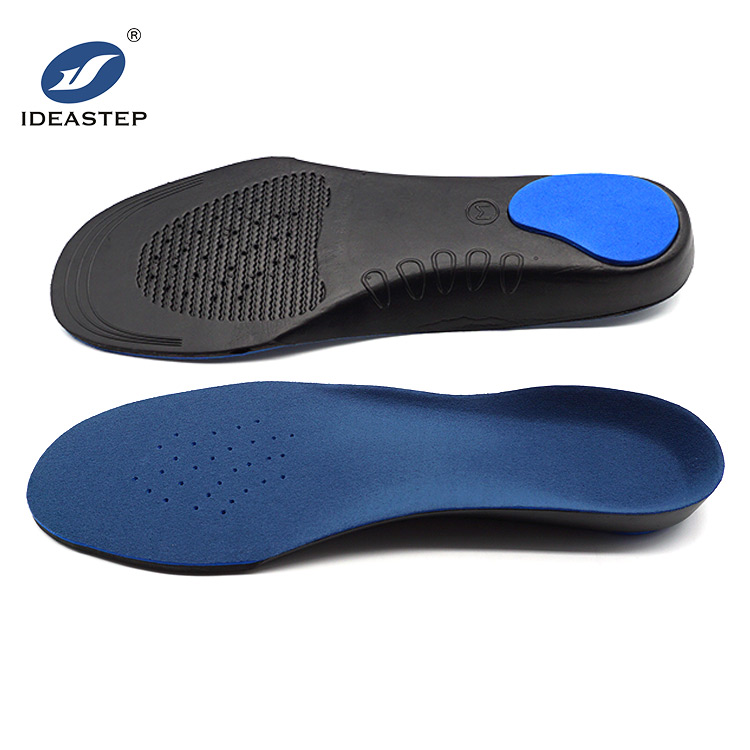
A custom orthotic insole is typically built around several functional areas: the arch, heel, forefoot, base, and top cover. These areas work together, so changing one can affect the overall construction.
Arch
When reviewing the arch area, look beyond height. The arch width, position, contour, and underlying material all influence the final support profile and overall insole construction.
Heel Cup
The heel cup provides a defined area for the heel and contributes to the overall geometry. Its depth and width need to be compatible with the target shoe, particularly when internal space is limited.
Forefoot
The forefoot needs an appropriate balance between cushioning and flexibility. Its thickness also affects the amount of space available inside the footwear.
3. Select Materials Based on the Design
Material selection affects cushioning, flexibility, weight, durability, and structural behavior. Common materials include EVA, TPU, PU, PORON, memory foam, gel, and fabric or microfiber top covers.
| Material | Typical Use |
|---|---|
| EVA | Cushioning, shaping, lightweight base construction |
| TPU | Structural support and reinforcement |
| PU | Cushioning and flexible foam construction |
| PORON | Localized cushioning |
| Memory foam | Soft cushioning and pressure distribution |
| Fabric or microfiber | Top cover and surface finish |
Several materials may be combined in one design. A structured support component, for example, can be integrated with an EVA base and a softer top layer.
Material hardness should also be considered. Softer materials change the cushioning characteristics, while firmer materials influence structural support. The final combination should match the intended application rather than simply maximize softness or hardness.
4. Check Footwear Compatibility Early
The insole and shoe should be considered together during development. Available internal volume affects the practical thickness of the insole, while heel cup depth, toe clearance, and the existing footbed can affect fit.
For a project developed around a specific shoe, useful references include the physical shoe, existing footbed, dimensional drawings, or detailed measurements.
Addressing these constraints before sampling can reduce unnecessary design changes later.
5. Clarify the Level of Customization
“Custom” can mean different things in an OEM project. Depending on the product, buyers may require:
- Custom dimensions
- Modified arch profiles
- Adjusted heel cup geometry
- Specific material combinations
- Different hardness levels
- Customized top covers
- Logo printing or embossing
- Custom colors
- Private-label packaging
Not every project requires a completely new structure. An existing platform may be modified for some applications, while a new design or tooling may be necessary for others.
Clarifying the scope of customization helps determine development requirements, tooling, MOQ, and lead time.
6. Treat Sampling as Part of Development
The first sample provides a physical reference for evaluating the design. Buyers should check more than appearance.
Key points include:
- Dimensions and thickness
- Arch position and contour
- Heel cup geometry
- Material hardness
- Flexibility
- Layer bonding
- Top-cover finish
- Fit inside the target footwear
When changes are needed, specific feedback is more useful than general comments. Identifying the affected area or design feature allows the manufacturer to make a targeted adjustment.
7. Review Quality Control Before Bulk Production
For B2B orders, the approved sample is only the starting point. The manufacturer must be able to reproduce the same specification across production batches.
Buyers should understand how the supplier controls:
- Material specifications
- Hardness and density where applicable
- Product dimensions
- Layer construction
- Bonding quality
- Surface finish
- Logo and packaging details
A documented production specification provides a reference for both the initial order and future repeat orders.
8. Understand MOQ and Production Costs
MOQ can vary according to the structure, materials, tooling, packaging, and customization involved.
A standard product with private-label packaging may have different requirements from a completely new custom design. Before ordering, buyers should confirm:
- Sample quantity
- Production MOQ
- Tooling or mold costs
- Packaging MOQ
- Sample lead time
- Bulk production lead time
These details provide a clearer picture of the actual cost of developing and launching the product.
9. Consider Repeat Production
For a B2B product, the first order is only part of the sourcing process. The supplier should be able to reproduce the approved specification when the product is reordered.
Before placing a larger order, buyers can confirm:
- Whether the approved sample is retained as a production reference
- Whether material specifications are documented
- Whether the same structure can be reproduced
- Whether branding and packaging can remain consistent
- How future design changes are recorded
This becomes particularly relevant for private-label products and long-term distribution.
10. Understand the Difference Between OEM and ODM
OEM is suitable when you already have a defined product design and need a manufacturer to produce it to your specifications. The buyer usually provides requirements such as dimensions, materials, support features, logo placement, and packaging.
ODM is more suitable when you need help developing the product itself. The manufacturer may provide an existing design or adjust the structure, materials, and appearance based on your target market and application.
Before placing an order, clarify which model you need, what needs to be customized, and which parts of the product the manufacturer will be responsible for developing.
11. Prepare a Clear RFQ
A detailed inquiry helps the manufacturer understand the project before quoting.
A typical RFQ can include:
- Product application
- Target footwear
- Required sizes
- Material preferences
- Support requirements
- Estimated quantity
- Branding requirements
- Packaging requirements
- Reference samples, drawings, or images
Not every specification needs to be finalized before the first inquiry. Providing the information already available is enough to start a more focused discussion.
Conclusion
For B2B buyers, custom orthotic insoles should be evaluated as both a product and a manufacturing project.
Application, structure, materials, footwear compatibility, customization, sampling, quality control, MOQ, and repeat production all affect the final sourcing decision.
A clear production specification also gives the buyer and manufacturer a common reference for sampling, bulk production, and future orders.
Ideastep manufactures custom orthotic insoles for wholesalers, distributors, clinics, footwear companies, and private-label brands, with OEM/ODM options for structure, materials, dimensions, top covers, branding, and packaging.
Explore More: Ideastep Custom Orthotic Insoles for Wholesale and OEM.