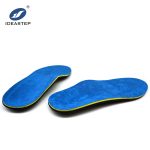
For footwear brands, healthcare suppliers, and distributors, sourcing orthotic insoles is not simply about finding the lowest-cost supplier. A reliable orthotic insole manufacturer needs to provide consistent product quality, material expertise, customization capability, and stable production support for long-term business growth.
As demand for foot care products continues to increase, more companies are looking for manufacturing partners that can support bulk orthotic insoles, private label projects, and customized product development. However, choosing the right supplier can be challenging, especially when different manufacturers offer different levels of experience, technology, and production capability.
Before placing a large order, businesses should evaluate several key factors, including manufacturing experience, OEM capability, material knowledge, quality control, and delivery reliability.
Understand Your Requirements Before Choosing an Orthotic Insole Manufacturer
Before contacting suppliers, it is important to define your product requirements clearly. The right manufacturing partner depends on your target market, product positioning, and expected order volume.
Define Your Product Type and Application
Orthotic insoles are developed for different applications, and each category requires different design considerations. Common product types include:
- Custom orthotic insoles
- Semi-custom orthotic insoles
- Comfort insoles
- Sports insoles
- Work boot insoles
- Foot care products
For example, sports insoles may focus on shock absorption and flexibility, while work boot insoles often require stronger cushioning and durability for long hours of standing. Understanding your target application helps manufacturers recommend suitable materials and structures.
Consider Bulk Order Requirements
For large-volume purchases, production capability is just as important as product design. Before cooperation, buyers should evaluate:
- Minimum order quantity (MOQ)
- Monthly production capacity
- Lead time
- Material supply stability
- Experience with international bulk orders
A supplier that can produce high-quality samples may not always have the capability to maintain the same consistency during mass production. Bulk order experience is essential for reducing supply risks.
Key Factors to Evaluate an Orthotic Insole Manufacturer
1. Manufacturing Experience and Industry Knowledge
Experience plays an important role in orthotic insole production. A manufacturer with years of industry knowledge understands how materials, structures, and manufacturing processes influence final product performance.
Professional manufacturers should have knowledge of:
- Foot biomechanics
- Insole structure design
- Material performance
- Different footwear requirements
In orthotic manufacturing, the same material combination may perform differently depending on the application. A supplier with technical experience can provide better recommendations instead of simply producing according to basic specifications.
2. OEM and Customization Capability
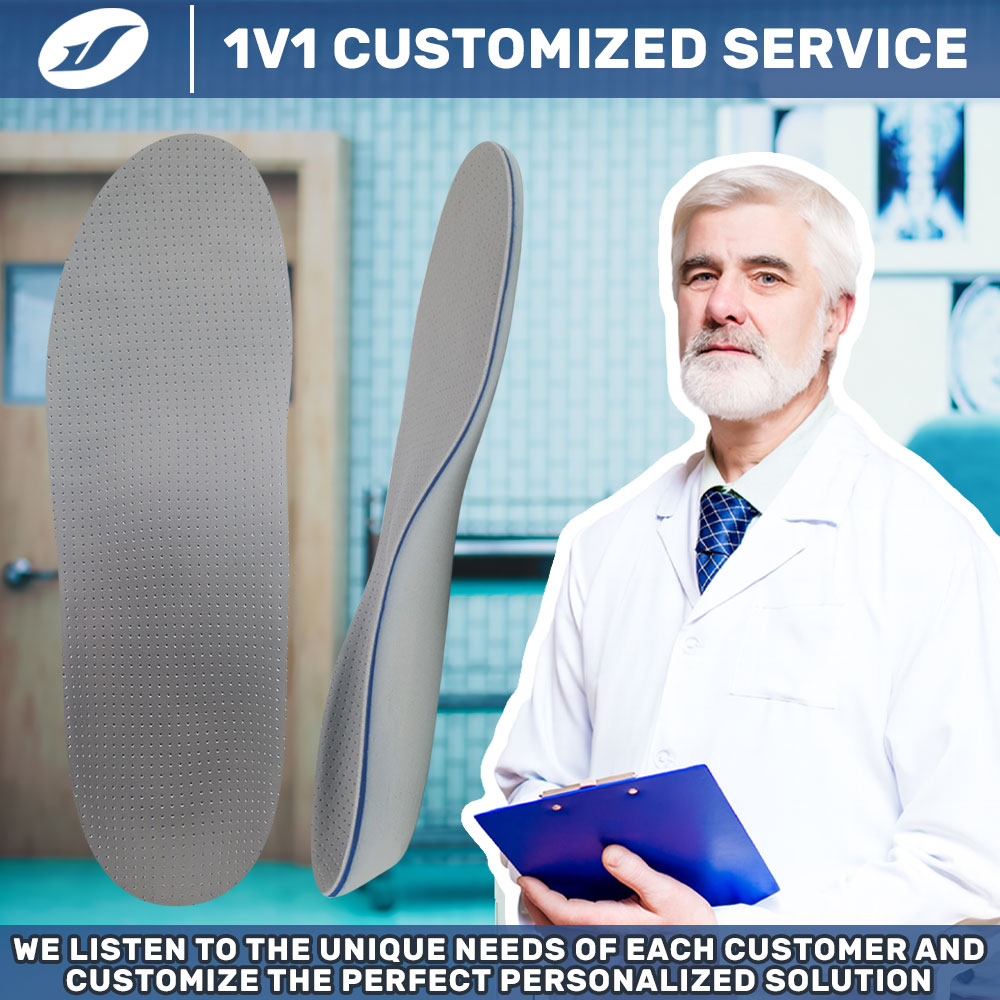
For brands and distributors, customization is often the key factor that separates a standard supplier from a long-term manufacturing partner.
A capable OEM orthotic insoles supplier should support customized solutions, including:
Material Selection
Different applications require different material combinations, such as:
- EVA foam for lightweight cushioning and support
- Memory foam for comfort and pressure adaptation
- PU foam for durability and flexibility
- TPU components for structural reinforcement
- Fabric top covers for improved wearing experience
Structural Design
OEM projects may require adjustments to:
- Arch support design
- Heel cushioning structure
- Insole thickness
- Multi-layer construction
- Overall footbed shape
These customization options allow brands to create products that match specific customer needs and market positioning.
Private Label and Branding Support
For companies developing their own product lines, manufacturers may provide:
- Custom logo printing
- Brand-specific colors
- Packaging solutions
- Private label production
This allows businesses to launch differentiated products without investing in their own production facilities.
Material Selection Determines Product Performance
A professional orthotic insoles manufacturer should understand how different materials affect comfort, support, and durability.
EVA Foam
EVA foam is one of the most commonly used materials in insole manufacturing because of its:
- Lightweight properties
- Cushioning performance
- Shock absorption ability
- Flexible processing options
Different EVA densities and hardness levels can be selected depending on the product application.
Memory Foam
Memory foam is often used in comfort-focused insoles because it provides:
- Soft cushioning
- Pressure adaptation
- Improved foot contact
It is commonly combined with EVA or support layers to achieve a balance between comfort and stability.
Support Components
Some orthotic designs require additional structural support. Materials such as TPU components or reinforced layers can help improve stability and maintain the shape of the insole over time.
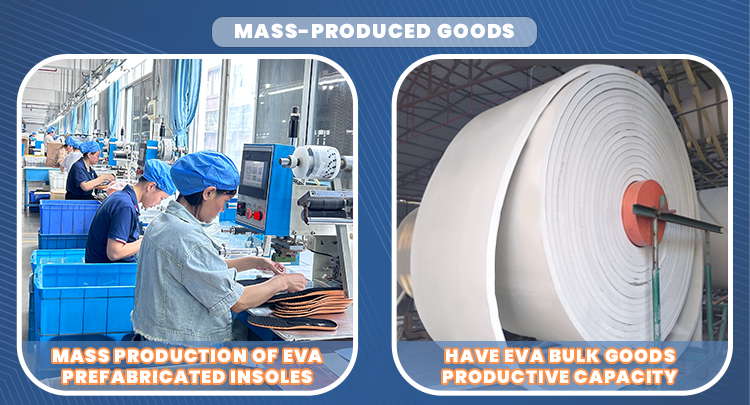
Quality Control and Production Reliability
For bulk orders, consistent quality is more important than producing one successful sample. A reliable orthotic insoles factory should have a complete quality control process from material inspection to finished product evaluation.
Material Inspection
Before production begins, materials should be checked for:
- Density consistency
- Hardness accuracy
- Appearance quality
Production Monitoring
During manufacturing, quality control should focus on:
- Cutting accuracy
- Bonding strength
- Product dimensions
- Surface finishing
Final Product Inspection
Before shipment, finished products should be inspected to ensure:
- Size consistency
- Structural accuracy
- Appearance standards
- Packaging requirements
OEM Orthotic Insoles Development Process
A professional manufacturer should be able to support the complete product development process, not just mass production.
Step 1: Requirement Discussion
The manufacturer evaluates your target market, footwear application, performance expectations, and customization requirements.
Step 2: Material and Design Selection
Based on product goals, the supplier recommends suitable materials, thickness options, and structural solutions.
Step 3: Prototype Development
Samples are created for evaluation and adjustments before moving into production.
Step 4: Bulk Manufacturing
After approval, production begins with controlled processes to ensure quality consistency and delivery reliability.
Common Mistakes When Choosing an Orthotic Insole Supplier
Choosing Only Based on Price
The lowest price does not always represent the best value. Lower costs may come from reduced material quality, limited customization, or weaker quality control.
A better approach is evaluating the balance between cost, quality, and manufacturing capability.
Ignoring Customization Ability
As competition increases, standard products become harder to differentiate. Working with a supplier that supports customization helps brands create unique market advantages.
Skipping Sample Testing
Testing samples before bulk production helps identify potential issues with materials, structure, and product performance before large investments are made.
Conclusion: Choosing the Right Manufacturer Creates Long-Term Value
Selecting the right orthotic insole manufacturer for bulk orders requires careful evaluation of technical experience, customization capability, material knowledge, quality control, and production capacity.
A reliable manufacturing partner does more than supply products. They support brands through product development, sampling, customization, and large-scale production.
For footwear brands, healthcare suppliers, and distributors looking for OEM orthotic insoles, partnering with an experienced manufacturer can help create competitive products while building a stable and long-term supply chain.
Related Reading: Ideastep: A Medical-Oriented Orthopedic Insole Manufacturer for Biomechanical Foot Support Solutions.